










How to Choose Alabaster Lighting for Your Home
12 minutes
How to Choose Alabaster Lighting for Your Home
Alabaster Lighting
A stone bar above the kitchen island. A broad shade over the dining table. A small pool of light beside the bed. Alabaster can connect these spaces while giving each one a different shape.
How do you choose alabaster lighting for your home?
Start with the surface or area you want to light. Compare linear fixtures for long tables and islands, round or drum forms for a centered arrangement, and pendants or wall sconces for smaller areas. Then check the selected size, installed drop, light source, and controls. Repeating the stone can bring rooms together; each fixture should still suit its own location.
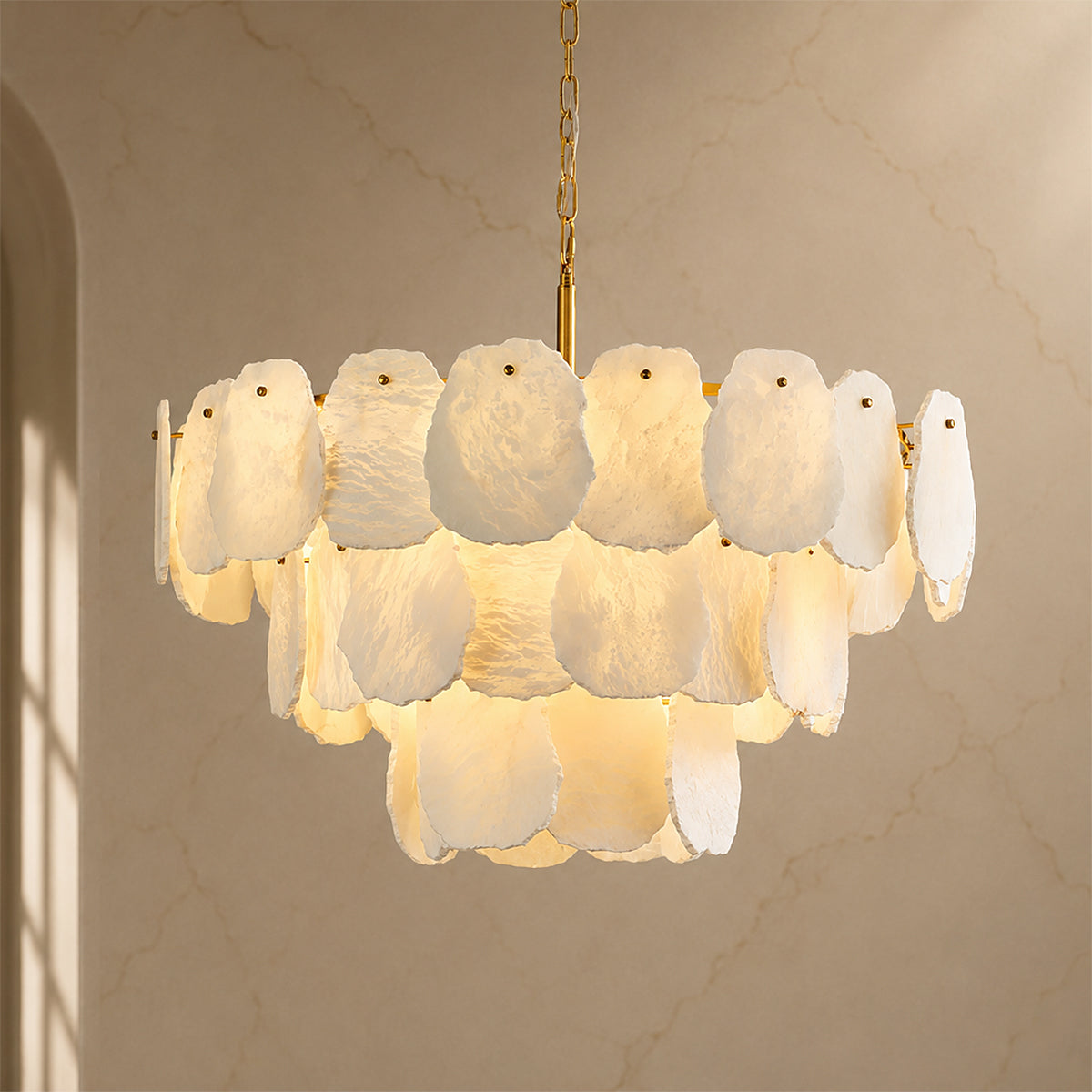
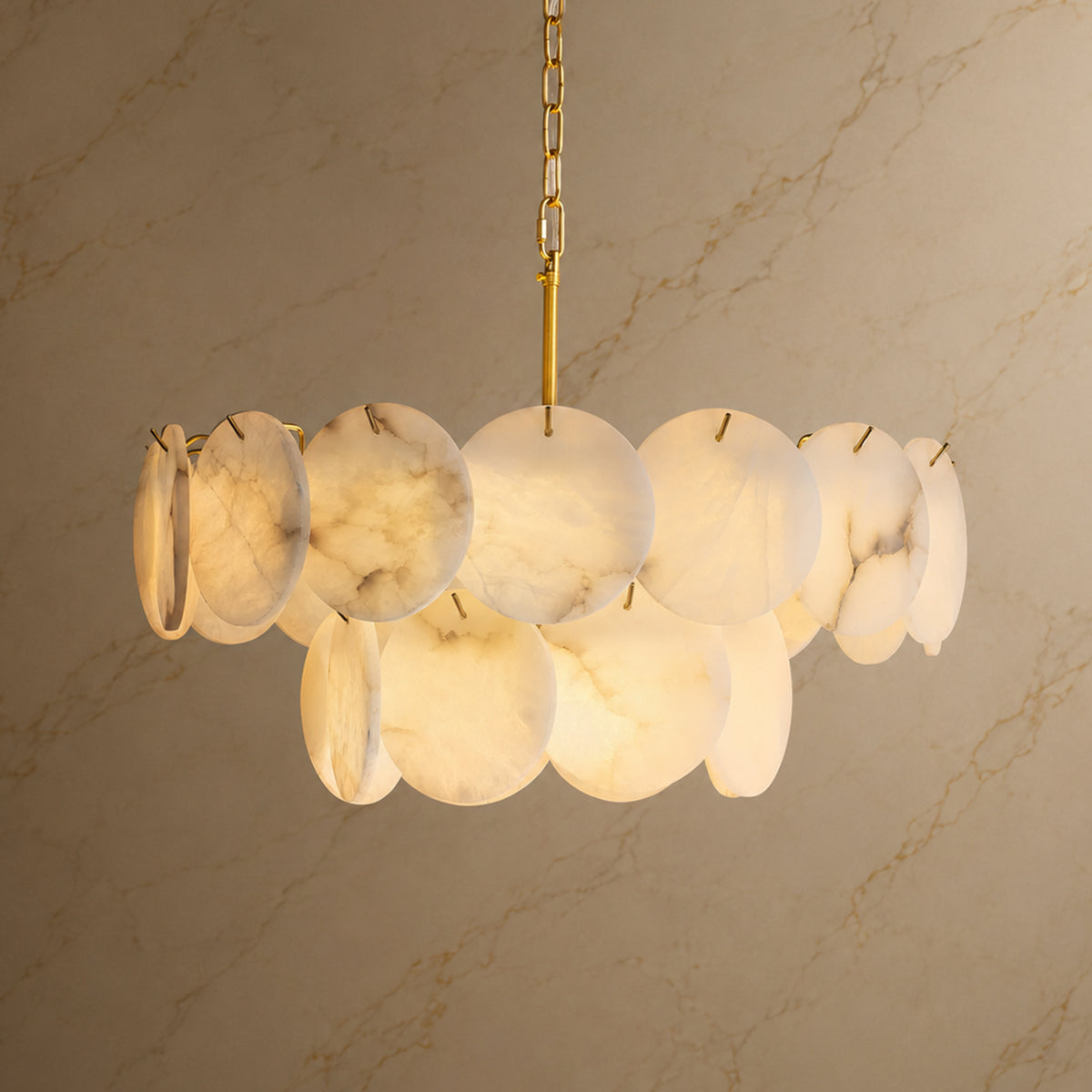
Alabaster has a presence in daylight as well as after dark. Its pale surface and individual markings make the unlit fixture part of the room. When illuminated, the appearance changes with the stone, its thickness, and the light behind it.
This guide looks at six designs from CARRA’s alabaster lighting collection, with a focus on choosing a shape and using it comfortably at home. For a closer introduction to the material, begin with our alabaster chandelier guide.
Choose the shape around the room
Look at the space from the doorway, then from the seat you use most often. A fixture can feel well balanced from the entrance yet interrupt a view across the table. Record the ceiling height and the furniture dimensions before comparing product sizes.
A slim line for a long surface
A linear light follows the length of an island or rectangular table. It is a useful starting point when you want the furniture and the light to share the same direction.
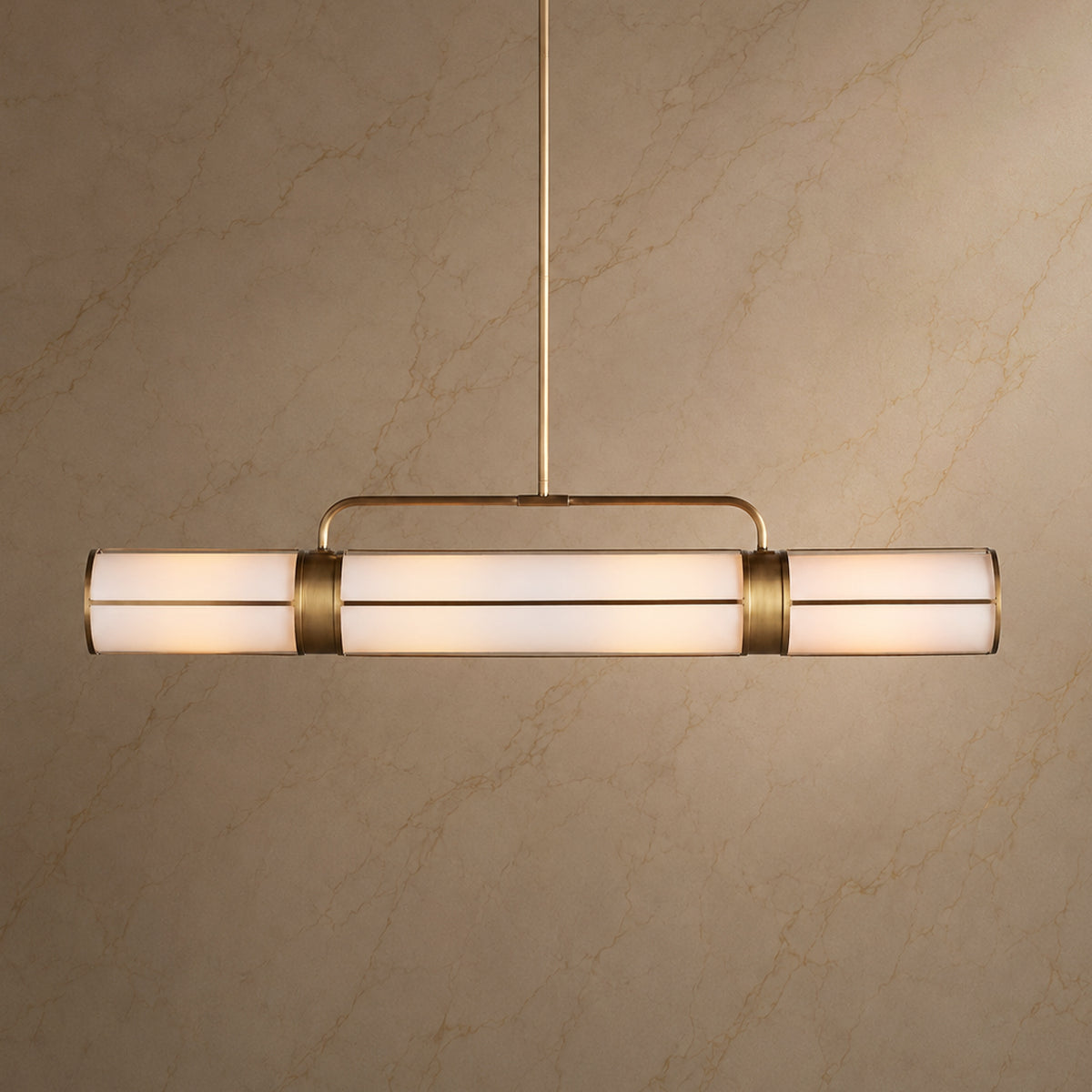
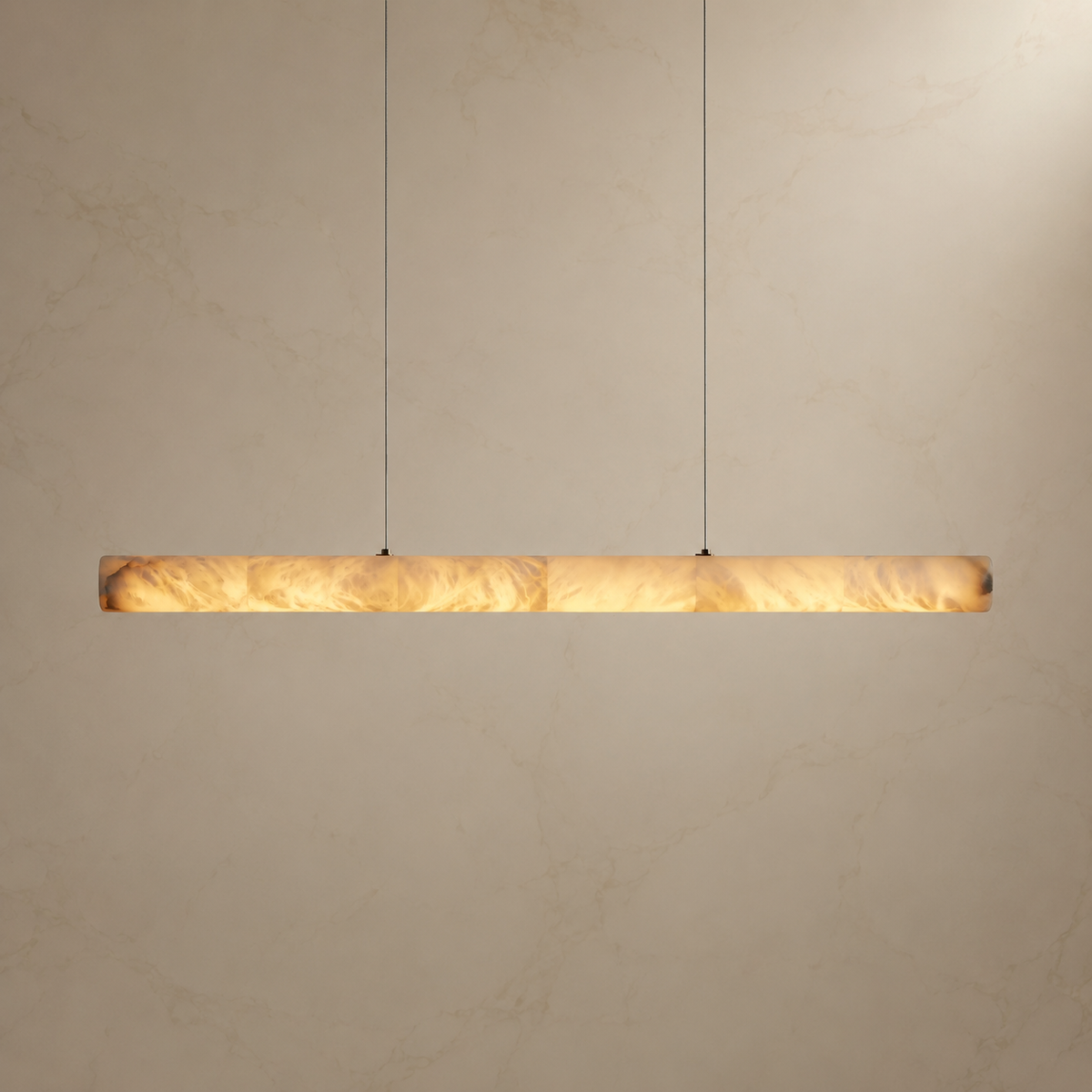
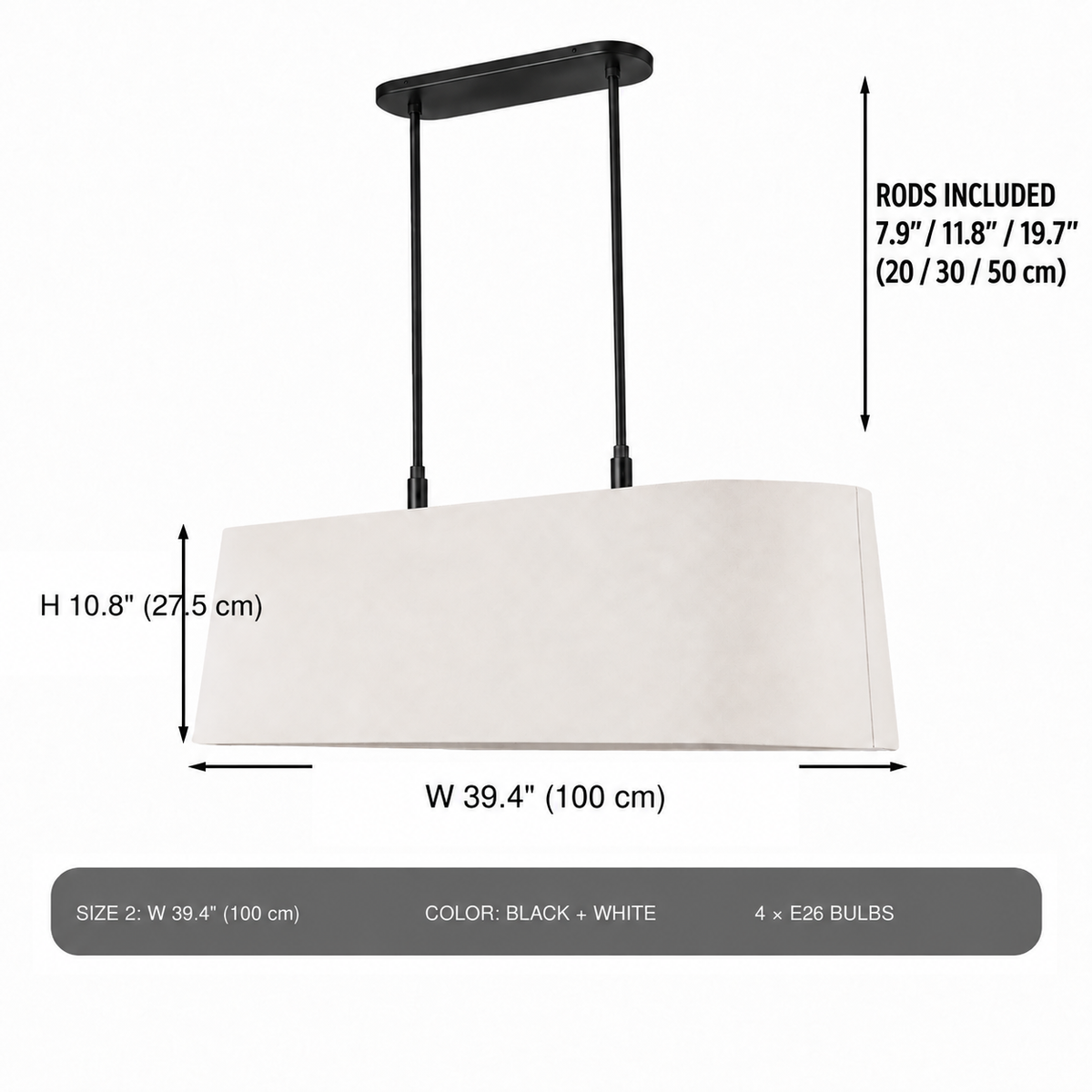
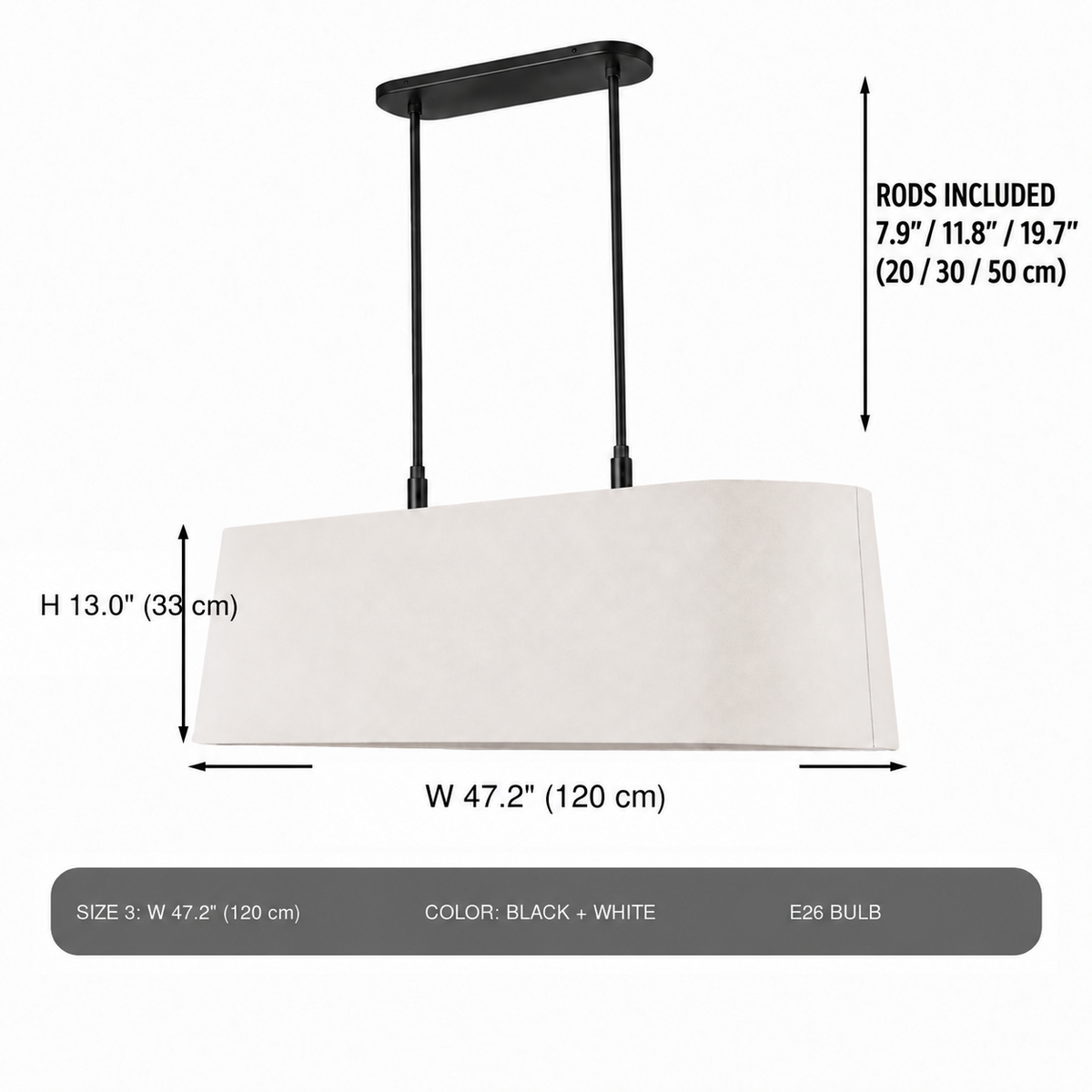
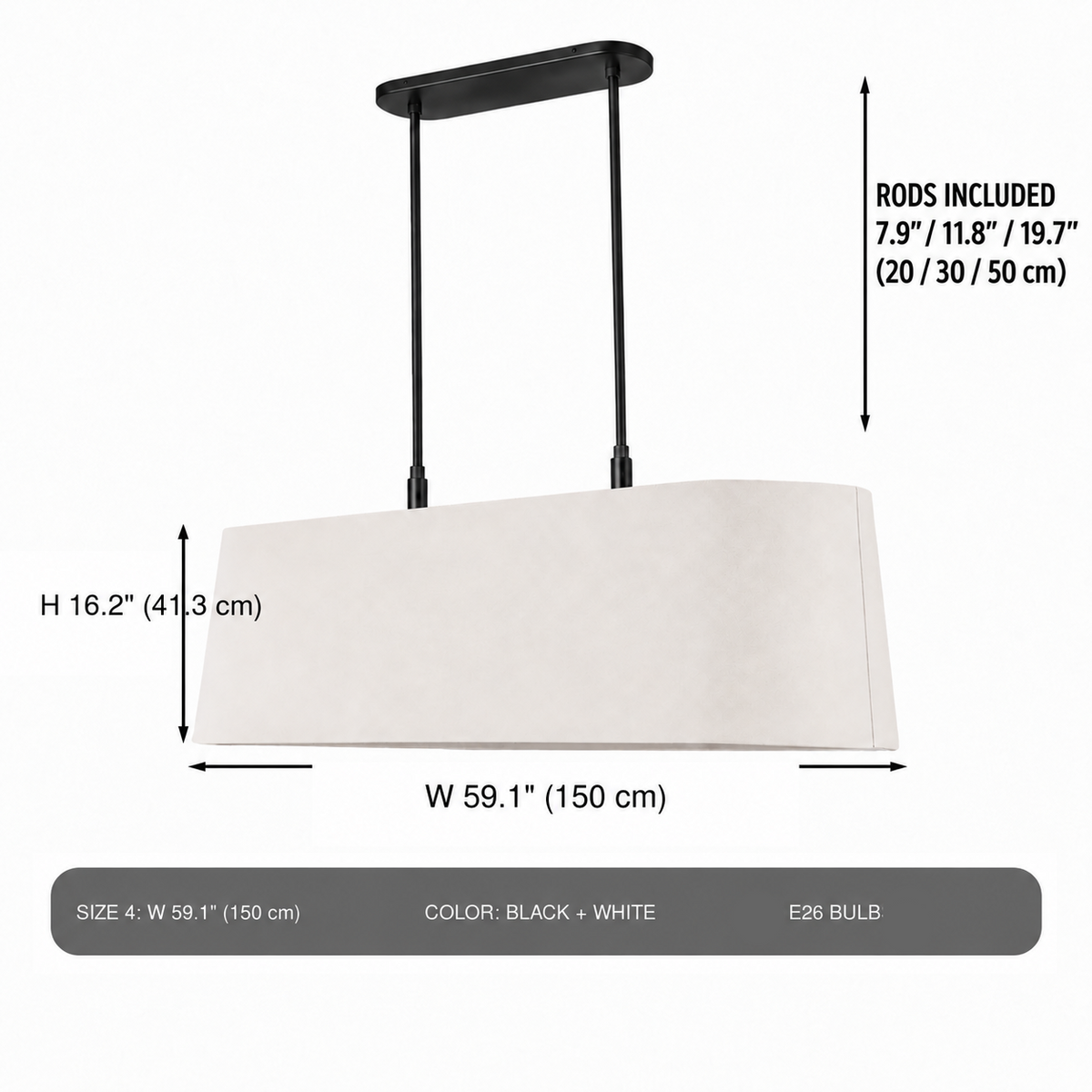
Halima Alabaster Linear Chandelier has a softly rounded stone bar and integrated LEDs. Its listed lengths are 39.4, 47.2, and 59.1 inches, each with a 3.9-inch-wide body. The narrow profile makes it worth considering alongside cabinetry, artwork, or other features you want to keep in view.
Choose the length against your actual table or island. A long fixture in a small photograph can appear deceptively modest, so mark its outline over the surface before deciding.

An open rectangle with more definition
Teva Alabaster Rectangular Chandelier outlines the space above a table with an open stone frame. It offers a different balance of solid material and empty space from a single bar.
The range runs from 39.4 to 78.7 inches long. Even the shortest version is a substantial fixture, so leave room around its outline and check the available suspension against your ceiling. The standard version is listed for indoor use, with 3000K integrated LEDs; it is not dimmable or sloped-ceiling compatible.
Teva is an option for a long dining setting where the rectangular outline is part of the design you want to see. If dimming is central to how you use the room, resolve that requirement before choosing this model.

A round form to gather the room
A circular fixture gives the eye a center. Begin here for a round table, a square seating arrangement, or a living room organized around a central coffee table. The table shape is a starting point; the room’s width and the fixture’s visual weight still matter.
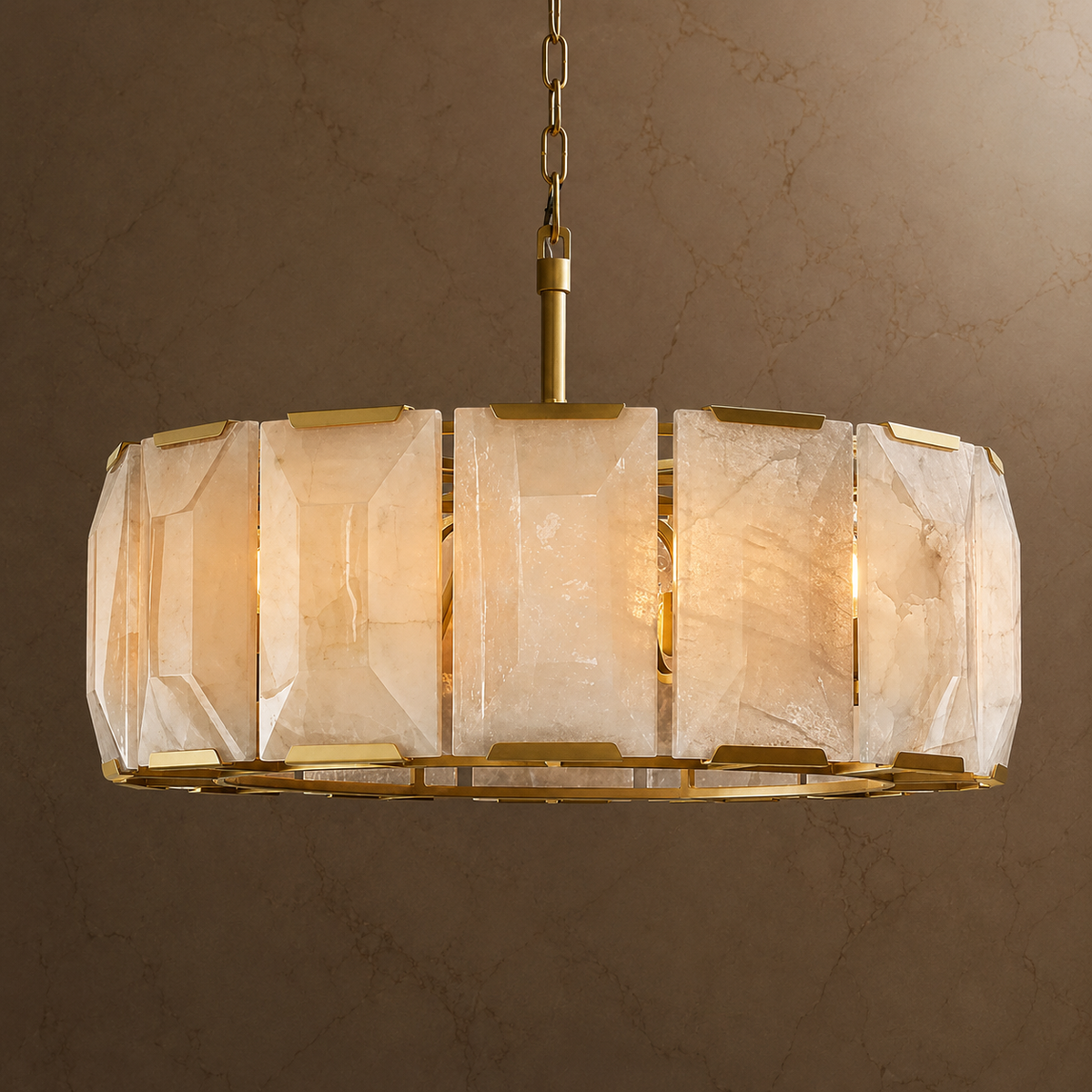
Celestique Alabaster Drum Chandelier arranges stone panels around a gold-finished frame. Its listed body is 31.5 inches wide and 8.7 inches high, with five E12 bulbs required separately. The broad shade has a stronger daytime presence than a slender bar.
Use that width to judge the space around it, especially in a room with lower ceilings. Body height and suspension length are separate measurements; your installer will need the complete hanging drop.

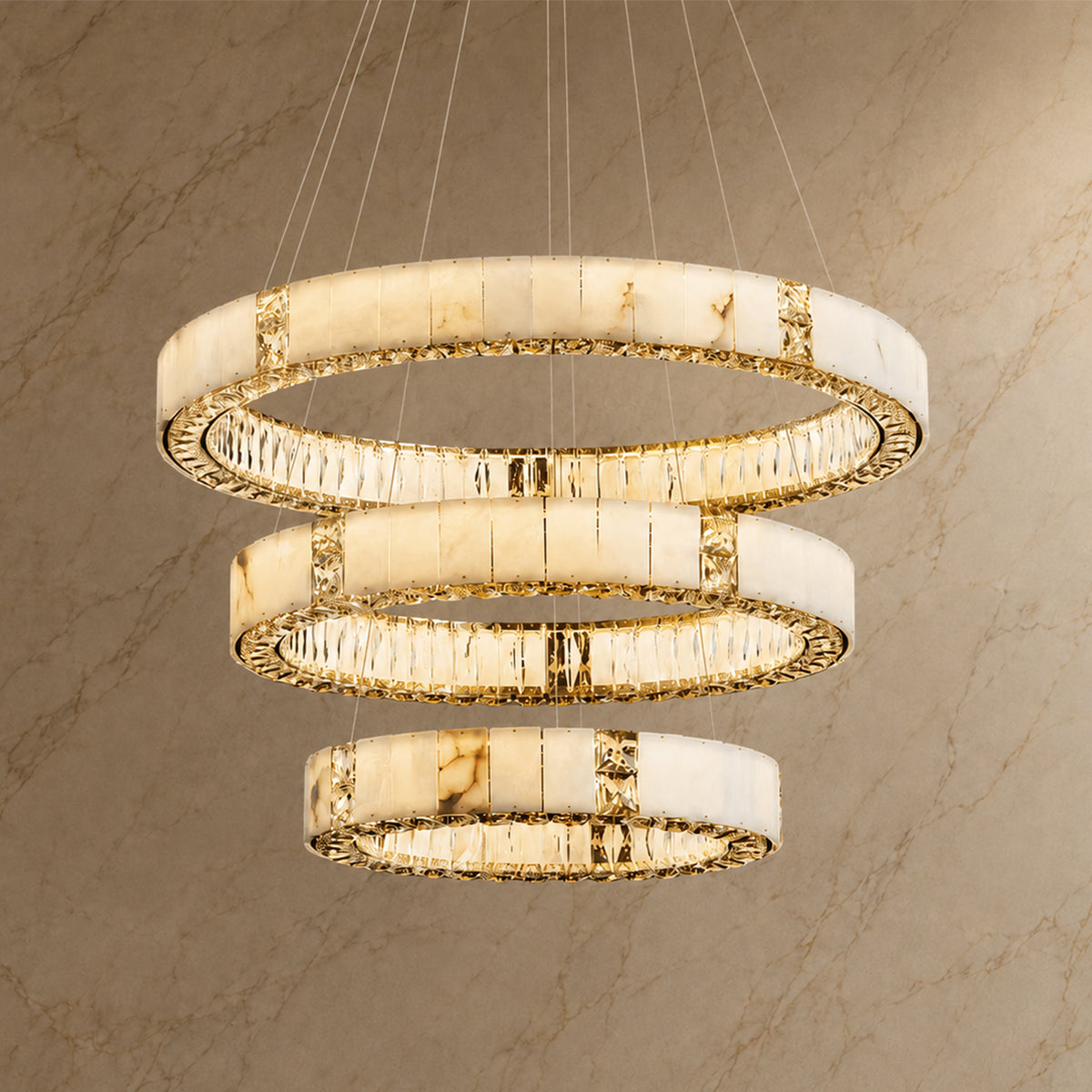
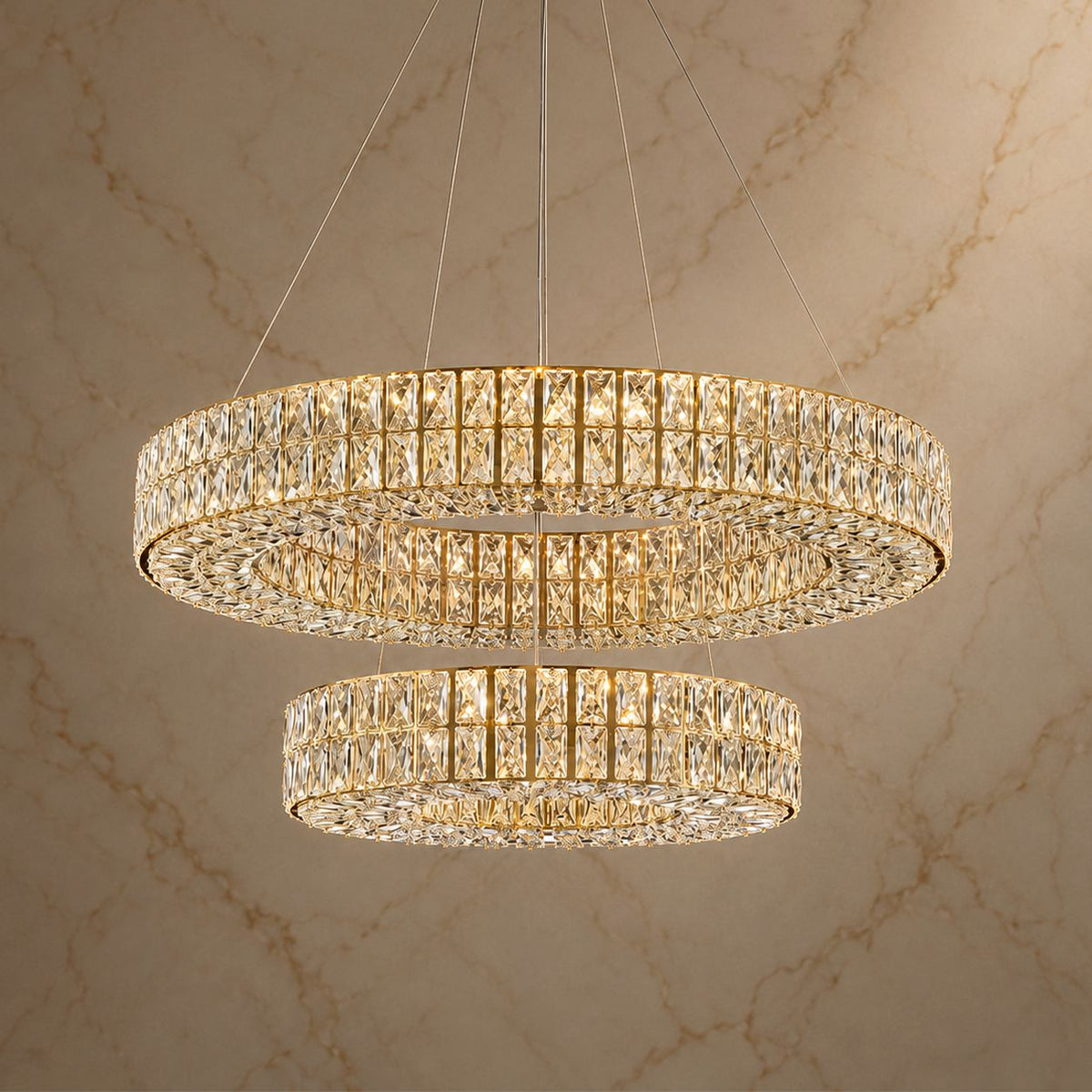
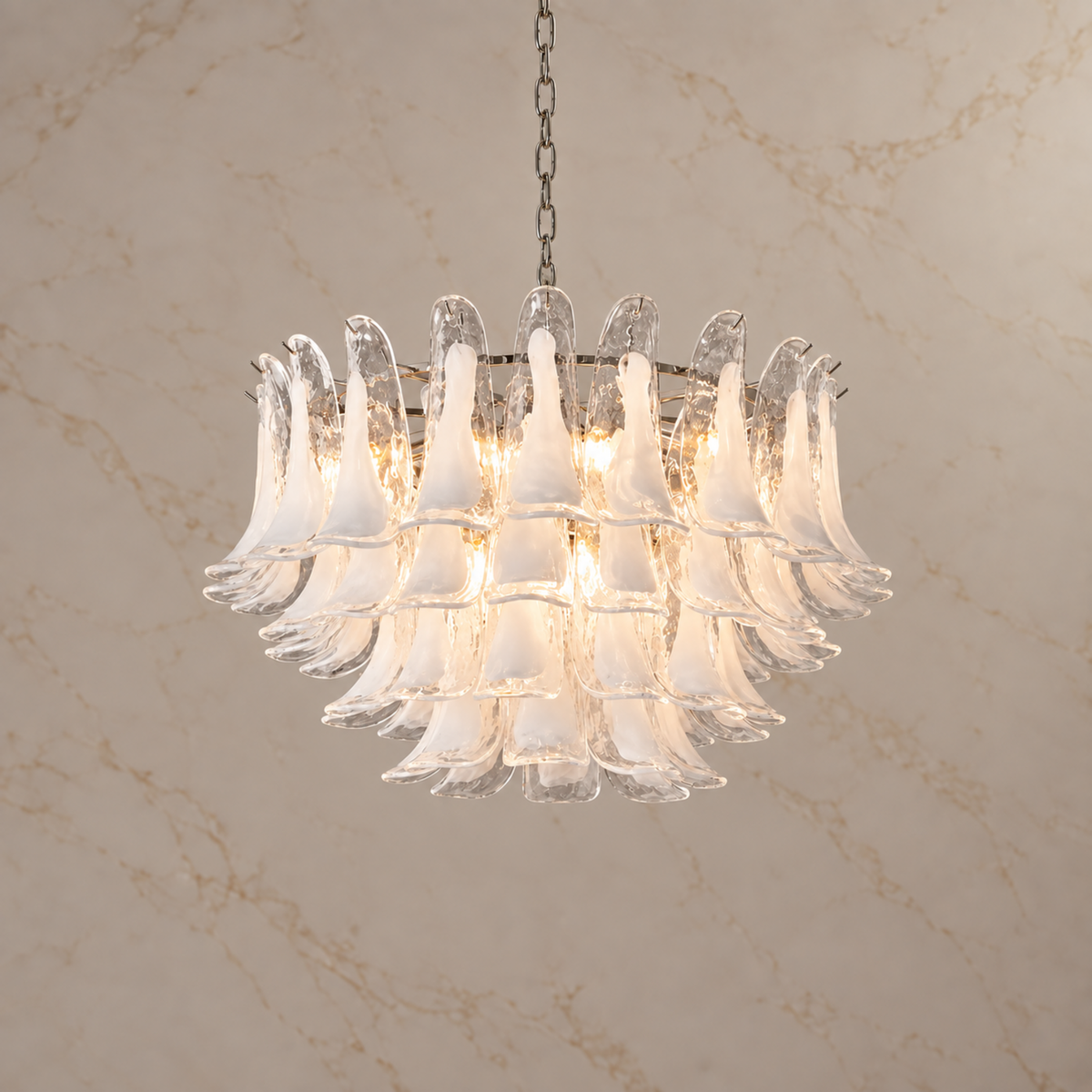
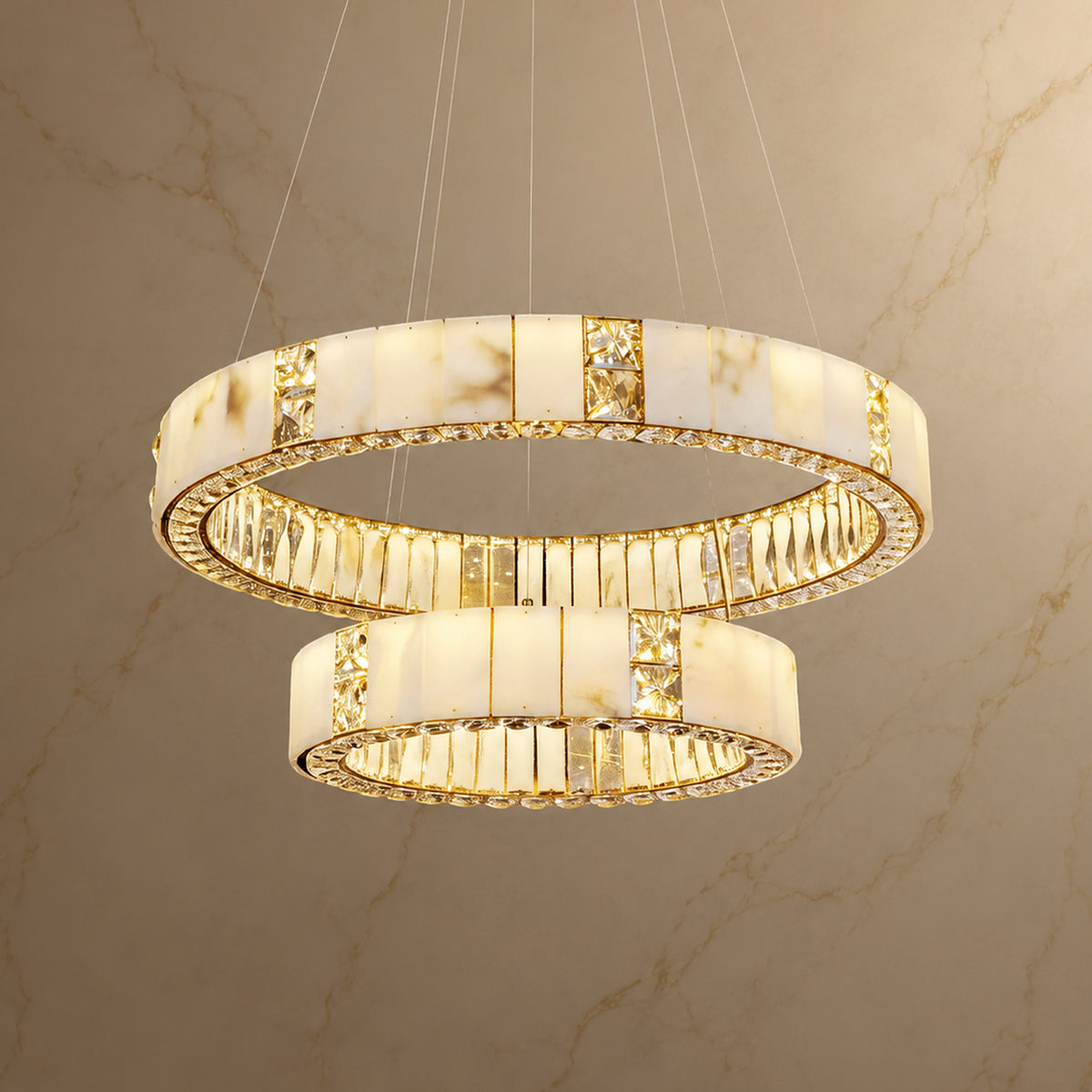
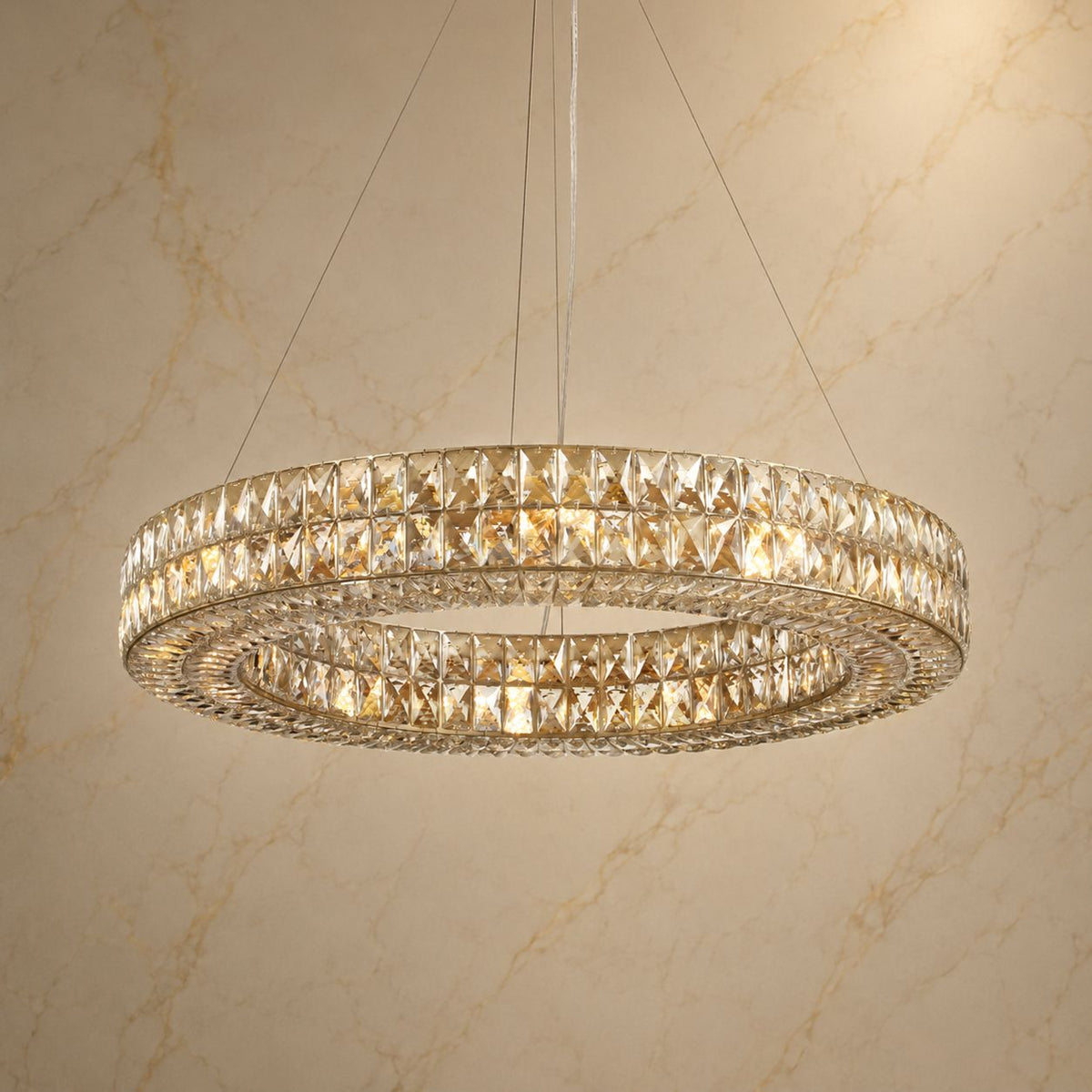
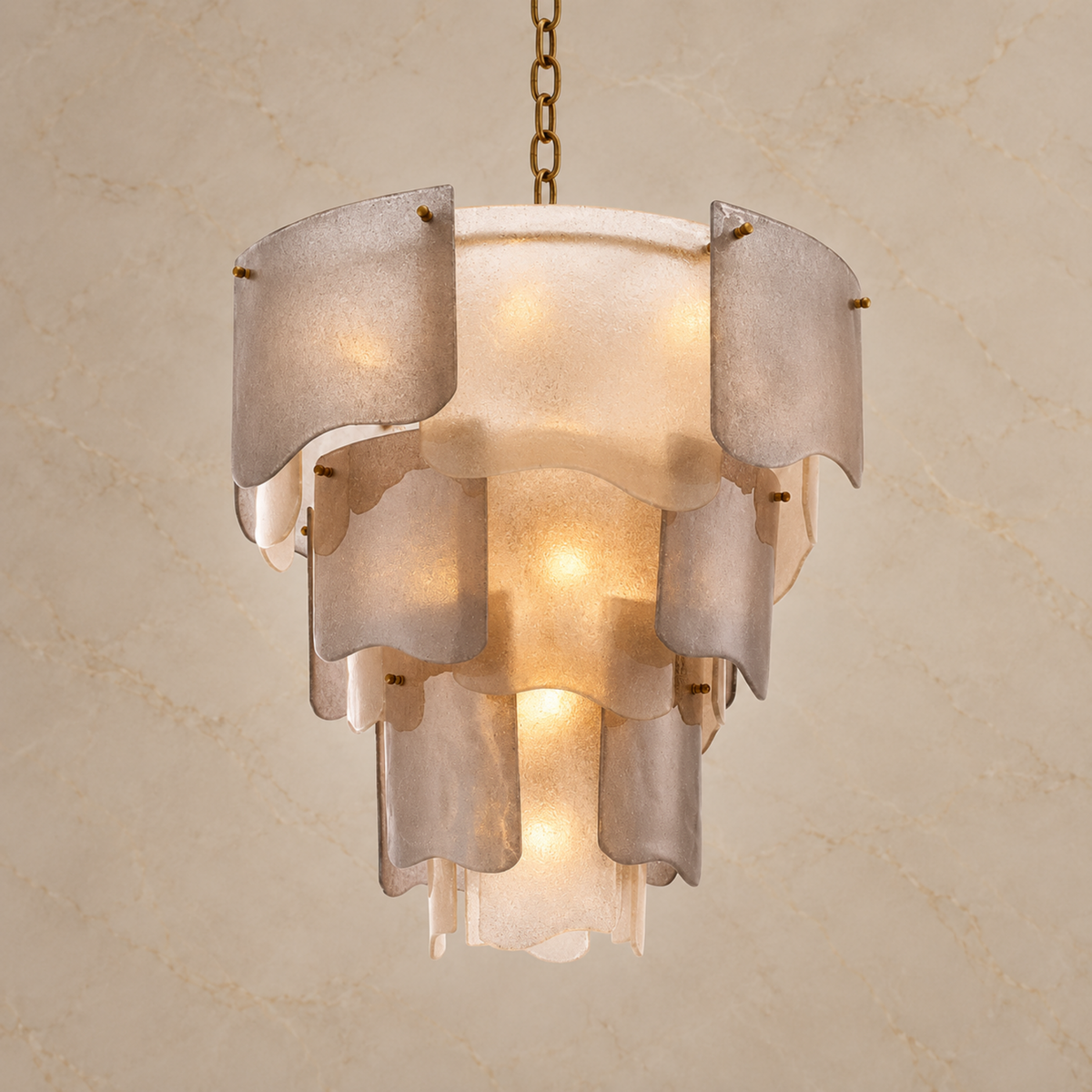
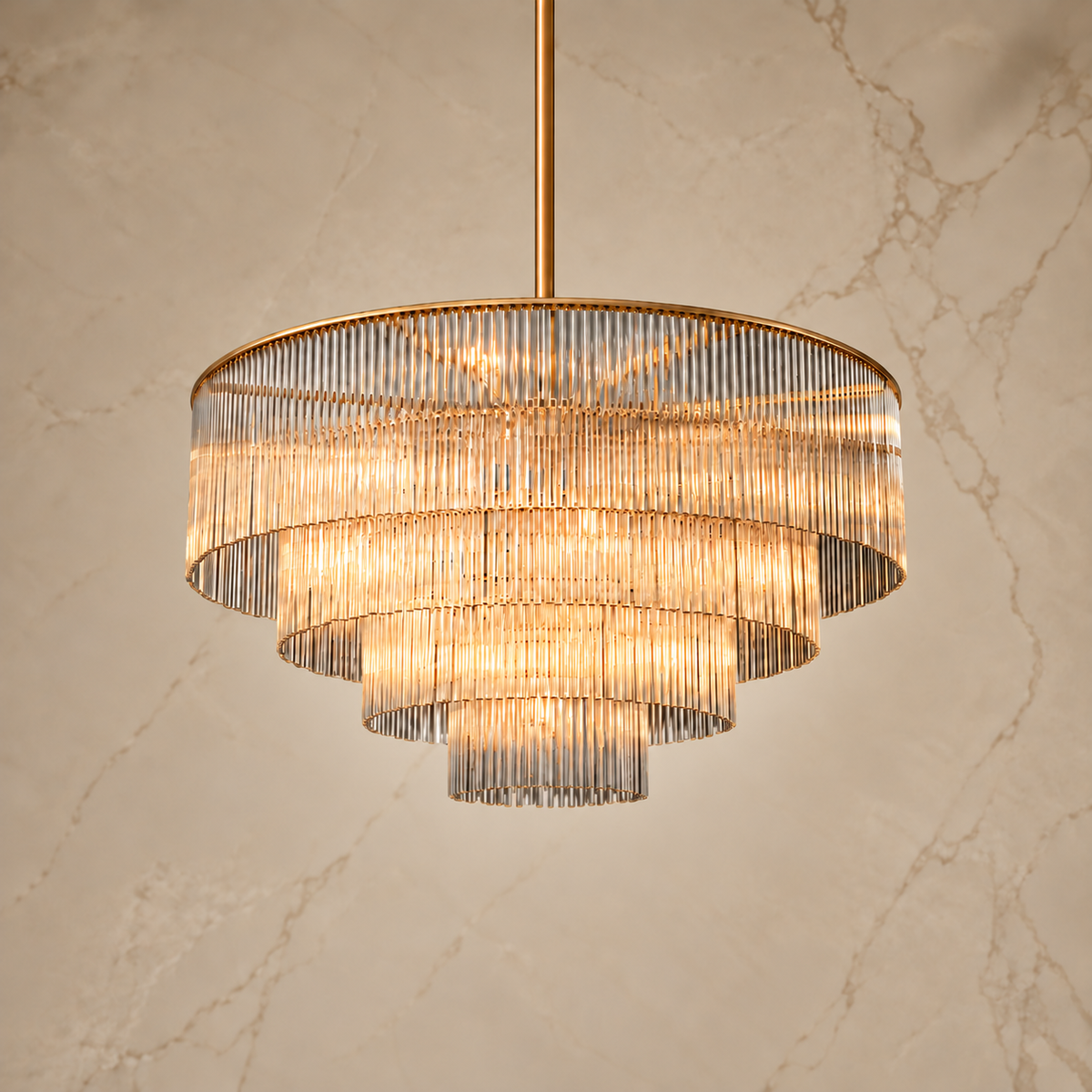
For a layered circular silhouette, Lumaire Alabaster 2-Tier Ring Chandelier combines alabaster with crystal details. Compare it where the dining area needs a more decorative focal point, allowing enough visual space for both rings. Its selectable light colors do not provide dimming; the product listing expressly excludes dimmer-switch use.

For a detailed look at a long dining table, read our guide to linear and round chandeliers. For measurements across different rooms, use the chandelier size guide.
Use pendants and wall lighting where they help
Pendants for a smaller footprint
A pendant lets you bring stone into a more compact area. A single fitting can mark a small table or an entrance; a repeated arrangement can create rhythm along an island, provided its spacing and electrical points are planned for the room.
Althéa Brass Alabaster Box Pendant Light combines a geometric alabaster shade with a warm metal frame. It uses one E12 bulb, supplied separately, and is listed for a flat ceiling. Compare the full hanging dimensions and the shade’s position in your sightline before choosing a single pendant or a group.
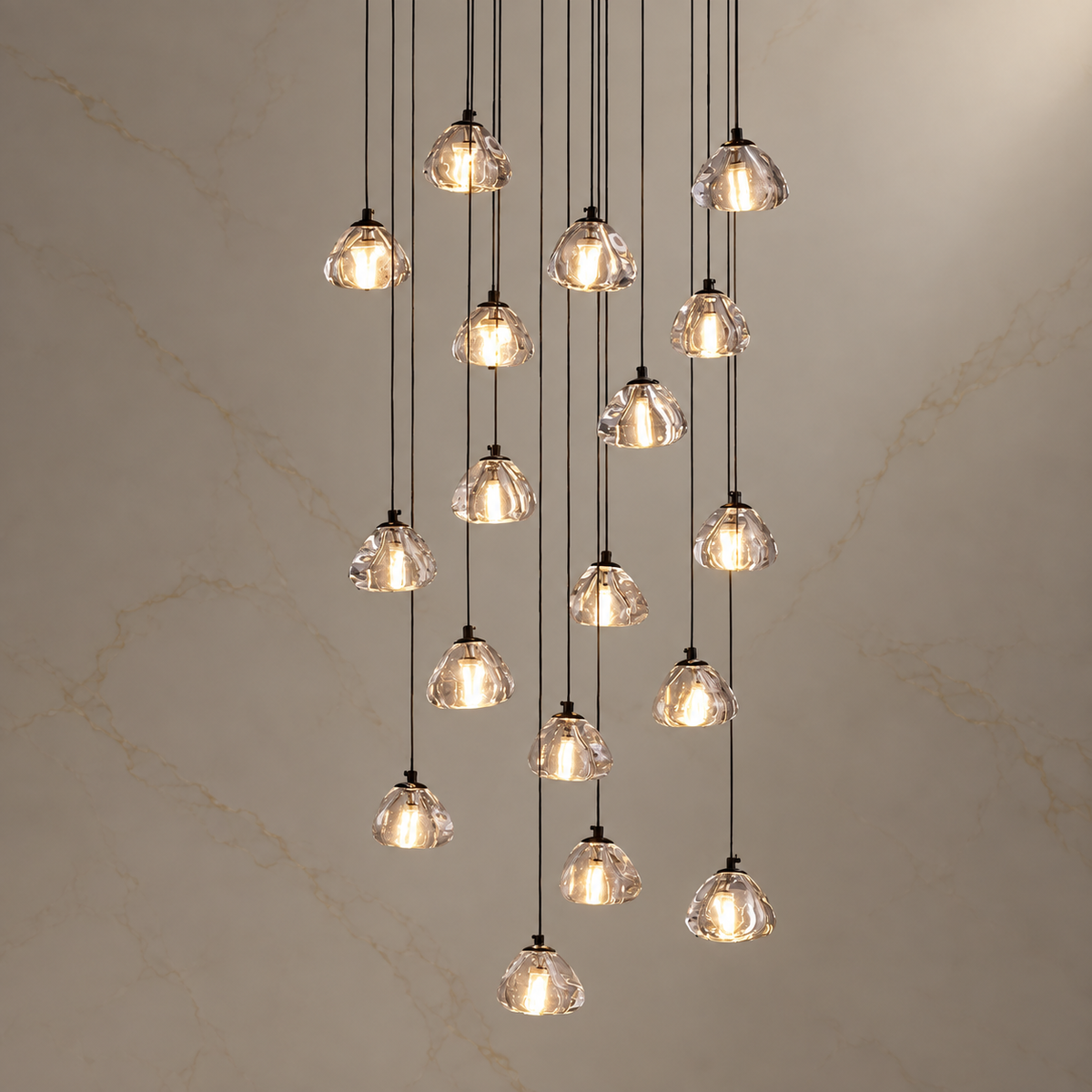
Repeated pendants need their own spacing plan. Three small shades can feel busier than one linear light, particularly when the island sits next to a decorative dining chandelier.

Wall sconces for a bedside or hallway
Wall lighting can carry alabaster into a bedroom or passage without adding another ceiling fixture. Beside a bed, check where the headboard, pillows, and bedside table will sit before locating the electrical connection.
Emilia Alabaster Wall Sconce has a rounded stone diffuser on a rectangular metal backplate. The listed body is 3.9 inches wide and 19.7 inches high, with a standard 3000K integrated LED configuration that is not dimmable. It is a candidate for bedside ambient light or a wall accent.
If you read in bed, assess the light reaching the page separately. A decorative stone sconce may be one part of the bedroom lighting plan alongside an adjustable reading lamp or other task light.

Work with the materials already there
Gather a few references before choosing: a piece of flooring, the cabinet finish, the dining upholstery, and a photograph of the room in daylight. They give the pale stone a context.
With wood and fabric
Oak, walnut, linen, and woven upholstery give you several textures to work with. In a room with expressive wood grain, start by comparing a simple alabaster silhouette. A quiet wall color can leave room for both materials.
With marble and other patterned stone
Look at the amount of pattern in the room. If the kitchen island has bold veining, a narrow fixture or small pendant may give the stone below more visual space. Where the surfaces are restrained, a fuller alabaster shade can become the material feature.
Alabaster and marble are different materials. Repeating a pale stone palette does not require identical veining, and a natural alabaster fixture will not reproduce a countertop’s pattern exactly.
With metal finishes
Compare the visible metalwork with a nearby reference, such as a cabinet pull or door handle. Gold-finished lighting can relate to warm brass details, but finish names do not guarantee an exact match. Look at tone and sheen together.
When several lights are visible at once, choose which one should draw attention first. A broad dining drum, a slim island bar, and a narrow wall sconce can share alabaster while serving different parts of the home. Our open-plan lighting guide explores that relationship in more detail.
Choose the light and controls together
The stone’s appearance cannot tell you how a fixture is controlled. Check the light source, light color, and dimming information on the exact model.
- Replaceable bulbs: Celestique requires five E12 bulbs, and Althéa requires one. Select bulbs within the fixture’s published limits. For dimming, have the fixture, bulb, and control combination checked.
- Integrated LEDs: Halima, Teva, Lumaire, and Emilia use integrated lighting. Confirm the selected model’s controls and ask about service parts if future replacement is important to you.
- Color selection: Lumaire offers 3000K, 4500K, and 6000K through its wall-switch operation. This changes the light color; it is not a brightness control.
- Evening use: If you want a low setting for dinner or bedtime, make dimming compatibility part of the shortlist from the beginning. The standard Teva and Emilia configurations and the linked Lumaire do not support it.
Compare alabaster in both lit and unlit images. Natural differences in tone, veining, and translucency are part of the material; camera exposure and room lighting also affect what you see online. Our guide to alabaster variation explains what to look for.
A shortlist for your home
These are starting points for a room plan. Select the size and installation details on each product page before ordering.
| Design | Consider it for | Check first |
|---|---|---|
| Halima | A narrow line over a long table or island | Selected length, installed drop, and LED controls |
| Teva | An open rectangular outline | Flat ceiling; standard version is not dimmable |
| Celestique | A broad, centered stone shade | 31.5-inch body width and five E12 bulbs |
| Lumaire | A layered circular focal point | Ring sizes; dimmer switches are not compatible |
| Althéa | A compact pendant or planned repeated arrangement | Flat ceiling, full drop, and one E12 bulb per fitting |
| Emilia | A bedside or hallway accent | Wall position; standard configuration is not dimmable |
Bring the shortlist back to the room: the selected product and finish, furniture measurements, ceiling height, required hanging drop, and the controls you will use. For visual help comparing options, CARRA’s Design Preview service can place your choices in a room photograph. Confirm installation fit separately with your installer.
Frequently asked questions
Does alabaster lighting suit a modern home?
Yes. A simple bar, rectangle, or wall-mounted form can sit comfortably with modern furniture. Choose the fixture’s shape and metalwork around the existing architecture, then use the stone’s individual markings as part of the material palette.
Should every alabaster light in the house match?
They can share a material or related metal tone without repeating the same shape. Choose each fixture for its location and compare adjoining rooms from the view in which you see them together.
Can an alabaster light provide all the light a room needs?
That depends on the fixture’s output, the room, and the activities taking place. Judge task lighting and ambient lighting separately. A chandelier over a table or a decorative bedside sconce may need support from other light sources.
Are all alabaster lights dimmable?
No. Dimming depends on the model and its electrical components. The standard Teva and Emilia configurations and the linked Lumaire are examples that do not support dimming. Check the exact fixture and control combination before ordering.
Will two alabaster shades have the same veining?
Natural stone varies. Expect related material character rather than an identical pattern across every piece. If tone or veining is especially important to your room, discuss your preferences with CARRA before ordering.
Explore the alabaster lighting collection to compare chandeliers, pendants, and wall sconces for your room.
Product information checked October 27, 2026, against the linked CARRA listings. Room and material pairings are editorial suggestions. Product imagery is from those listings; interior settings are styling references. Natural stone varies. This guide does not include independent light-output testing or installation approval.