










How to Coordinate Lighting in an Open-Plan Kitchen and Dining Room
Kitchen & Dining Lighting
The island light and dining chandelier are often visible at the same time. Choosing them together helps balance their size, finish, and shape. A slim fixture over the counter can sit beside a fuller shade over the table, with a common material linking the two.
How do you coordinate kitchen and dining lighting?
Repeat a material, metal finish, or shade color, while allowing each fixture to suit the surface below it. Decide which light should attract more attention, then check the sizes, light color, and controls for both. They do not need to come from the same collection.
Choose the main focal point
Look at the kitchen and dining area from the living room or doorway. This is the view in which the two lights need to work together.
To draw attention to the dining table, pair a fuller chandelier with a slender island bar or small pendants. If the island is the main feature, give its light more presence and choose a simpler dining shade that still fits the table.
Two large, decorative fixtures need enough space between them. In a compact room, their shapes can overlap from the entrance or a seat at the table. Compare that view before choosing both.
Connect the materials and finishes
Material
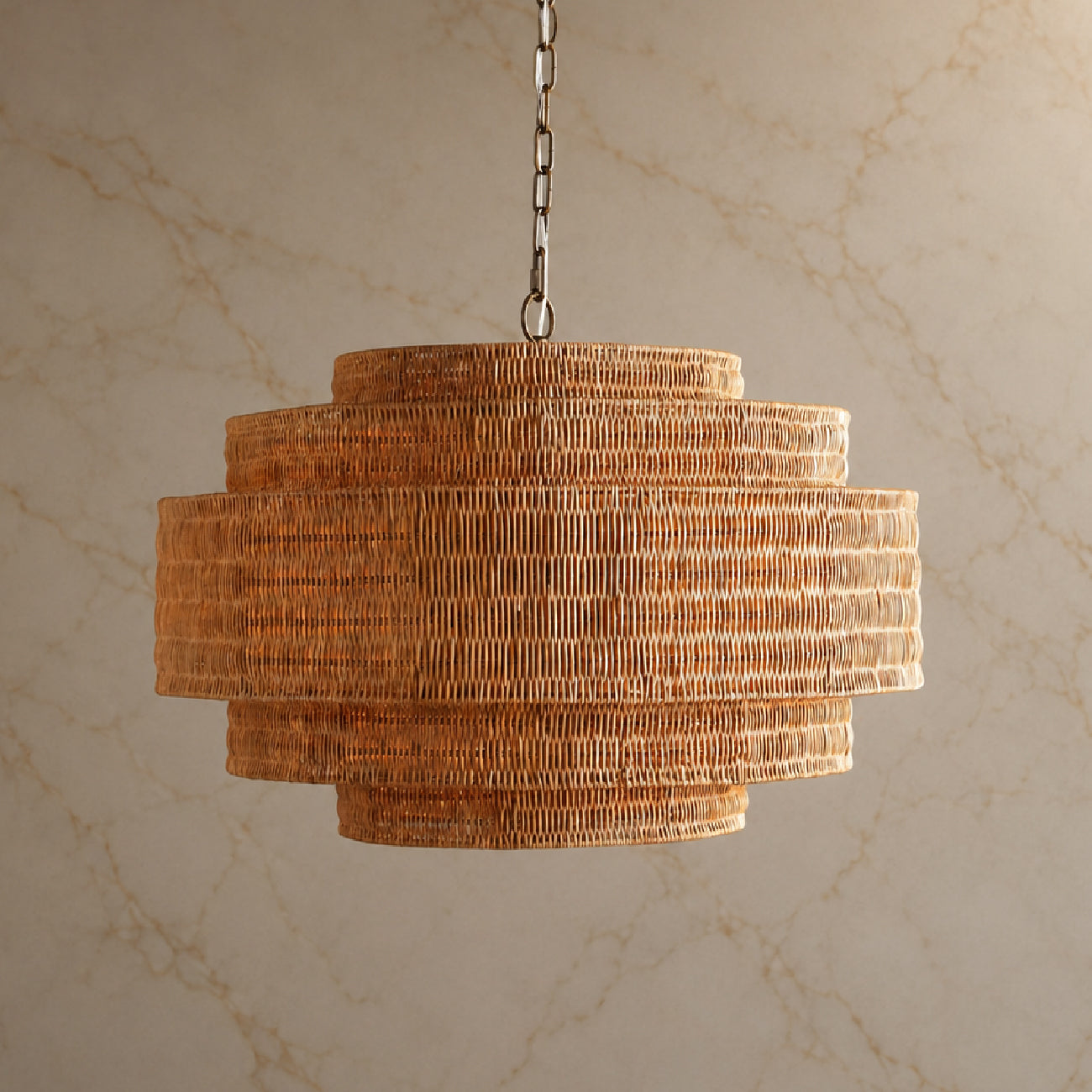
Alabaster can link a linear island light with a round dining shade. Fabric and clear glass offer a different pairing: the shades soften the island's outline, while the glass adds detail over the table. Pale upholstery and simple cabinetry can help the two sit comfortably in the same room.
Finish
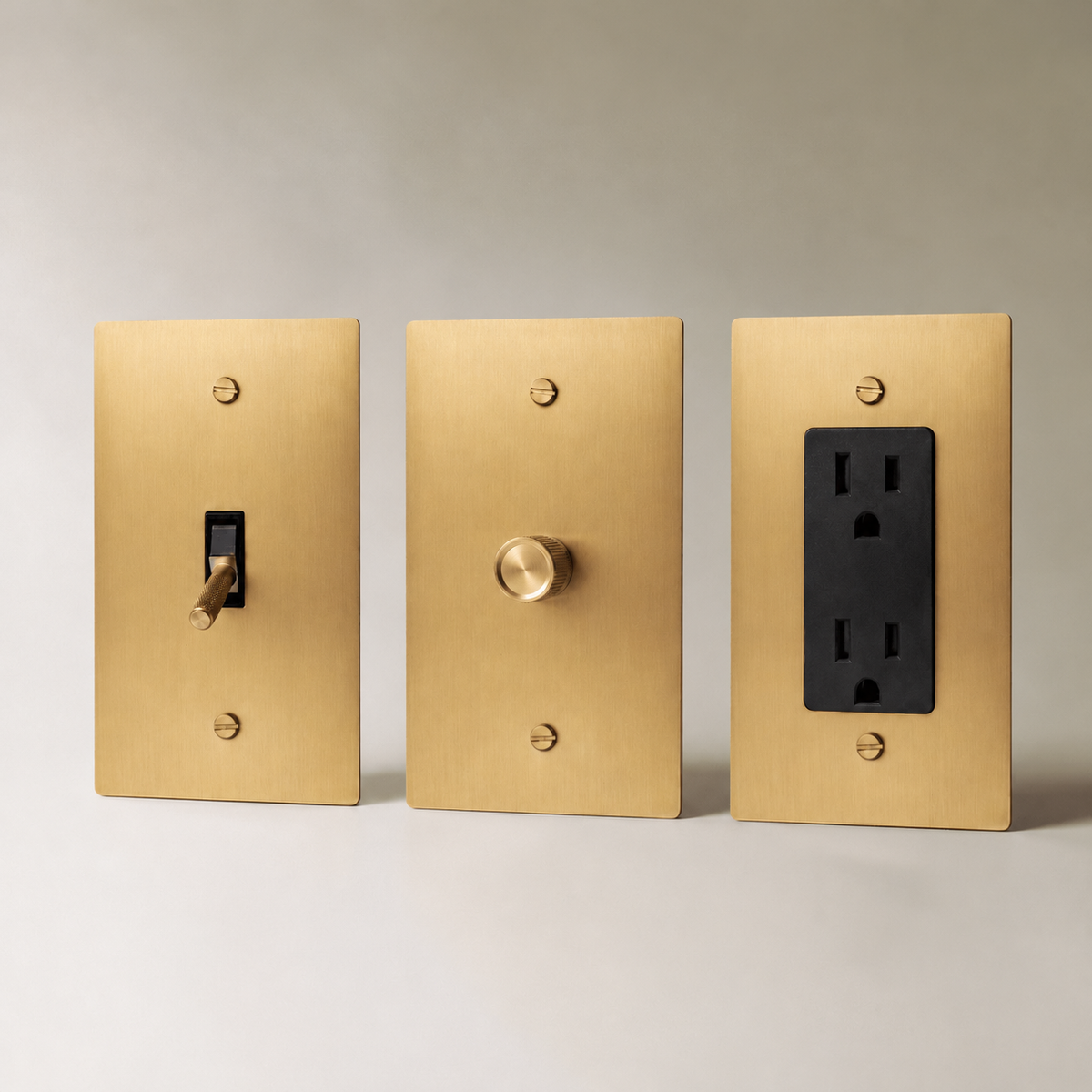
Use the faucet, cabinet hardware, window frames, or chair legs as a reference. Gold-finished lighting can relate to warm metal details; a black frame can pick up dark window mullions. Every metal does not have to match.
Check the actual finish images. “Gold” can describe different tones and levels of sheen, so the name alone will not tell you whether two products match.
Shape
A linear fixture follows the island's long axis, while a circular chandelier centers a round dining table. Different shapes can suit the two surfaces without making the room feel disconnected. Our guide to linear island lights and separate pendants explains the island options in more detail.
Three Carra kitchen and dining pairings
These pairings show how related materials and different shapes can work in one room. The table summarizes the choice; the examples below include the selected sizes and practical details.
| Pairing | Shared detail | Shapes |
|---|---|---|
| Halima + Celestique | Natural alabaster | A slender island line and a broader dining drum |
| Althéa + Lumaire | Ivory stone and warm metal | Small repeated pendants and a two-tier dining focal point |
| Berkshire + Florielle | Pale shades and a restrained room palette | An open linear frame and sculptural glass |
The room scenes below are AI-generated styling illustrations based on Carra products. Use the linked product specifications to confirm dimensions and installation fit.
Halima + Celestique: alabaster in two shapes
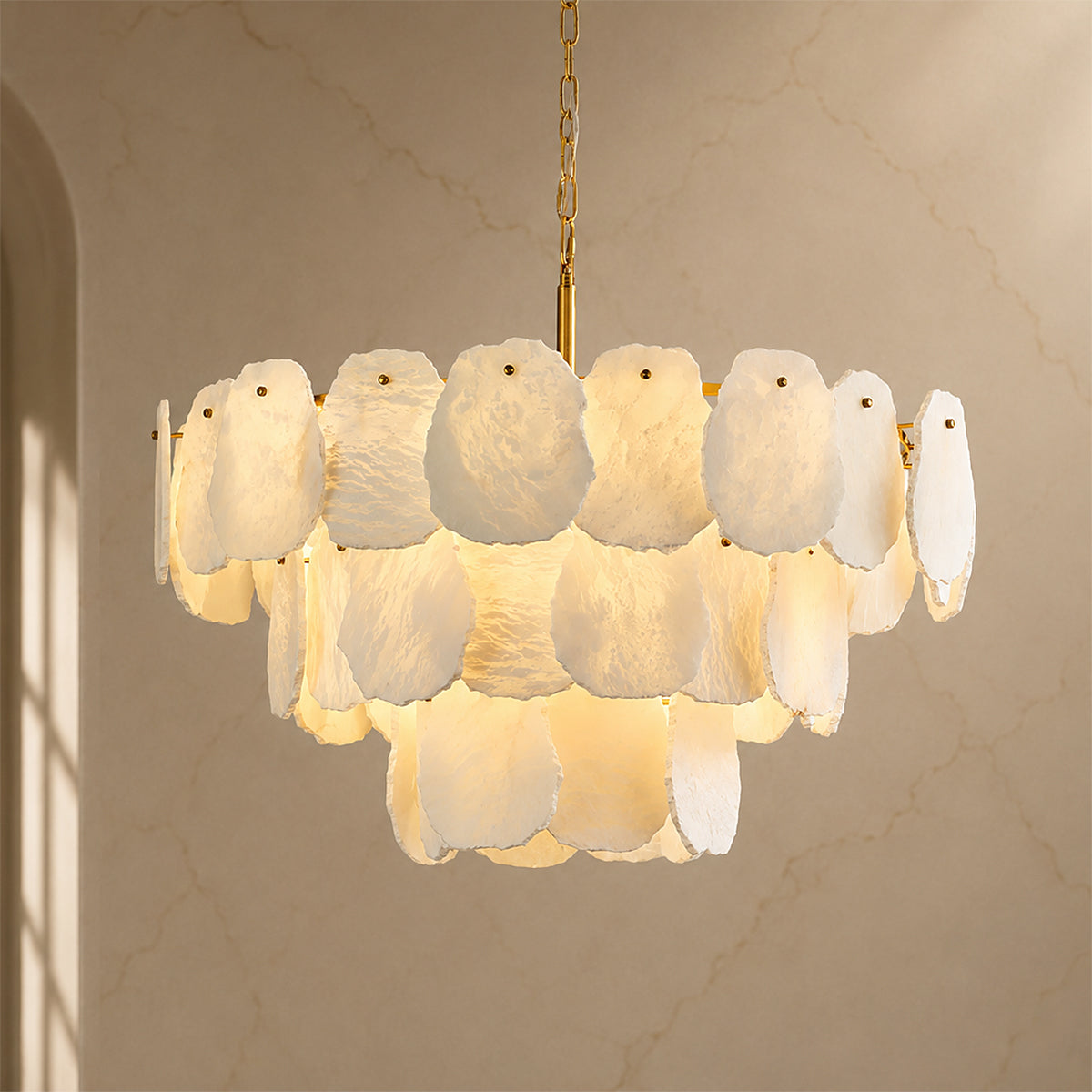
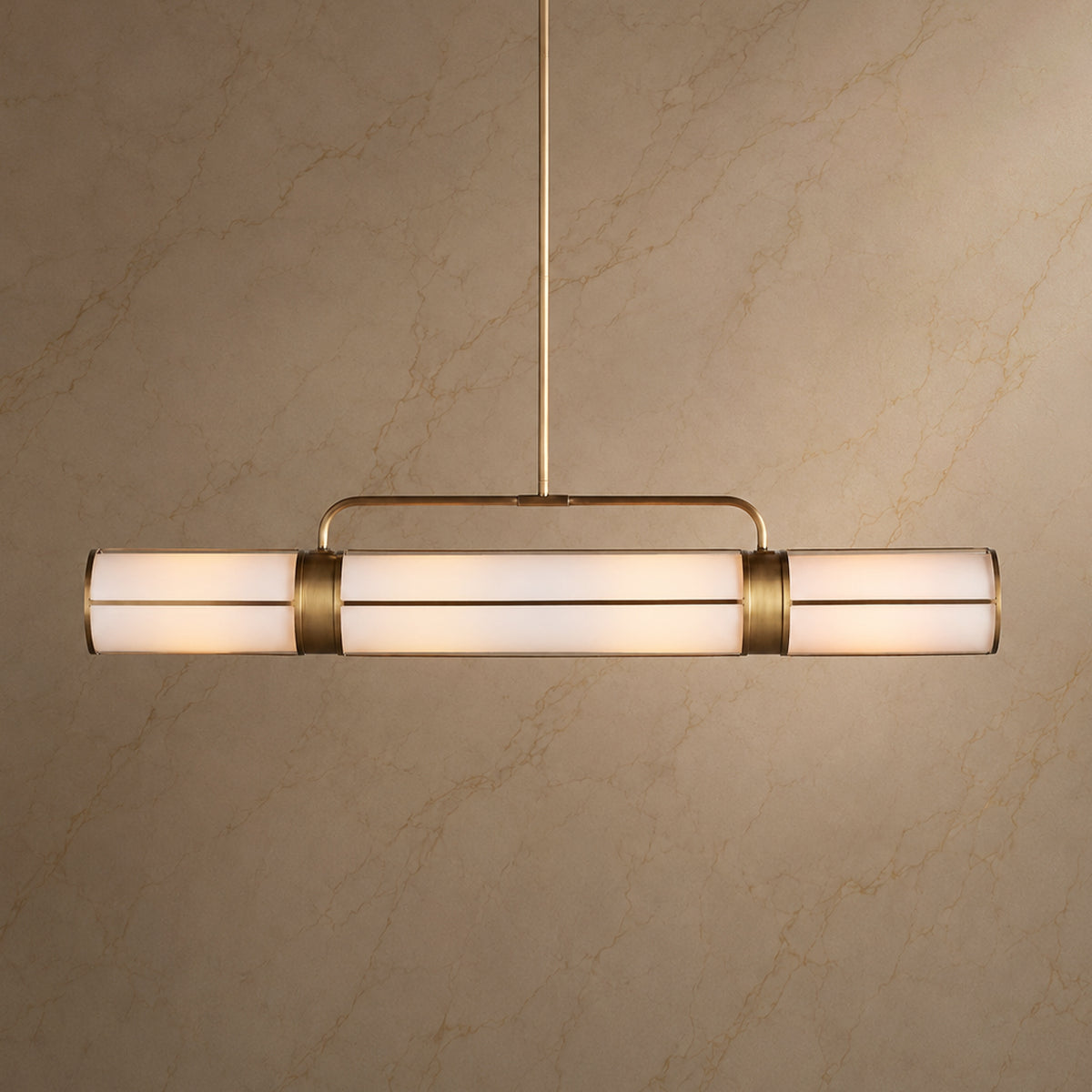
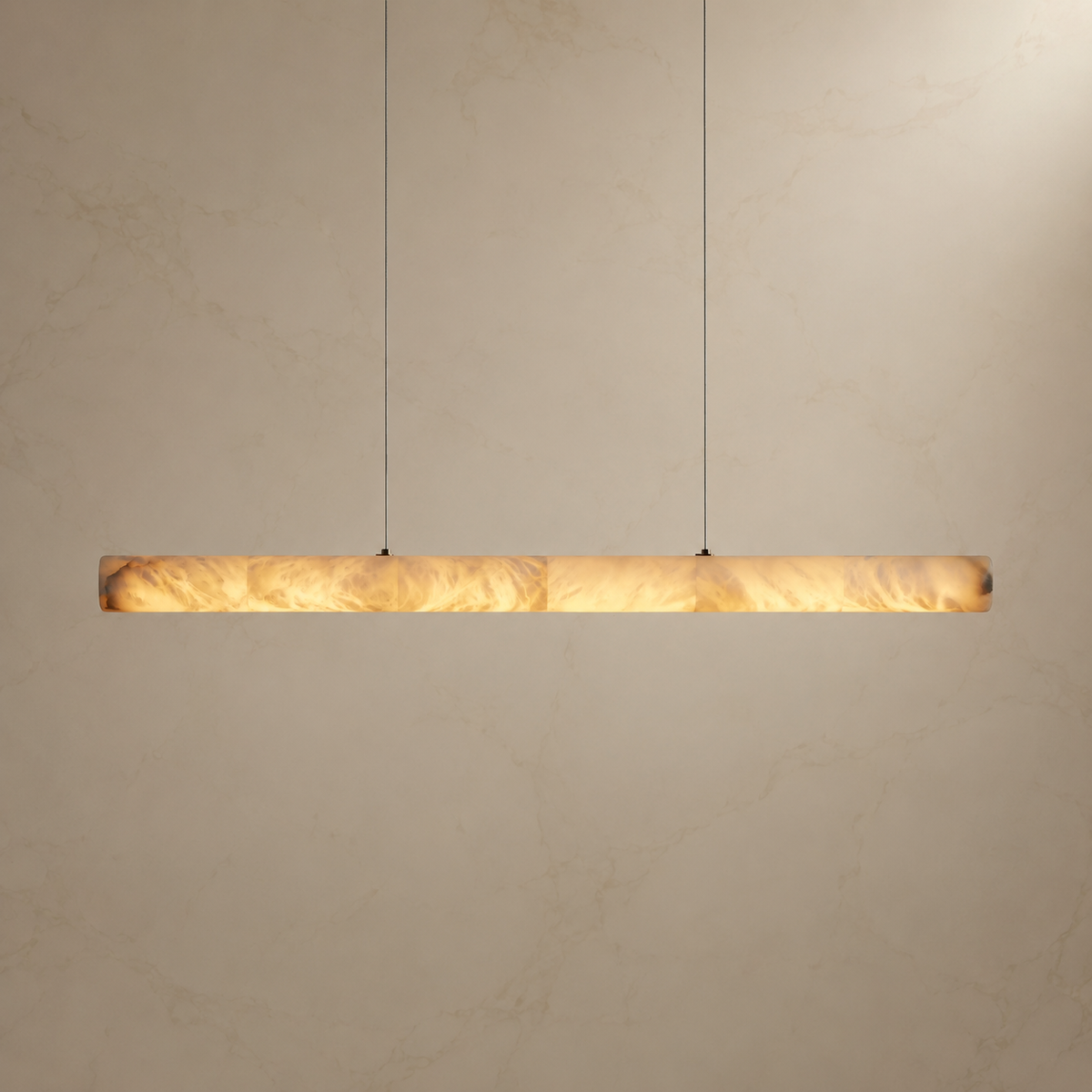
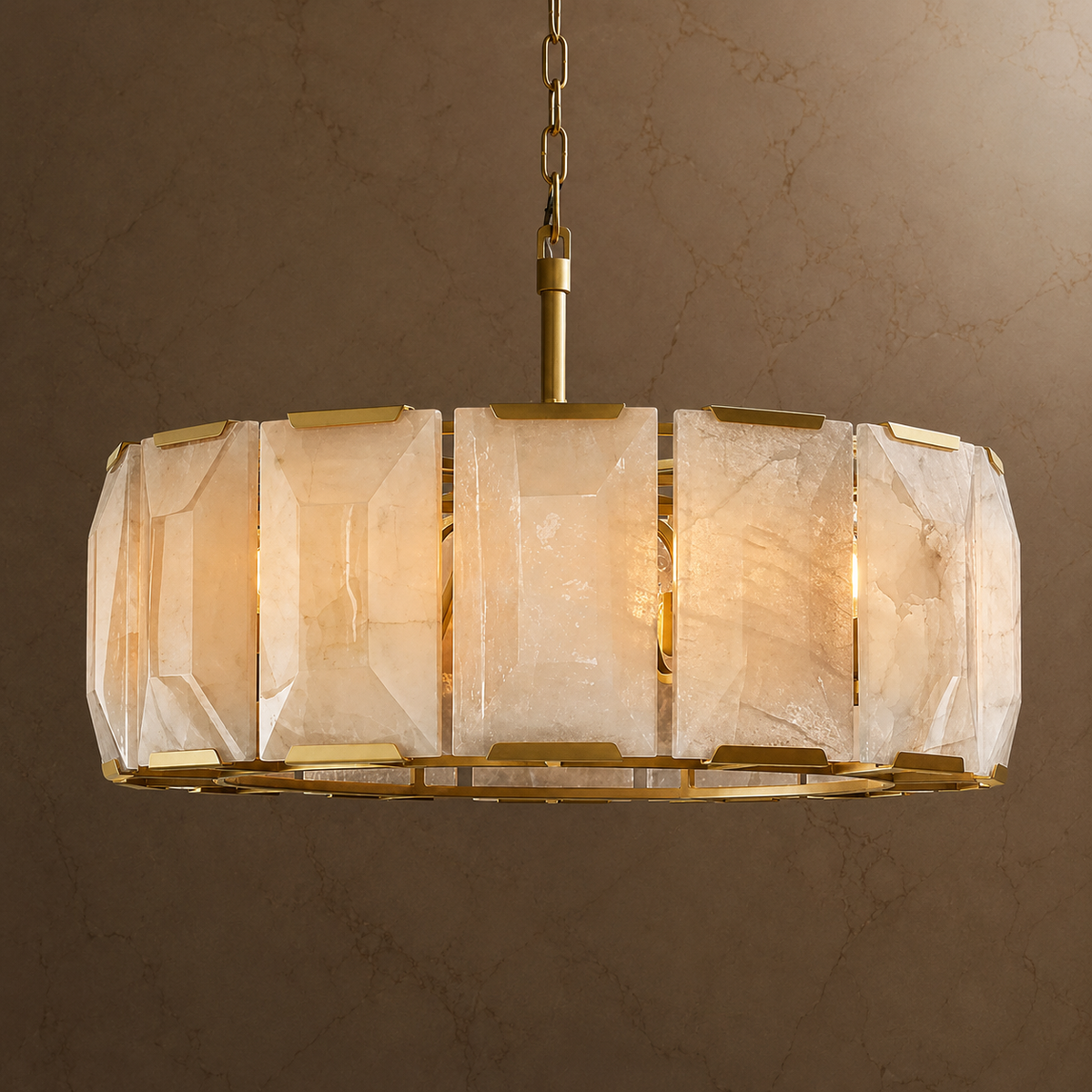
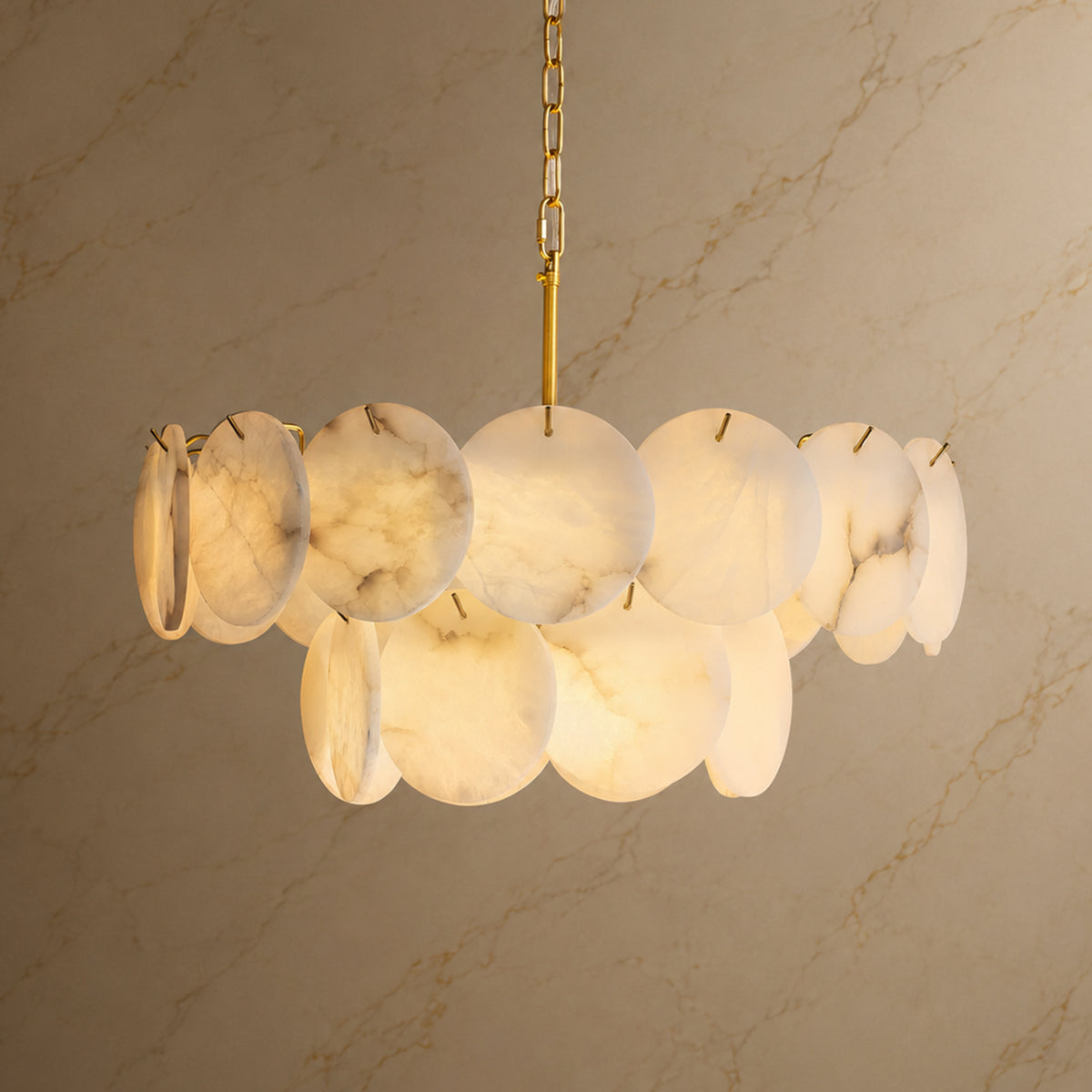
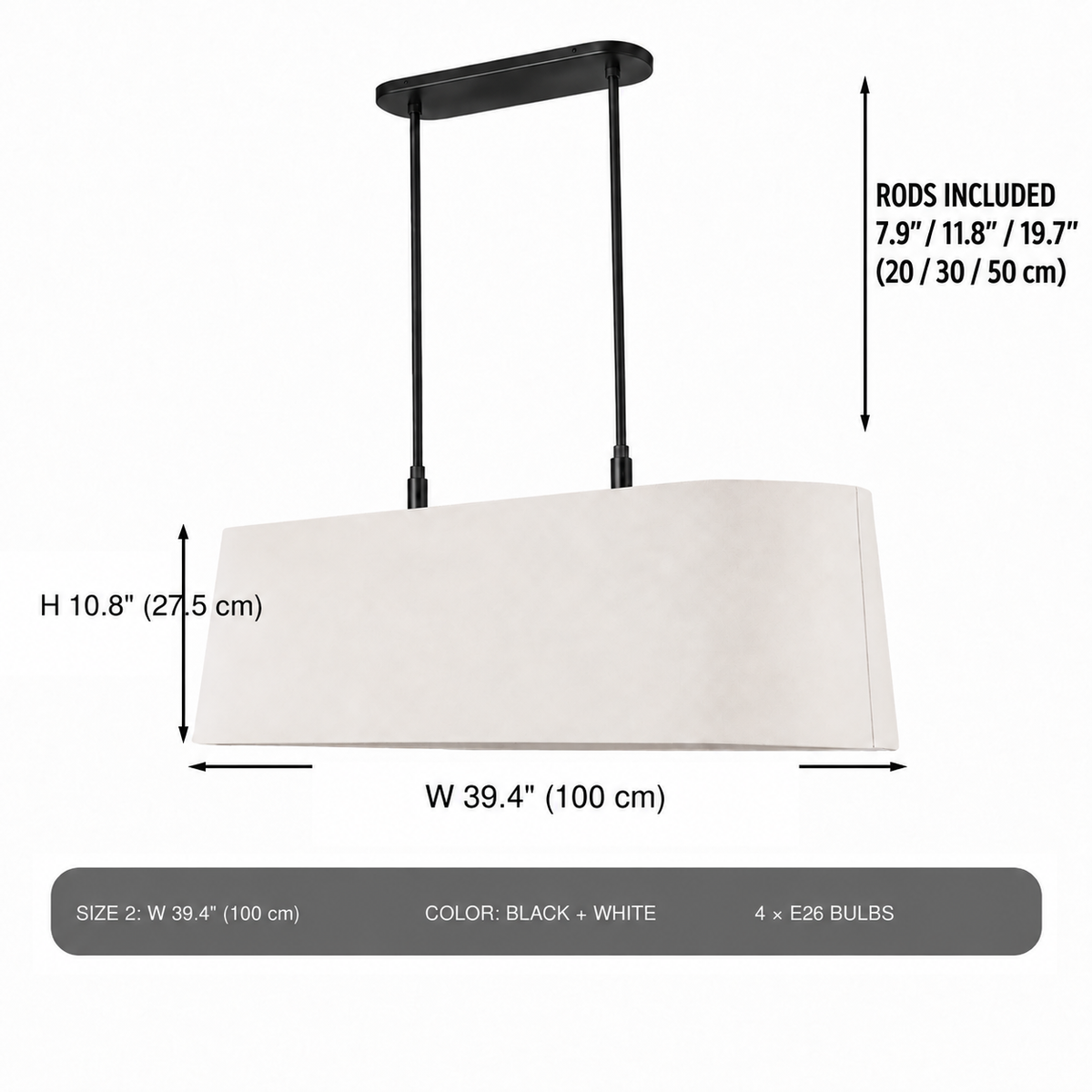
Halima Alabaster Linear Chandelier has a softly rounded stone bar. Celestique Alabaster Drum Chandelier arranges individual stone panels around a gold-finished frame.
Halima keeps the island light narrow, while Celestique gives the dining table a broader centerpiece. Alabaster connects the pair without repeating the same shape.

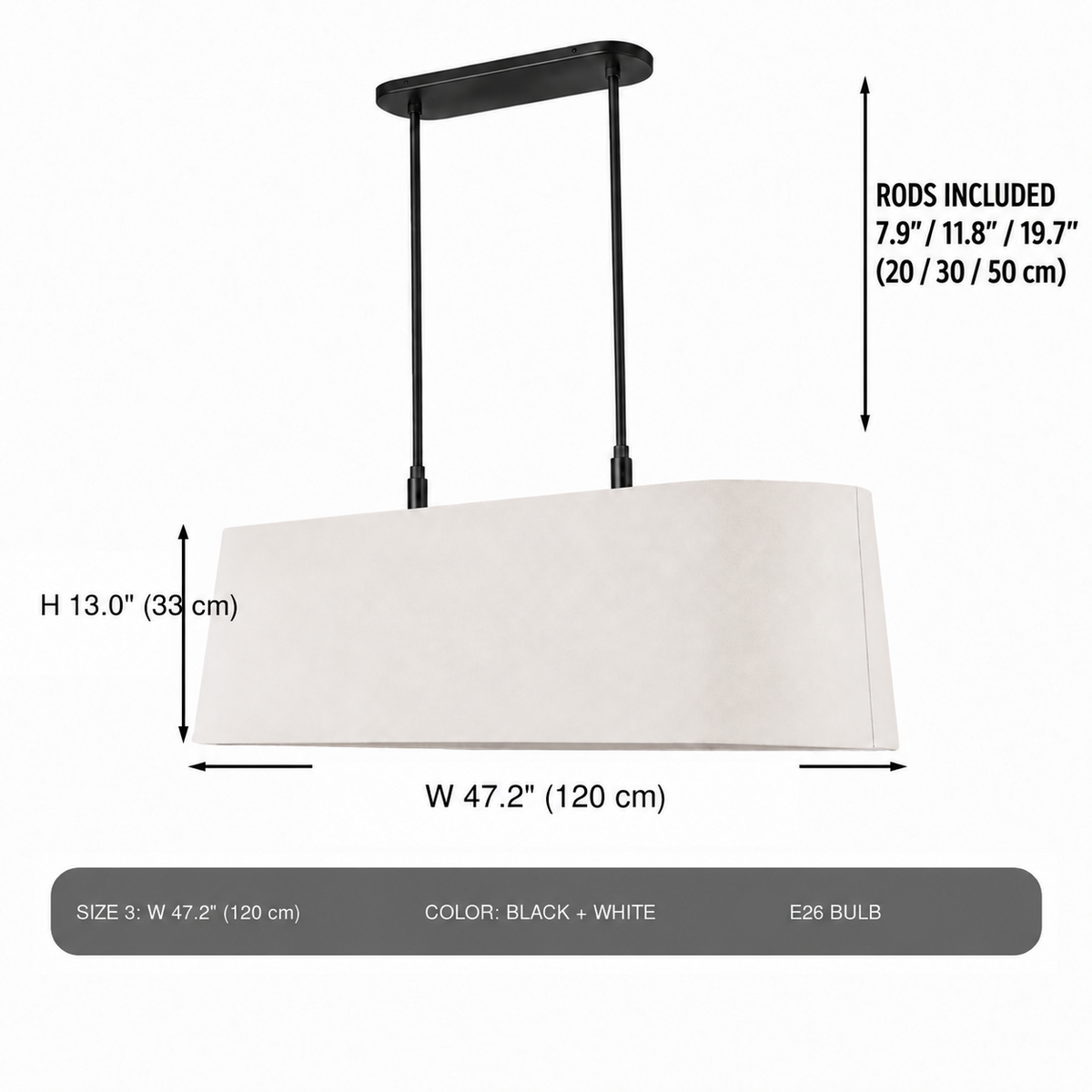
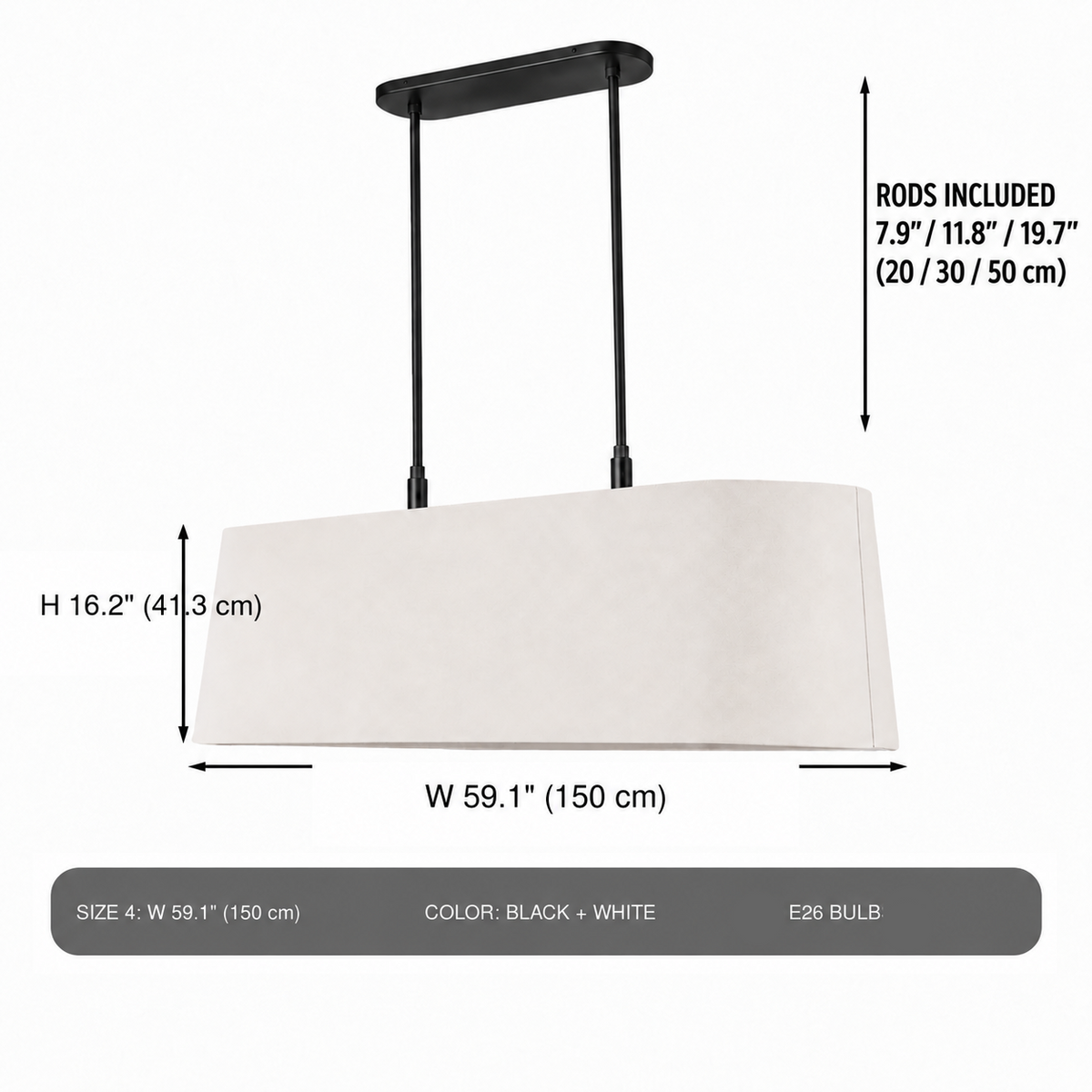
Halima comes in 39.4-, 47.2-, and 59.1-inch lengths. Celestique is 31.5 inches wide and 8.7 inches high. These scenes use the 39.4-inch Halima and Celestique over a round table.
This combination works well with wood cabinetry and linen seating. If the countertop has strong veining, keep nearby patterns simple. The two lights will have their own stone markings; identical veining is not needed for them to work together.

Althéa + Lumaire: small pendants and layered rings
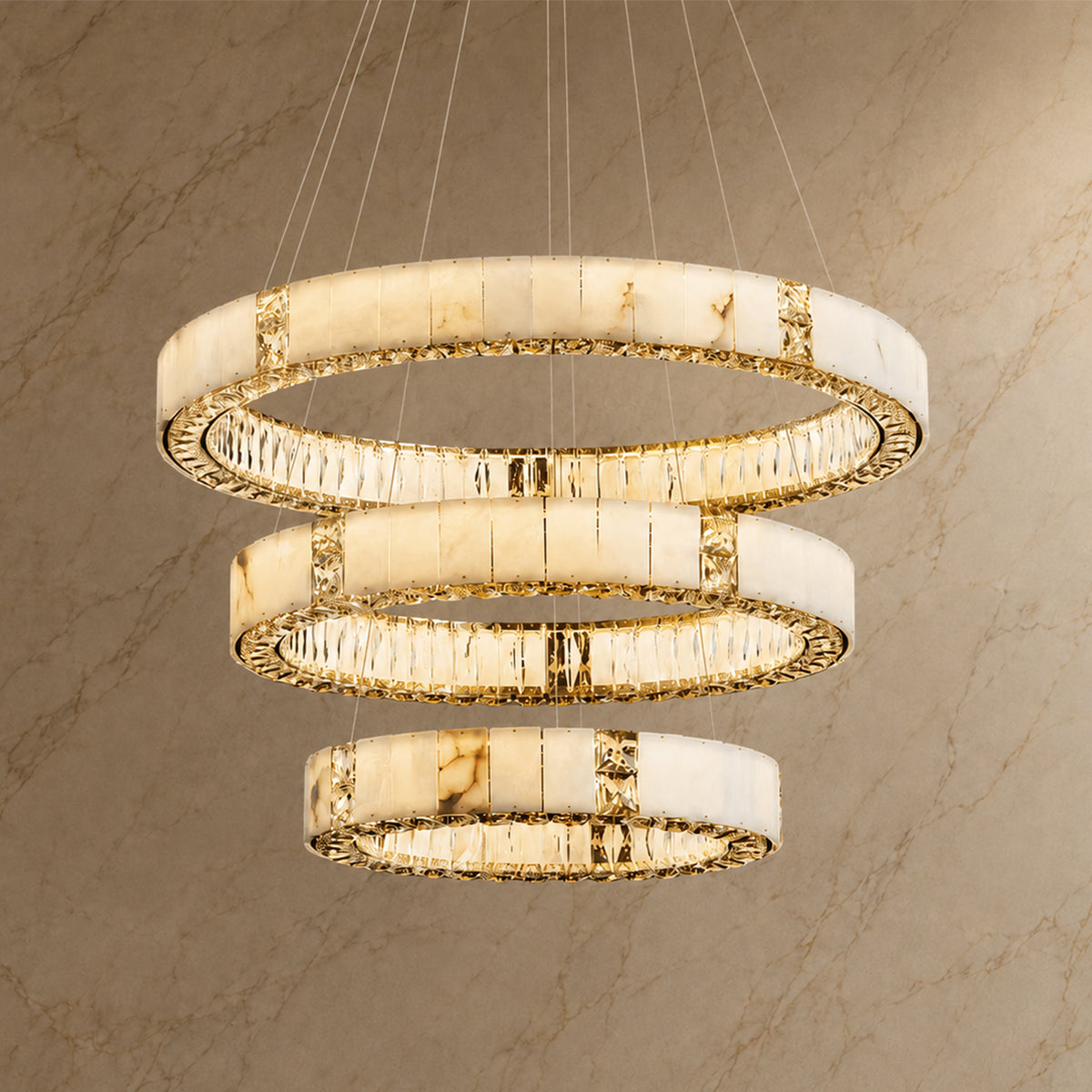
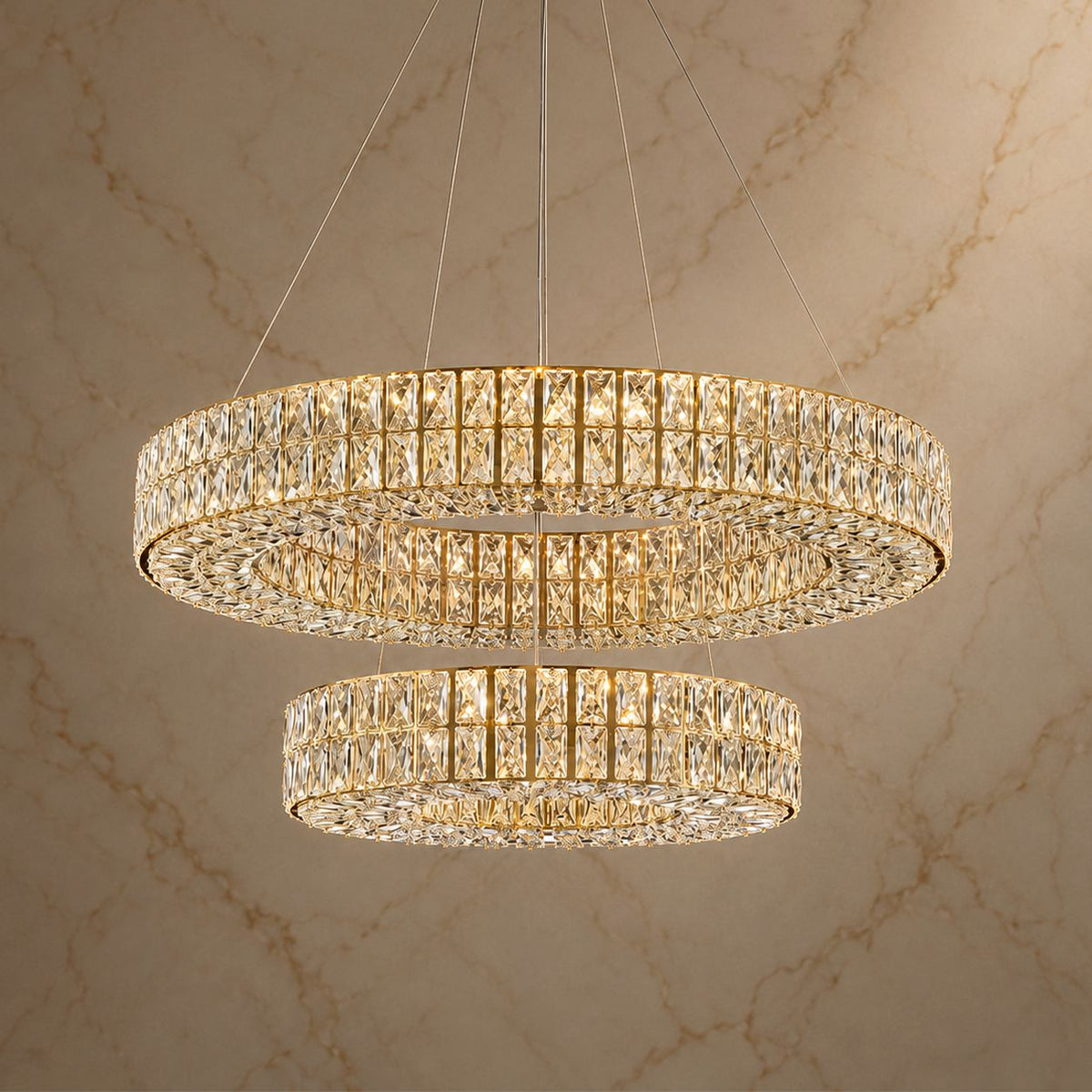
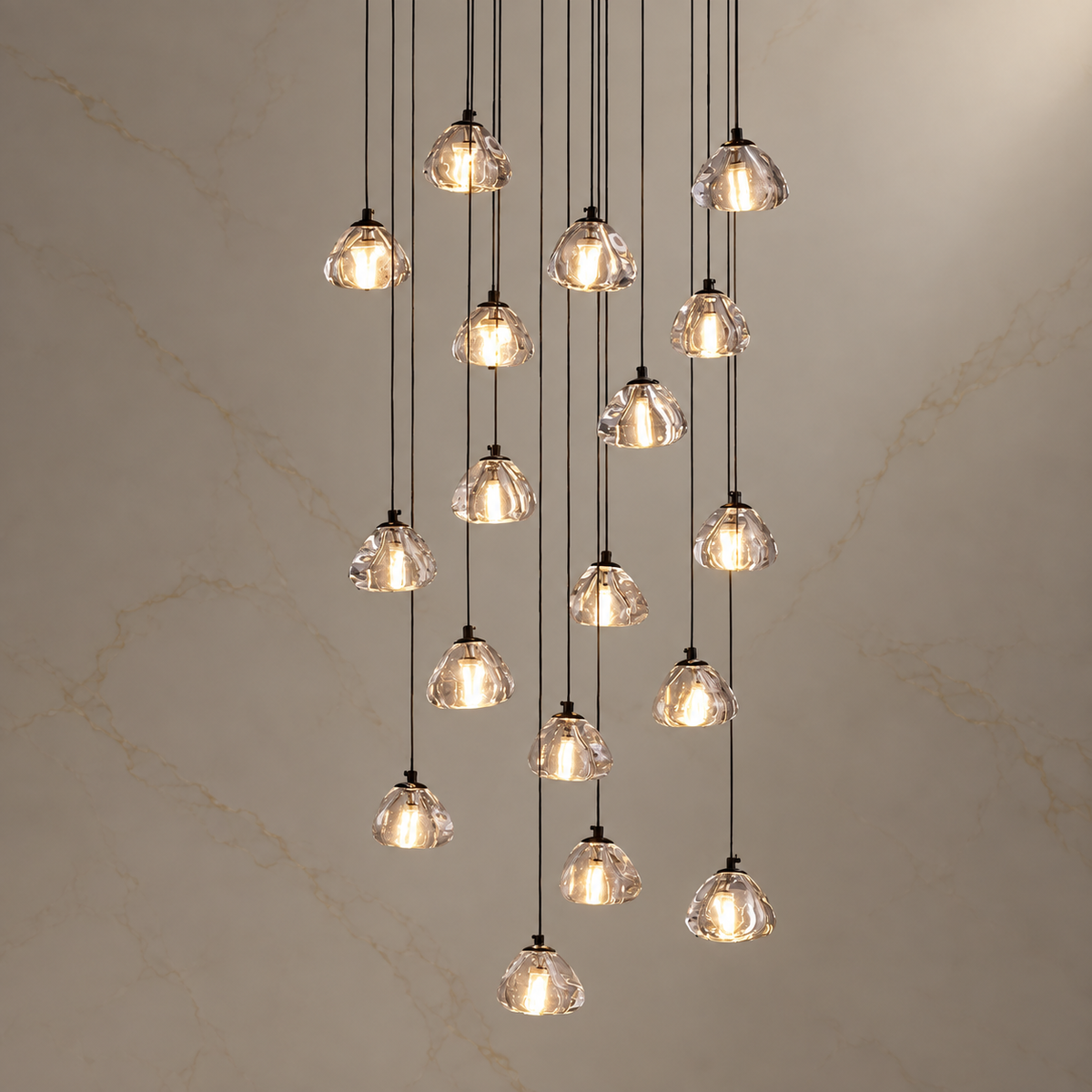
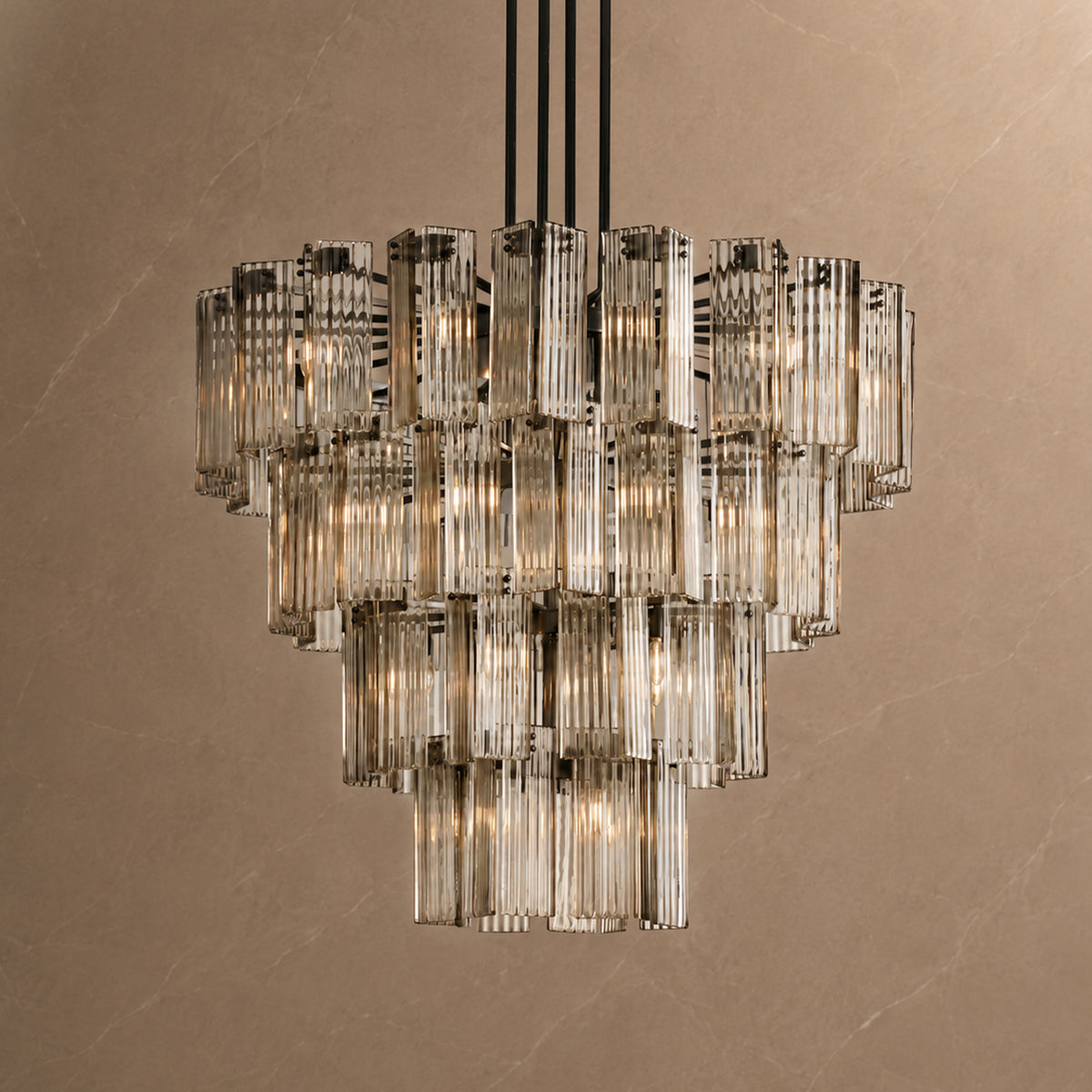
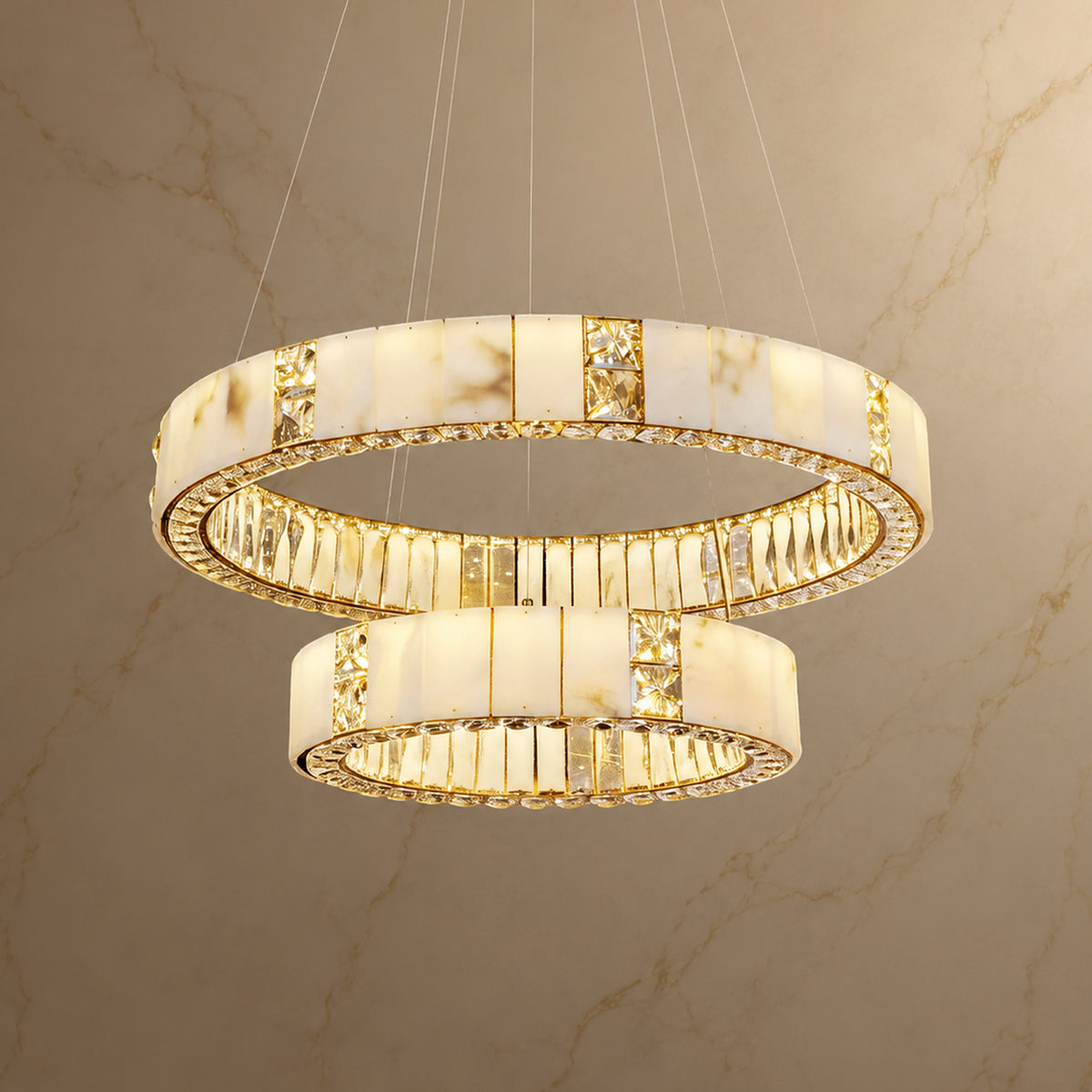
Althéa Brass Alabaster Box Pendant Light combines a small stone box with a geometric brass-tone frame. Lumaire Alabaster 2-Tier Ring Chandelier has a larger circular outline with alabaster and crystal details.
A pair of Althéa pendants repeats the ivory stone and warm metal without competing with Lumaire's two tiers. This is an option when you want the dining light to be the more decorative fixture.

Althéa is listed at 6.7 inches wide and 11.4 inches high. Lumaire comes with ring diameters of 30.7 and 18.9 inches, or 38.6 and 22.8 inches. The scenes show two Althéa pendants and the smaller Lumaire. Choose the pendant count for your island's length and available mounting positions.
Check the full width of Lumaire from the dining seats as well as the kitchen. Its lower ring should leave a comfortable view across the table.

Check the controls: Lumaire's listing states that it is not compatible with a dimmer switch. Its wall switch selects 3000K, 4500K, or 6000K; this changes light color, not brightness. If dimming is essential, choose a dining fixture with confirmed dimmer compatibility.
Berkshire + Florielle: fabric and clear glass
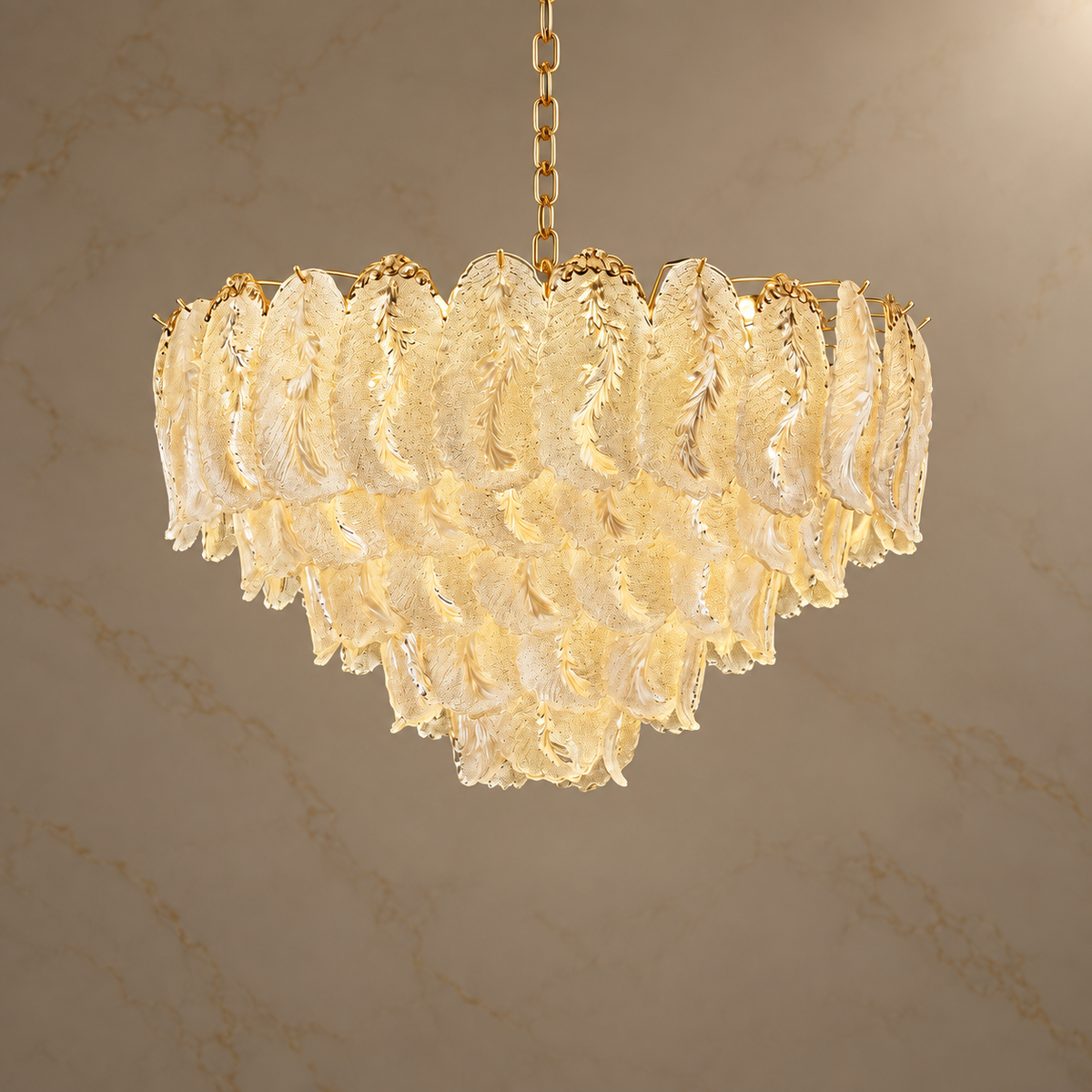
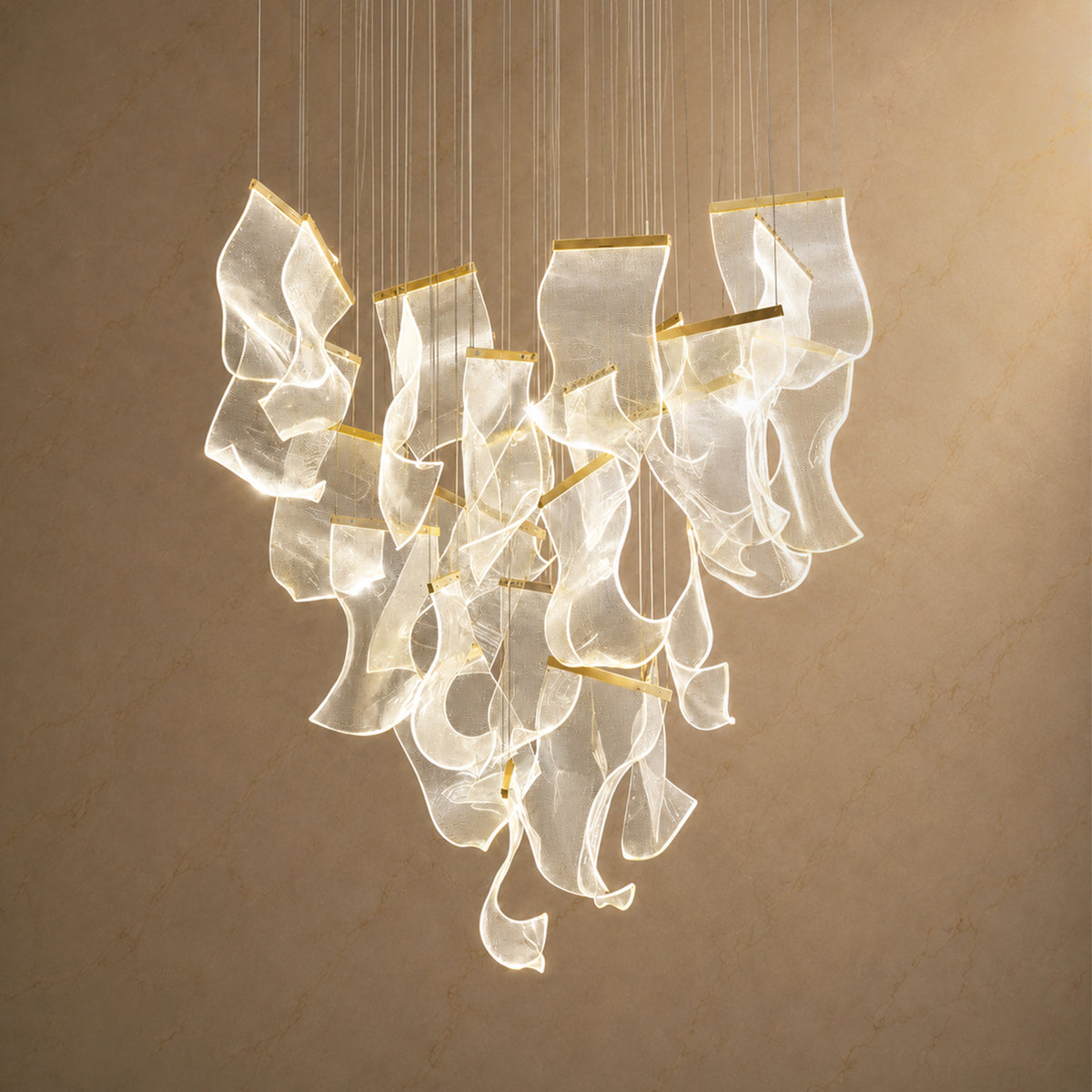
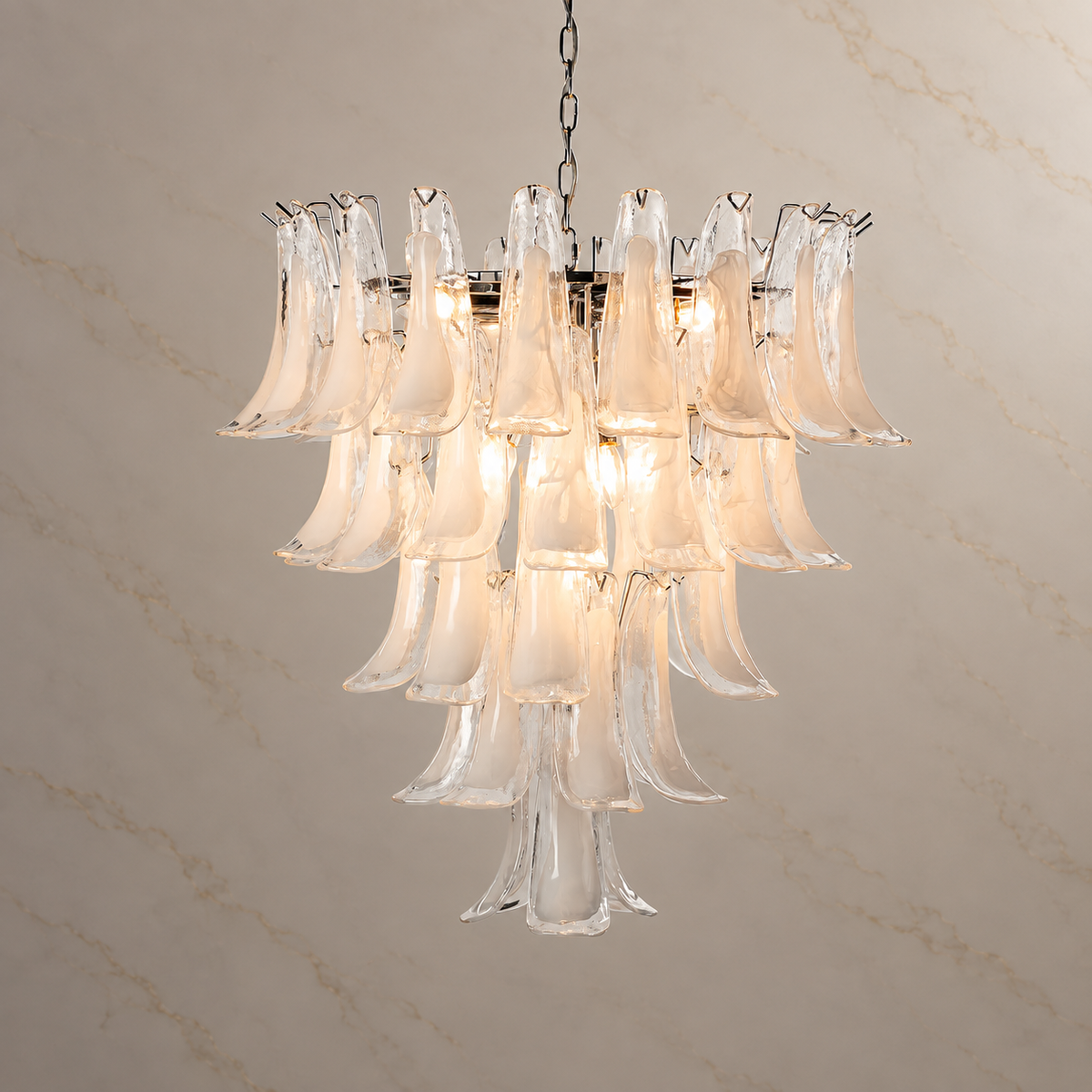
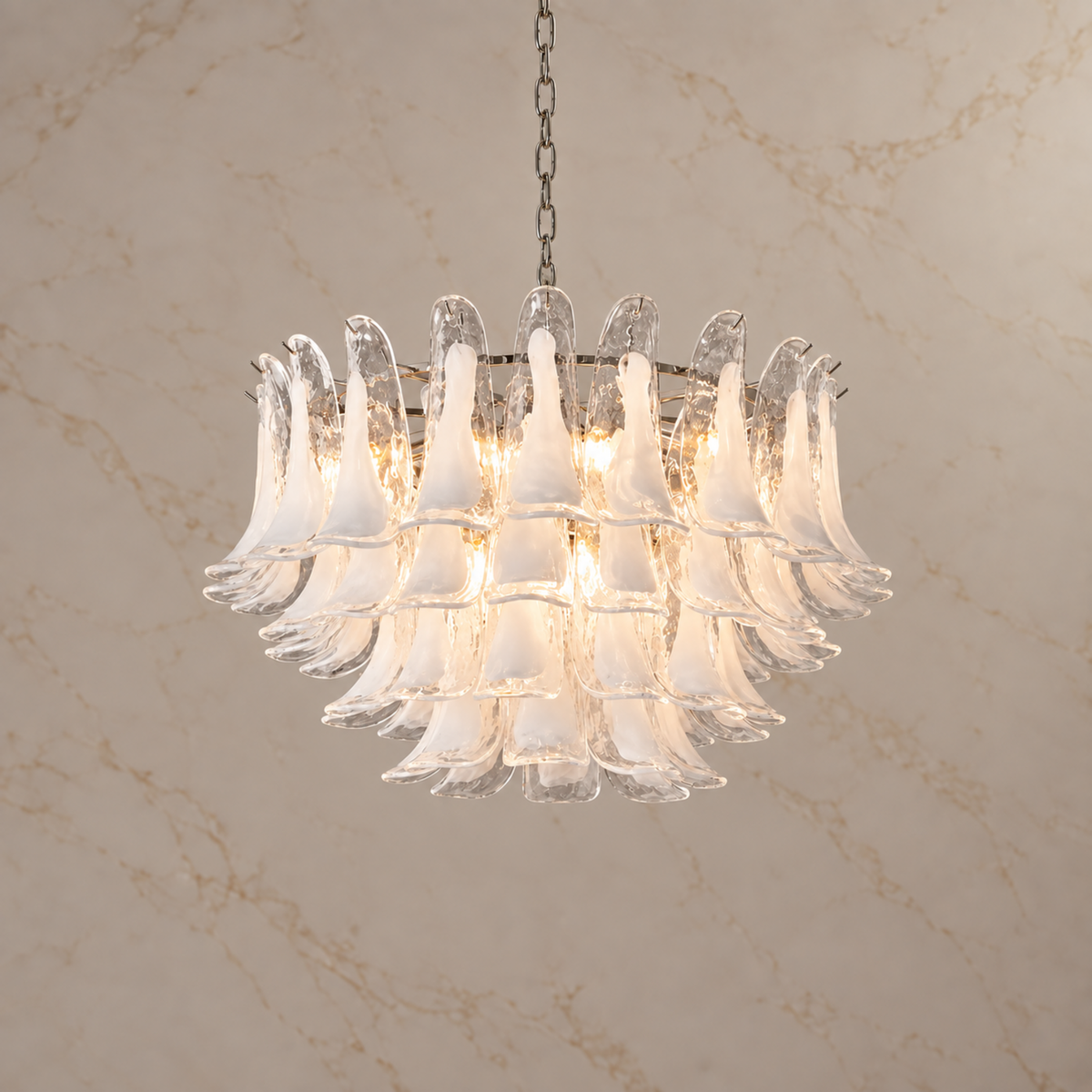
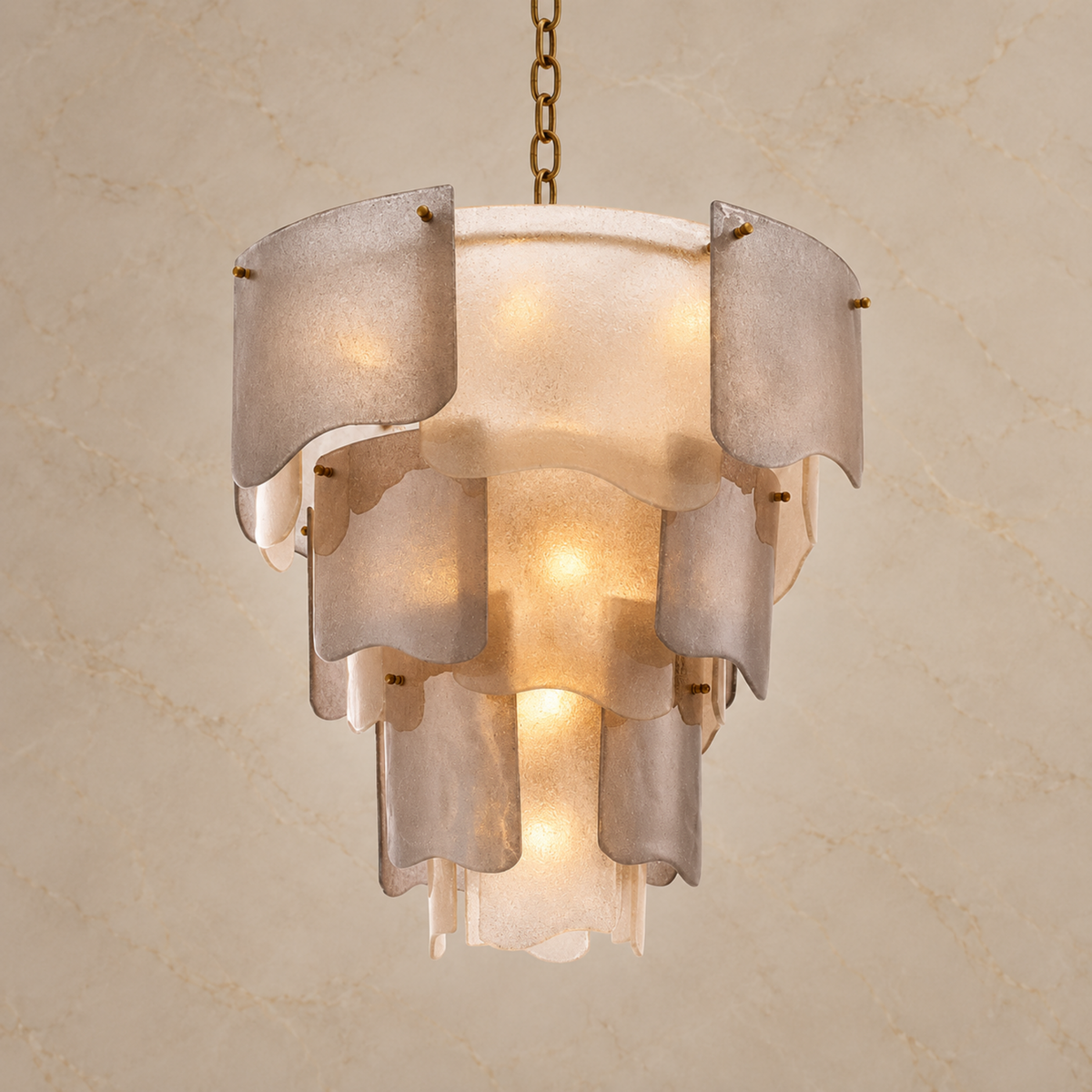
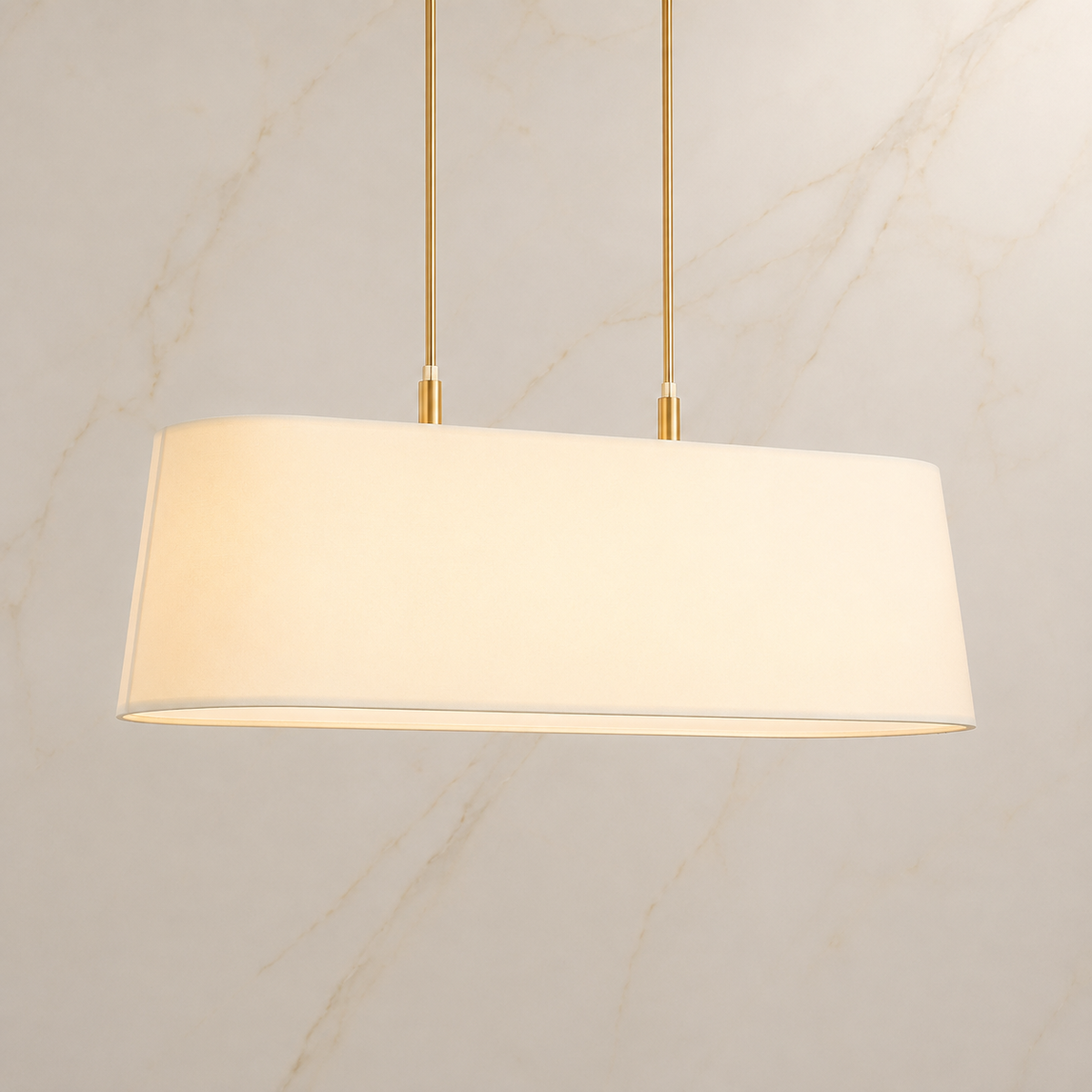
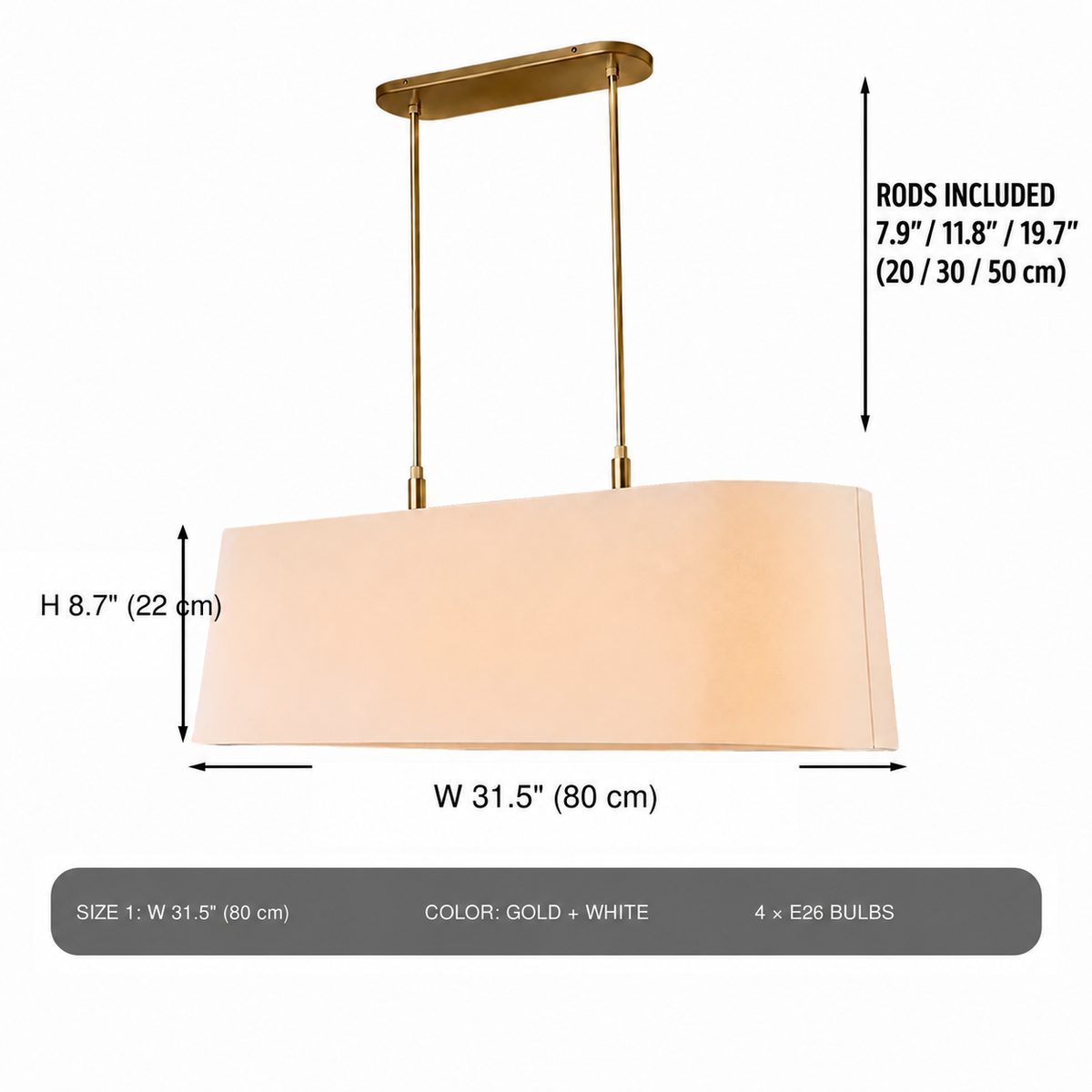
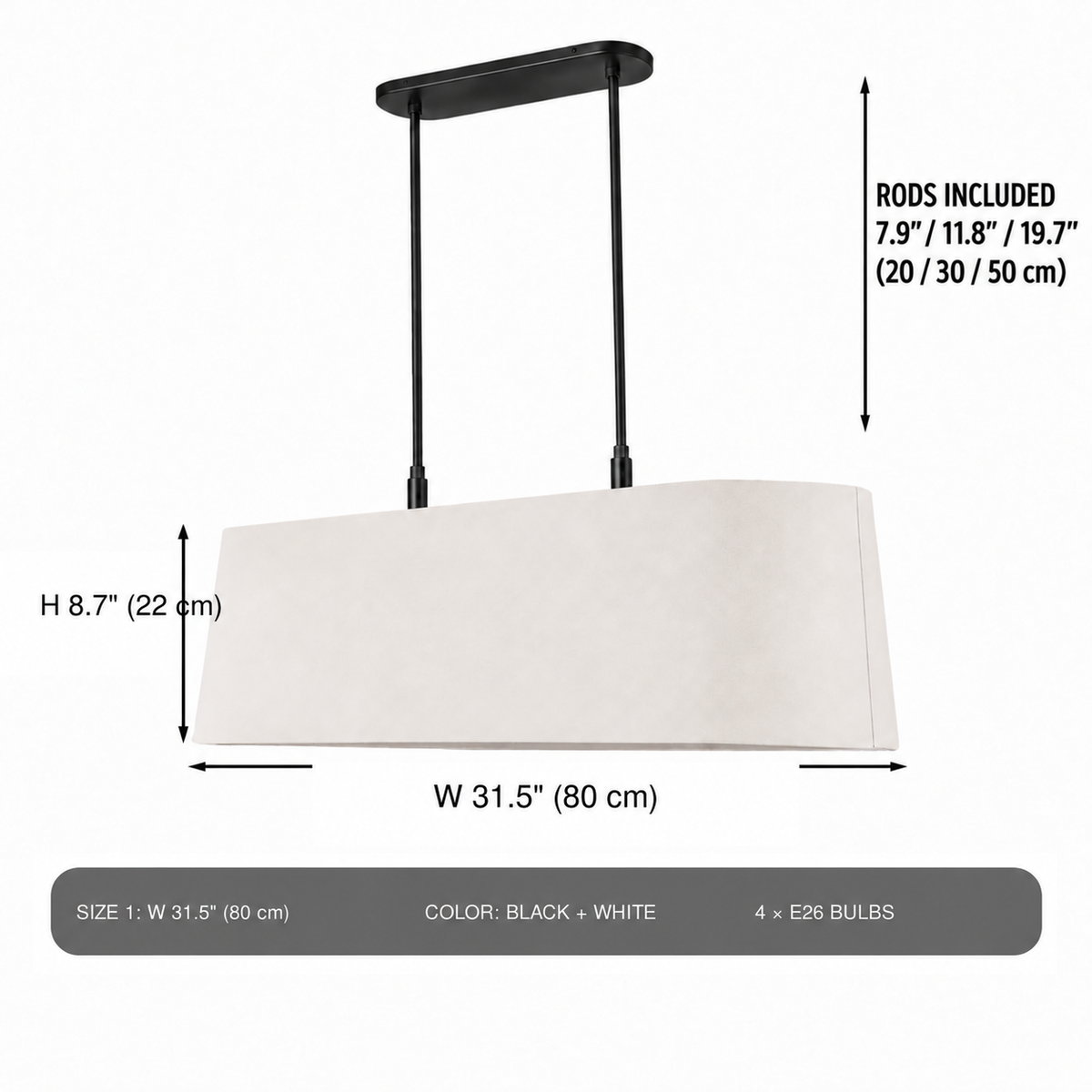
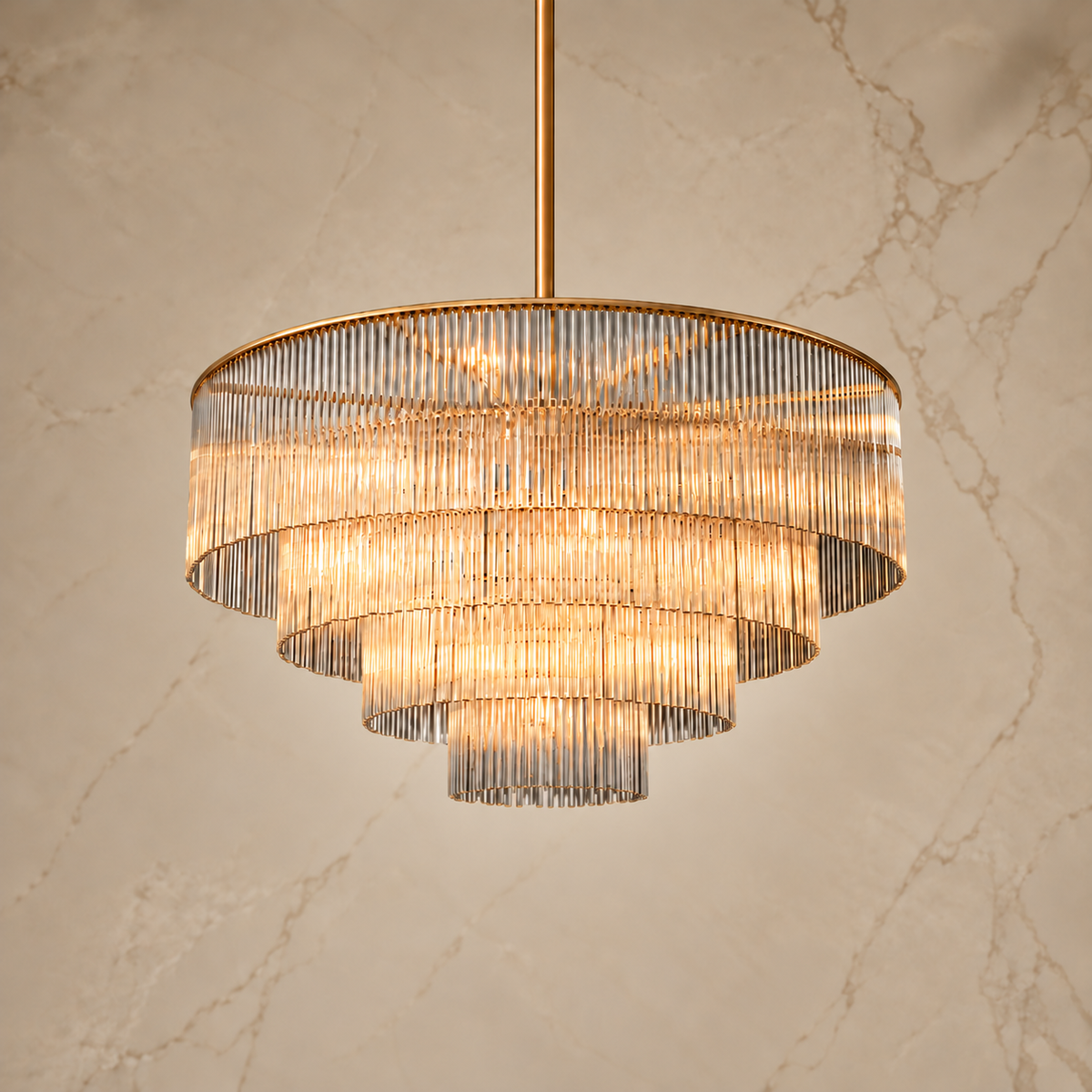
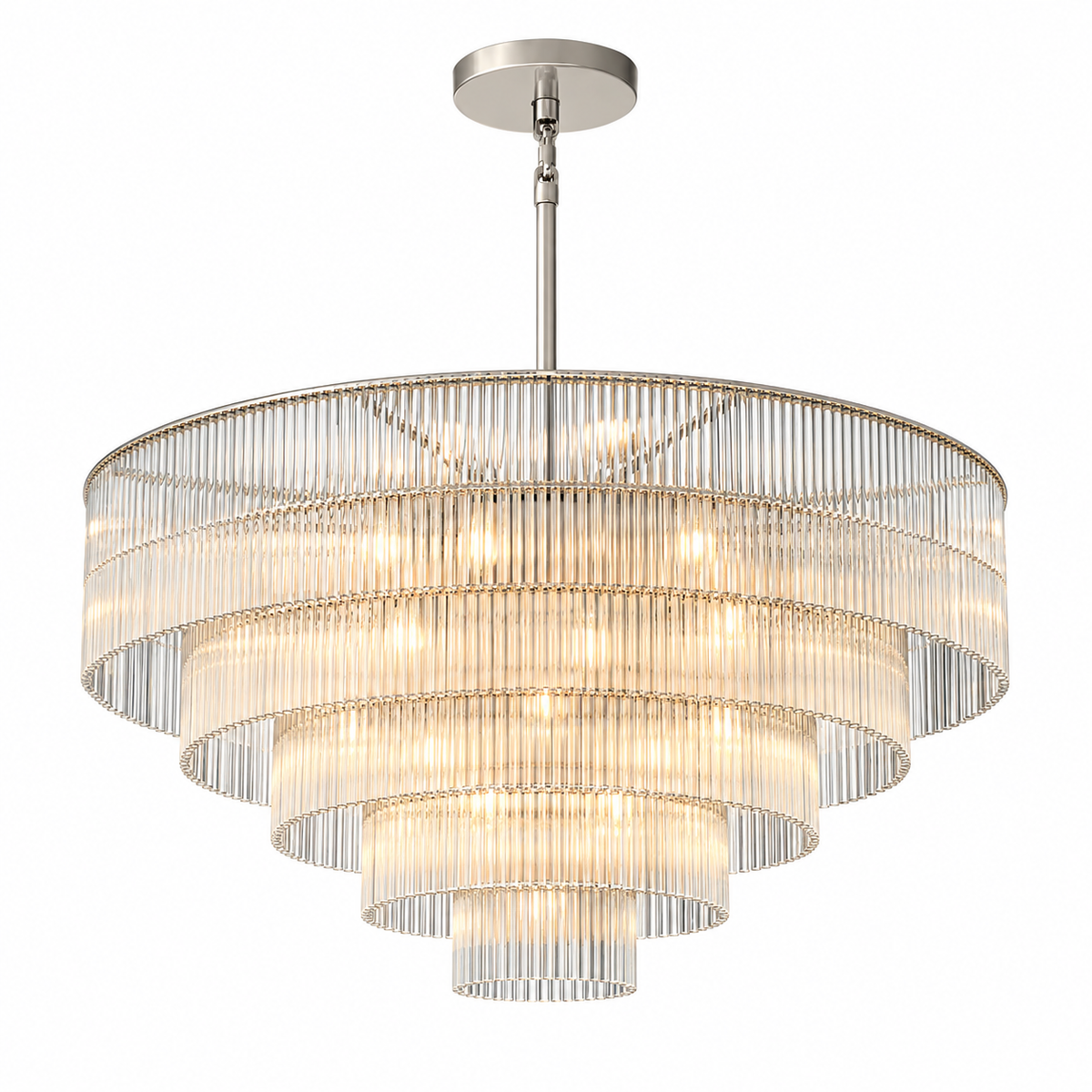
Berkshire Metal Linear Pendant Light carries four tapered fabric shades on a slim frame. Florielle Hand-Formed Glass Petal Tiered Chandelier layers curved glass petals around a silver-finished structure.
In this room, Berkshire's black frame picks up the window frames. Florielle adds more detail above the dining table, while the clear glass and pale fabric shades sit within the same neutral palette. The finishes differ, but each has a connection to the room.

Berkshire is 47.2 inches wide and comes in gold or black. Florielle offers clear, amber, and pink glass in widths of 19.7, 25.6, and 31.1 inches. These scenes pair black Berkshire with the 31.1-inch clear Florielle.
Florielle's listed adjustable chain has a maximum length of 19.7 inches. Check the total ceiling-to-bottom drop against your ceiling height; the standard suspension may not reach the position you want in a taller room.
Simple cabinetry and a lightly patterned countertop give the glass petals space to stand out. With a busy backsplash or strongly veined stone, compare a simpler dining shade too.

Match the light color and check the controls
A warm island light beside a much cooler dining light can look mismatched after dark. Check the color temperature of each fixture and the bulbs elsewhere in the room.
For a warm residential interior, 3000K is a useful starting point, as discussed in our dining room color-temperature guide. Halima's inspected listing does not specify its color temperature, so ask Carra to confirm it before planning an exact match with the dining light.
Product images cannot establish an exact light-color match. The shade material, camera exposure, and surrounding finishes affect what you see.
Separate controls can let you use the kitchen while keeping the dining area softer, where the fixtures and wiring support that arrangement. Have your installer check the selected bulbs, fixtures, and dimmers together.
The decorative lights are only part of the kitchen's lighting. Ceiling and under-cabinet lights may also be needed for preparation surfaces. Lutron's guide to ambient, task, and accent lighting explains how these layers work together.
Measure before you order
- Record both surfaces. Measure the island and table separately, along with the ceiling height above each. Compare the fixture dimensions using our chandelier size guide.
- Check one view of the whole room. Put both candidates into the same room photograph to compare their scale, finishes, and spacing.
- Set the hanging heights separately. Countertops and dining tables have different heights. Check standing and seated sightlines, and the full installed drop of each fixture.
- Confirm mounting and electrical details. Check the selected versions' ceiling compatibility, suspension, light sources, and controls with the installer.
- Plan access for cleaning. Consider grease and steam near cooking areas, and follow each product's care instructions.
Frequently asked questions
Should kitchen pendants match the dining chandelier?
They do not have to match or come from the same collection. Repeating a material, finish, or shade color can connect them, while different shapes suit the island and table.
Can I mix black, gold, and silver lighting finishes?
Yes. Relate each finish to something else in the room, such as window frames, hardware, or furniture. Compare the actual tones and sheen before ordering.
Should the island and dining lights hang at the same height?
No single height suits both surfaces. Set each light for its table or countertop, then check the view between the two areas.
Can both lights share one dimmer?
Only if the fixtures and bulbs are compatible with that dimmer and its combined load. Ask the installer to confirm the arrangement; similar-looking lights may have different control requirements.
Try the pairing in your room
Carra's Design Preview service can help you compare two fixtures in one room photograph. Send the image, island and table measurements, ceiling height, and the products you are considering.
Use the preview to judge size and finish, then confirm the installation details for your selected versions before ordering.
Product details checked on October 12, 2026. Natural stone, finish tone, and lit appearance vary. Follow the linked product specifications and installation instructions for your selected versions.