





Kitchen Island Lighting: One Linear Fixture or Multiple Pendants?
9 minutes
Kitchen Island Lighting: One Linear Fixture or Multiple Pendants?
Kitchen & Island Lighting
A kitchen island may be where you prepare dinner, open the morning mail, or linger with friends. Its lighting should feel at home in all three moments. The right arrangement brings the island into proportion with the room while leaving space for the way you live.

One linear fixture or multiple pendants?
Choose one linear fixture when you want a continuous focal point along the island. Choose multiple pendants when you prefer a repeated silhouette and want to place each fixture individually. Neither arrangement is automatically brighter: the light source, shade, placement, and other lighting in the kitchen all matter. Start with the island’s dimensions, the fixture’s actual size, and the sightlines you want to preserve.
Begin with the island—and the view beyond it
Measure the island’s length and width, then note the ceiling height and the position of any existing ceiling connections. Also mark the sink, cooktop, seating, and the areas where you do most of your preparation.
Look at the island from the places you use every day: the kitchen entrance, the dining table, and a seat at the counter. A fixture can be beautifully scaled in a front-facing photograph yet interrupt the view between two people sitting across from one another.
Finally, decide what you want the lighting to contribute. Is the island the room’s main visual feature, or should it sit quietly beneath an architectural ceiling? This helps you choose an arrangement before you become attached to a particular design.
When one linear fixture feels right
A linear fixture draws one continuous shape along the island. It can give a long counter a composed focal point, particularly when the room already has several competing details: cabinet doors, open shelving, veined stone, or an adjoining dining area.
The fixture’s length matters, but so do its depth and silhouette. A slender bar and a substantial rectangular shade may have the same width and still occupy very different amounts of visual space.
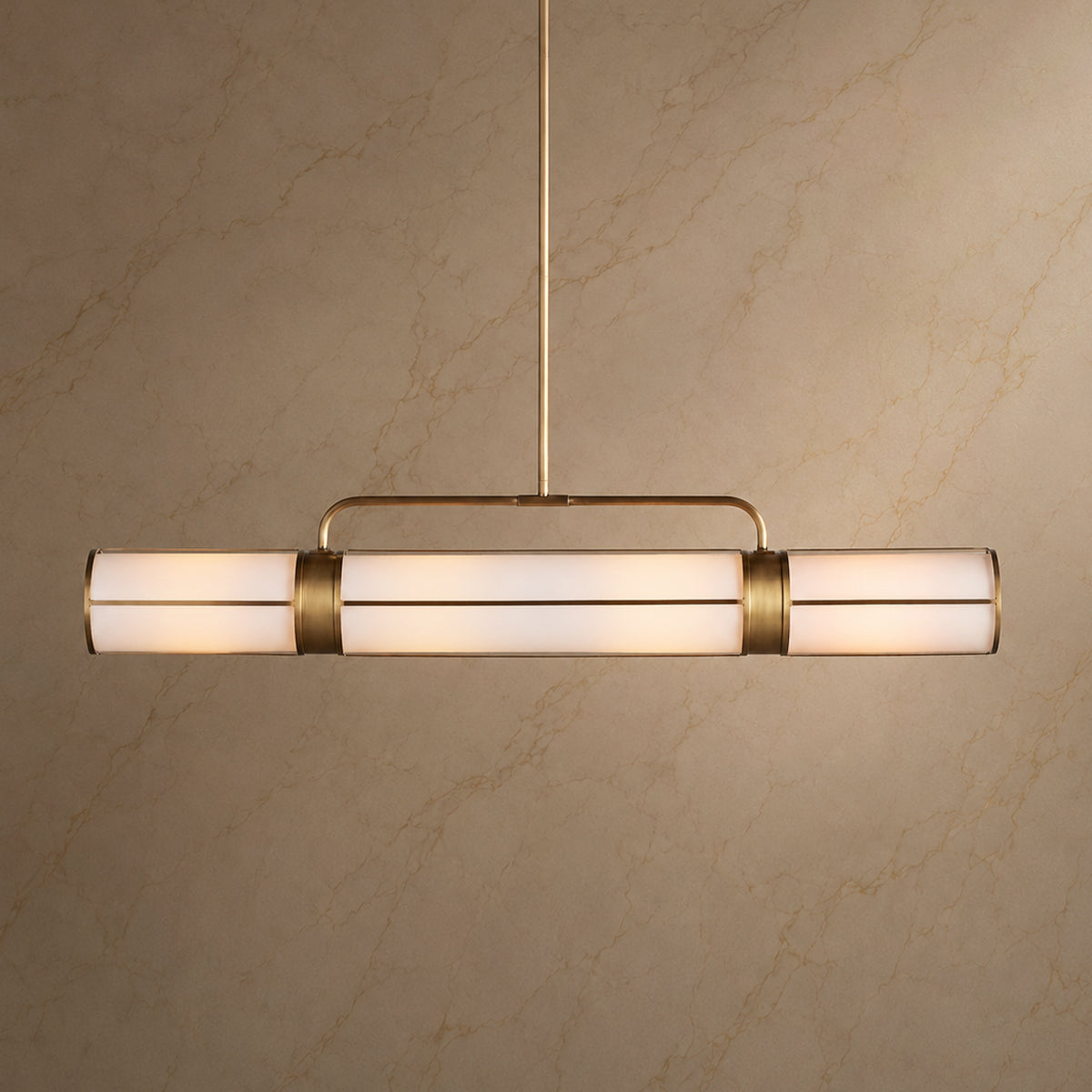
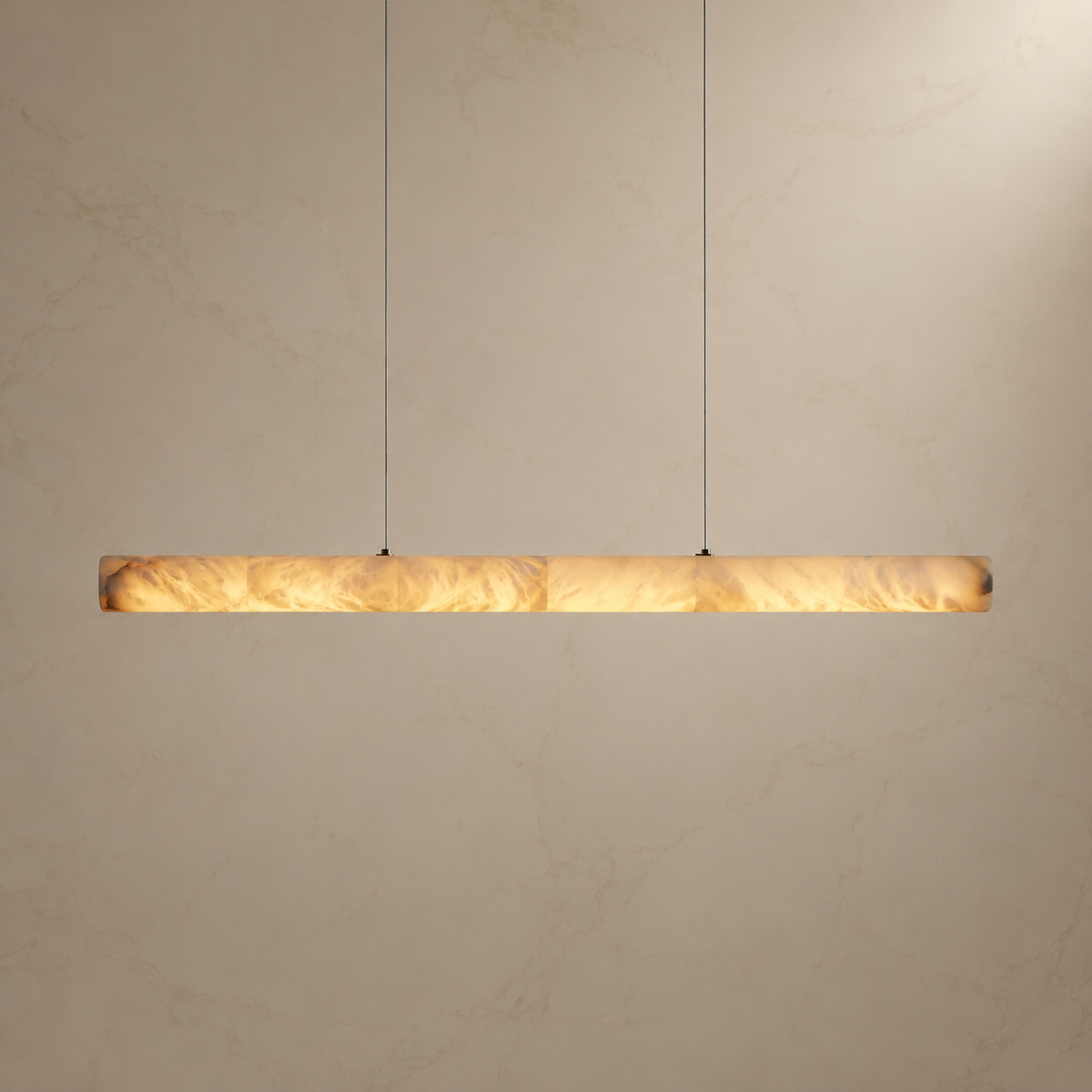
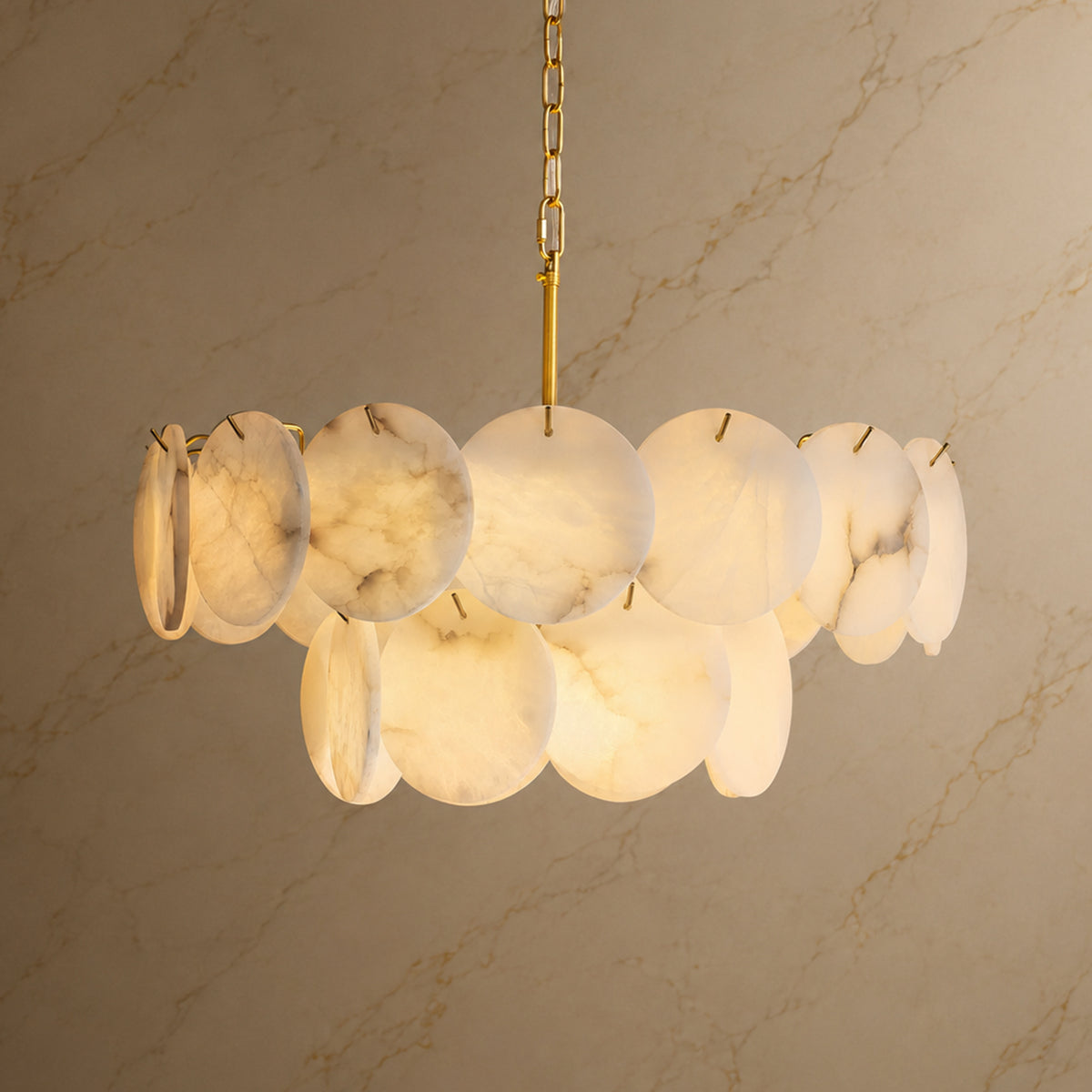
A quiet line in alabaster: Halima
Halima Alabaster Linear Chandelier pairs a softly rounded alabaster body with a restrained suspension. Its integrated LED source sits within a continuous stone form, making it an option for a kitchen where the material itself is the focal point.
Halima is offered in lengths of 39.4, 47.2, and 59.1 inches. Compare the specific size with your island, rather than choosing from the room photograph alone. A longer version creates a different balance of stone and surrounding space.

Familiar shades, held together: Berkshire
Berkshire Metal Linear Pendant Light brings four tapered fabric shades onto a single metal frame. At 47.2 inches wide, it offers the repetition of several shades within one fixture.
Its gold and black finishes allow different relationships with cabinetry and hardware. Gold can echo warm metal details; black can relate to darker window frames or cabinetry. The choice should follow the room’s existing palette, rather than require every metal surface to match.

A fuller silhouette: Stark
Stark Metal Fabric-Shade Linear Chandelier uses a continuous rectangular fabric shade and twin rods. Its broader silhouette makes it worth considering when you want the fixture to have a more substantial presence above the counter.
Widths range from 31.5 to 59.1 inches, with gold and black options. Check the shade height and available rod combinations for the selected version: the longest fixture also has a taller shade, so width alone does not describe its scale.

When multiple pendants feel right
Separate pendants introduce a rhythm across the island. They also let the spaces between the fixtures become part of the composition. Those gaps can keep views open, but only when the shade sizes and hanging positions are considered together.
Small stone forms: Althéa
Althéa Brass Alabaster Box Pendant Light combines a geometric alabaster body with a brass-tone frame. At 6.7 inches wide and 11.4 inches high, it has a compact footprint compared with a large dome shade.
A pair can make a restrained statement; three can establish a stronger repeated line on a longer island. Use the same selected size and align the lower edges for a calm arrangement. The natural stone adds its own variation; consider it alongside the countertop veining and cabinetry.


Larger woven forms: Green Oaks
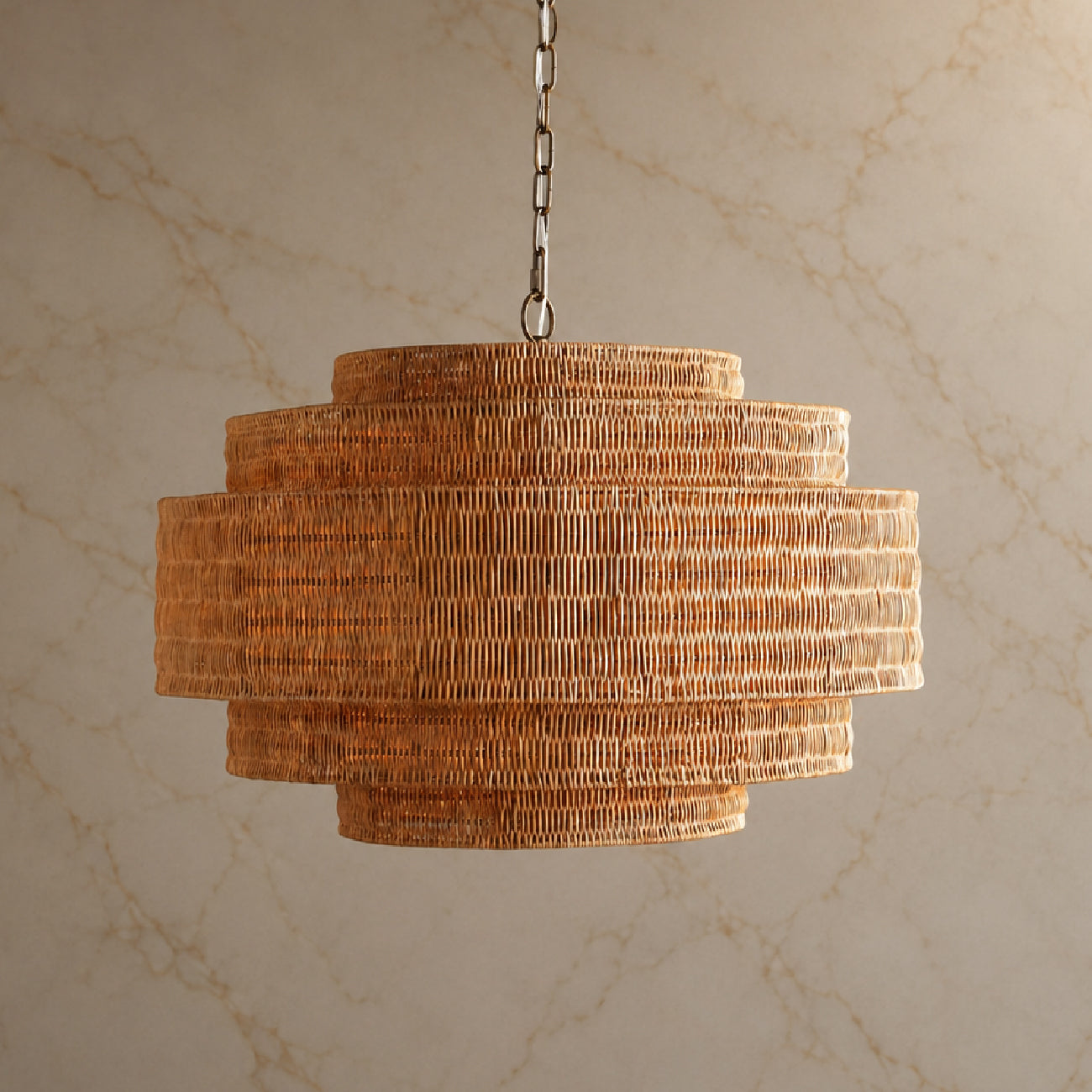
Green Oaks Oversized Pendant Light brings a woven dome and rope suspension into the kitchen. Its 17.7- and 21.7-inch diameters occupy considerably more space than Althéa’s compact stone form.
Two generously scaled shades may create the presence you want without adding a third. They can work with pale wood, textured walls, and natural textiles, provided the island and room give the domes enough space. Test the diameter as carefully as the number of pendants.

Two pendants or three? Draw the gaps first
There is no pendant count that suits every island of a given length. Two large shades and three small ones produce different spacing, views, and visual weight.
Sketch the island from above. Mark each pendant’s full width, its center position, and the clear space between adjacent shades. Center-to-center spacing is different from the gap between the fixtures’ edges.
For example, on a hypothetical 96-inch island, three 6.7-inch pendants centered 24, 48, and 72 inches from one end would have 17.3 inches between their edges. The outer shades would each leave about 20.7 inches to the nearest end of the island.
That calculation illustrates a layout; it does not establish the correct arrangement for every kitchen. Adjust it for seating, work areas, shade shape, ceiling connections, and the view from adjoining rooms. For one linear fixture, the same drawing helps you see the space remaining at each end.
Set the height around people and the fixture
Visual Comfort’s island pendant guidance gives 30–36 inches from the countertop to the bottom of the fixture as a common starting range. Treat it as a starting point, then check seated and standing sightlines alongside the product’s installation instructions.
For separate pendants, align the bottoms rather than simply cutting every cord to the same length. For a linear design, confirm that the fixture can hang level and reach the intended position with its supplied suspension.
Check the total installed drop, including the light’s body, canopy, and suspension. A product’s adjustable cord or rod length does not always describe the whole ceiling-to-bottom measurement.
Plan the lighting as a whole
Island fixtures belong within a wider lighting plan. Lutron’s guidance on layered lighting distinguishes ambient, task, and accent lighting; in a kitchen, these roles may be shared by ceiling lighting, island fixtures, and under-cabinet lights.
Do not assume that a longer fixture, more shades, or a glowing material guarantees sufficient preparation light. Check the specified light source and consider what reaches the work surface. Coordinate color temperature with the rest of the kitchen, and confirm dimmer compatibility for the exact fixture and bulbs.
Before ordering, have the ceiling connections and mounting requirements checked for the chosen arrangement. Several pendants need appropriate connection positions; a linear fixture may also have multiple attachment points. If the island is near cooking, consider exposure to grease and steam, along with access for cleaning fabric, woven surfaces, stone, and metal.

Frequently asked questions
Is a linear fixture better for a long kitchen island?
It can be a good fit when you want one continuous focal point. Multiple pendants can also suit a long island. Compare the actual fixture dimensions, gaps, sightlines, and lighting needs before choosing.
Can I use two pendants instead of three?
Yes. Two larger pendants may give an island the presence you want. Three smaller pendants create a different rhythm. Draw the full shade widths and clear gaps to compare them.
Should the island lights match the dining chandelier?
They can share a material, finish, or design detail without being identical. In an open room, consider which area should have the stronger focal point. Our linear or round dining chandelier guide helps with the adjacent dining space.
What should I check before ordering?
Confirm the selected size and finish, installed drop, mounting requirements, light source, dimming compatibility, and cleaning instructions. Our chandelier size guide provides further help with proportion.
See the arrangement in your kitchen
Begin with two or three candidates, then compare them against the same room photograph and measurements. Carra’s Design Preview service can help you explore their visual relationship with the island and surrounding finishes. Use the preview to refine the composition, and confirm technical installation details for the selected product before ordering.
Product sizes and materials checked against Carra’s current listings. Room images are AI-styled illustrations; natural stone and lighting appearance vary. For technical suitability, follow the selected product’s installation and care instructions.