







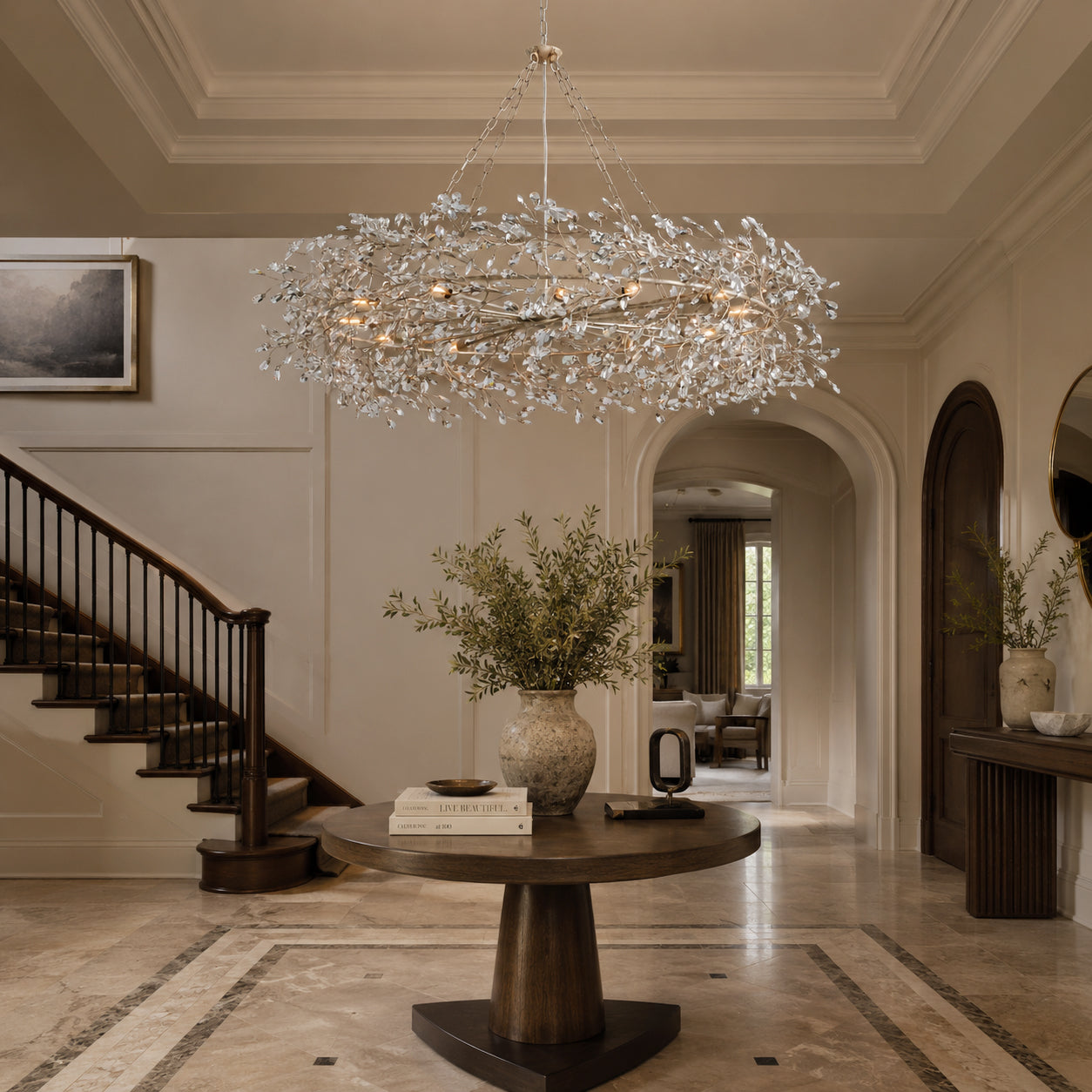

Carra Home Chandelier Guide
A beautiful fixture can only perform as well as the bulb inside it. The right bulb should fit the socket, stay within the fixture’s electrical limits, provide enough light, render colors naturally, and support the atmosphere you want to create. This guide explains the specifications that matter and how to apply them throughout the home.
The quick answer Start by confirming the bulb base, voltage, bulb shape, and maximum wattage listed for the fixture. Then choose brightness by lumens—not watts. For most residential fixtures, a high-quality dimmable LED with a CRI of 90 or higher is the best choice. Use 2700K–3000K in living rooms, dining rooms, and bedrooms; 3000K–3500K in kitchens; and 3000K–4000K in bathrooms and work areas, depending on the room’s design and task requirements.
1. Start with the Fixture, Not the Bulb Aisle
The most common bulb-buying mistake is choosing based on appearance or advertised brightness before checking the fixture. Every chandelier, pendant, wall light, and lamp is designed around a specific socket, voltage, bulb envelope, and maximum wattage.
Before shopping, look for a label on the socket, canopy, cord, instruction manual, or product specification page. Record the following:
- Base or socket type
- Required voltage
- Maximum wattage per socket
- Recommended bulb shape
- Whether the fixture is dimmable
- Whether the bulb is enclosed by glass or a shade
- Whether the fixture is rated for damp or wet locations
Carra Home Designer’s Note
Technical compatibility comes first. A bulb can have the perfect color temperature and still be the wrong choice if it does not fit behind the crystal, clears the glass shade, or work with the fixture’s dimmer and driver.
2. Understand Bulb Bases and Sockets
The base is the part of the bulb that connects to the socket. A bulb must have the exact base type required by the fixture.
| Base Type | Common Use | What to Know |
|---|---|---|
| E26 | Standard lamps, pendants, ceiling lights, and many North American fixtures | Often called a medium Edison screw base. |
| E12 | Chandeliers, decorative sconces, and candle-style fixtures | Often called a candelabra base. Common in multi-light chandeliers. |
| E17 | Some decorative and appliance-style fixtures | Smaller than E26 but larger than E12. |
| GU10 | Spotlights, track lights, and directional fixtures | Uses a twist-and-lock connection. |
| G9 | Compact chandeliers, glass pendants, and decorative fixtures | Small bi-pin capsule bulb; physical clearance is especially important. |
| G4 | Low-voltage accent lights and small decorative fixtures | Commonly used with 12V systems; voltage must be verified. |
| Integrated LED | Modern linear pendants, sculptural fixtures, and slim-profile lights | No replaceable conventional bulb; the LED module and driver are built into the fixture. |
The letter usually identifies the base family, while the number relates to its size. Never assume that two visually similar bases are interchangeable.

3. Check Bulb Shape and Physical Size
Matching the base does not guarantee that the bulb will physically fit. Bulbs with the same socket can have very different widths, heights, tips, and decorative shapes.
A-Series Bulbs
Traditional household bulb shape, often used in table lamps, floor lamps, and simple ceiling fixtures.
Candle and Torpedo Bulbs
Designed for chandeliers and candle-style sconces. Clear glass reveals more sparkle; frosted glass produces softer light.
Globe Bulbs
Suitable for open fixtures where the bulb is part of the visual design. Confirm the globe diameter before purchasing.
Capsule Bulbs
Compact G9 or G4 bulbs used where space is limited. Verify both length and diameter, especially inside glass shades.
Reflector Bulbs
BR, PAR, and MR-style bulbs direct light forward and are typically used for recessed, track, or accent lighting.
Vintage Filament Bulbs
Decorative LEDs designed to imitate exposed incandescent filaments. Best when the bulb remains visible.
For chandeliers, pay attention to the bulb tip. A long flame-tip bulb may rise above a sleeve or appear too prominent behind crystal. A shorter torpedo bulb may create a cleaner silhouette.
4. Voltage and Maximum Wattage
Voltage
Voltage must match the fixture and electrical supply. Many North American indoor fixtures are designed for approximately 120V, while some landscape lights, cabinet lights, and specialty fixtures operate at 12V or 24V through a transformer or driver.
Do not install a low-voltage bulb into a line-voltage socket or assume a bulb will regulate voltage automatically. When the fixture uses an integrated LED driver, replacement parts must also match the driver specifications.
Maximum wattage
Maximum wattage is a safety limit, not a brightness recommendation. A fixture marked “Max 40W” means the bulb must not consume more than 40 watts in that socket.
LEDs make this easier because they produce more light while consuming much less power. For example, an LED consuming only a few watts may provide the brightness once associated with a much higher-wattage incandescent bulb.
Important
Never exceed the fixture’s maximum wattage. Excess heat can damage wiring, sockets, shades, finishes, or nearby decorative materials. For enclosed fixtures, choose an LED specifically rated for enclosed use.
5. Choose Brightness by Lumens, Not Watts
Watts measure energy consumption. Lumens measure the amount of light produced. When comparing LED bulbs, lumens are the more useful brightness specification.
| Approximate LED Output | Typical Lumen Range | Common Use |
|---|---|---|
| Low-output decorative bulb | 200–400 lumens | Multi-bulb chandeliers, accent lighting, decorative exposed bulbs |
| Moderate-output bulb | 450–800 lumens | Table lamps, pendants, bedrooms, living areas |
| High-output bulb | 800–1,200 lumens | Kitchens, task lighting, larger rooms, single-bulb fixtures |
| Very high-output bulb | 1,200+ lumens | Utility spaces or fixtures specifically designed for high output |
In a chandelier, calculate the combined output of all bulbs. Eight 400-lumen bulbs provide approximately 3,200 lumens before accounting for shades, crystal, glass, and dimming.
Fixture design changes how those lumens feel. Frosted shades absorb and diffuse more light. Clear glass allows more direct light. Dense crystal can scatter light beautifully but may reduce the amount reaching the table or floor.
6. Select the Right Color Temperature
Color temperature describes whether light appears warm, neutral, or cool. It is measured in Kelvin (K). Lower numbers appear warmer and more amber; higher numbers appear whiter or bluer.
| Color Temperature | Appearance | Best Uses |
|---|---|---|
| 2200K–2400K | Very warm, similar to candlelight | Decorative accent lighting and intimate evening settings |
| 2700K | Warm and relaxed | Bedrooms, traditional living rooms, warm dining rooms |
| 3000K | Warm with clearer definition | Most living rooms, dining rooms, kitchens, and transitional interiors |
| 3500K | Balanced neutral white | Modern kitchens, bathrooms, offices, and multipurpose rooms |
| 4000K | Crisp neutral-to-cool white | Task-oriented spaces, garages, workrooms, some bathrooms |
| 5000K+ | Cool daylight-like white | Specialized task spaces; rarely ideal for decorative residential lighting |
Carra Home Recommendation
If you want one versatile color temperature across most of the home, 3000K is the safest starting point. It remains warm enough for comfort while providing better clarity than very amber light.
7. Look for a High Color Rendering Index
CRI, or Color Rendering Index, describes how naturally colors appear under an artificial light source. A bulb can have the correct color temperature and still make wood, food, artwork, textiles, and skin tones look dull if its CRI is low.
- CRI 80: acceptable for general utility lighting
- CRI 90+: preferred for most residential interiors
- CRI 95+: ideal for artwork, premium finishes, food presentation, makeup, and color-sensitive spaces
High CRI is particularly valuable around crystal, brass, marble, natural wood, upholstery, and decorative surfaces. These materials depend on subtle color variation and texture.
8. Confirm Dimming Compatibility
A dimmer allows one fixture to support different activities and moods. Bright light may be useful for cleaning, serving food, or working. Lower light creates a softer atmosphere for dinner or evening relaxation.
However, every part of the system must be compatible:
- The bulb must be labeled dimmable.
- The fixture or integrated LED driver must support dimming.
- The wall dimmer must be compatible with LED loads.
- The total wattage must fall within the dimmer’s supported range.
Incompatible combinations can cause buzzing, flickering, sudden shutoff, limited dimming range, or lights that glow faintly when switched off.
Standard dimming vs. dim-to-warm
Most standard LEDs maintain the same color temperature as they dim. Dim-to-warm LEDs become more amber at lower brightness, creating an effect closer to incandescent or candlelight. They can be especially attractive in dining rooms, bedrooms, and living rooms.
9. Compare the Main Types of Light Bulbs
| Bulb Type | Advantages | Limitations | Carra Home View |
|---|---|---|---|
| LED | Efficient, long-lasting, low heat, many shapes and color temperatures | Quality and dimming performance vary by brand | Best overall choice for most home fixtures |
| Incandescent | Warm light and smooth dimming | High energy use, more heat, short life, limited availability | Usually replaced by quality LED alternatives |
| Halogen | Clear light, good color rendering, compact sizes | Runs very hot and uses more energy than LED | Use only when the fixture specifically requires it |
| CFL | More efficient than incandescent | Slow warm-up, contains mercury, bulky shapes, inconsistent dimming | Generally not preferred for decorative residential fixtures |
| Integrated LED | Allows slim, sculptural, and highly efficient fixture designs | Conventional bulbs cannot be replaced; driver quality matters | Excellent when the fixture is well-designed and supported |
For most homeowners, a quality LED offers the best balance of efficiency, lifespan, heat management, color quality, and bulb selection.
10. The Best Light Bulbs for Each Room
Living Room
Living room lighting should support conversation, reading, television, and relaxation. A color temperature of 2700K–3000K works well in most homes. Choose high-CRI bulbs so upholstery, art, wood, and skin tones remain natural.
Use multiple light sources rather than relying on one bright ceiling fixture: a chandelier or ceiling light for ambient illumination, table lamps for comfort, and accent lights for artwork or architecture.
Dining Room
For dining rooms, 2700K–3000K creates the most inviting atmosphere. We often prefer 3000K for crystal, brass, marble, and transitional interiors because it provides warm light with slightly clearer reflections.
A dimmable high-CRI bulb is especially valuable. The chandelier can be brighter for serving and cleaning, then lowered for dinner and entertaining.
Kitchen
Kitchens need clear task lighting, but they do not have to feel cold. A range of 3000K–3500K is comfortable for most residential kitchens. Use CRI 90 or higher over countertops, islands, and food-preparation areas.
In an open-plan kitchen and dining space, keeping both areas at 3000K often creates a more cohesive visual transition. Brightness can differ by task even when color temperature remains consistent.
Bedroom
Bedrooms benefit from warmer light. Choose 2700K–3000K, with 2700K preferred for bedside lamps and evening relaxation. Avoid overly cool, high-output bulbs near the bed.
If the bedroom includes a dressing area or desk, use localized task lighting rather than making the entire room brighter and cooler.
Bathroom
Bathrooms require a balance of comfort and accurate visibility. Use 3000K–4000K depending on the finishes and task needs. Around mirrors, prioritize even illumination and a CRI of 90 or higher.
A spa-like bathroom with warm stone and wood may look best at 3000K. A clean contemporary bathroom may suit 3500K. Always use fixtures rated for the bathroom’s moisture conditions.
Home Office or Study
A home office often benefits from 3000K–4000K. Warmer light feels comfortable, while slightly cooler neutral light can improve visual clarity for detailed tasks. Avoid glare and use a separate desk light to illuminate the work surface.
Entryway and Foyer
The foyer introduces the atmosphere of the home. Use 2700K–3000K for an inviting first impression. Large crystal or glass chandeliers often look especially refined at 3000K with a high CRI.
Closets, Laundry Rooms, and Utility Spaces
These spaces can use 3500K–4000K for clearer visibility. High CRI is helpful in closets and laundry rooms when distinguishing fabric colors or checking stains.
Outdoor Fixtures
For porches and decorative exterior lighting, 2700K–3000K usually feels more welcoming and produces less visual harshness. Use bulbs and fixtures specifically rated for outdoor, damp, or wet locations as required.
11. Common Mistakes to Avoid
- Buying a bulb before confirming the socket and voltage.
- Using watts as the main measure of brightness.
- Exceeding the fixture’s maximum wattage.
- Installing a bulb that is too large for the shade or glass enclosure.
- Using a non-dimmable bulb on a dimmer.
- Mixing different brands or color temperatures in one chandelier.
- Choosing very cool light simply because it appears brighter.
- Ignoring CRI in rooms with food, art, makeup, wood, or premium materials.
- Using an LED not rated for enclosed fixtures.
- Installing indoor bulbs or fixtures in damp or wet locations.
12. A Simple Bulb-Buying Checklist
Before You Buy
- Correct base and socket type
- Correct voltage
- Below the fixture’s maximum wattage
- Bulb shape and dimensions fit the fixture
- Appropriate lumens for the room
- 2700K–3000K for most decorative living spaces
- CRI 90 or higher where color quality matters
- Dimmable bulb when used with a compatible dimmer
- Rated for enclosed, damp, or wet use when required
- Matching bulbs throughout multi-light fixtures
Frequently Asked Questions
What is the best type of light bulb for a chandelier?
A dimmable LED is usually the best option. Match the required base and bulb shape, stay below the maximum wattage, and choose a CRI of 90 or higher. For most chandeliers, 2700K or 3000K works well.
What is the difference between E12 and E26 bulbs?
E12 is a smaller candelabra screw base commonly used in chandeliers. E26 is the standard medium screw base used in many lamps, pendants, and ceiling fixtures. They are not interchangeable.
Can I use an LED bulb with lower wattage than the fixture rating?
Yes. The fixture rating is a maximum. A lower-wattage LED is acceptable as long as the voltage and base are correct and the bulb provides enough lumens.
Can I use a higher-wattage LED because it runs cooler?
Do not exceed the fixture’s stated maximum wattage unless the manufacturer explicitly provides a separate LED allowance. Always follow the fixture specification.
How many lumens should a chandelier have?
It depends on room size, fixture placement, shades, crystal density, and other light sources. Add the lumens of all bulbs to estimate total output, then use a dimmer to provide flexibility.
Is 3000K warm or cool?
3000K is considered warm white. It looks clearer and less amber than 2700K but remains much warmer than 4000K or daylight bulbs.
Why do LED bulbs flicker on a dimmer?
Flickering usually indicates incompatibility between the bulb, LED driver, dimmer, or electrical load. Use dimmable bulbs and an LED-compatible dimmer approved for the fixture.
Can I mix different bulb brands in one chandelier?
It is better not to. Bulbs with the same labeled color temperature can still differ in brightness, tint, dimming behavior, and physical appearance.
Should clear or frosted bulbs be used in a chandelier?
Clear bulbs produce more defined sparkle and work well with crystal or exposed decorative designs. Frosted bulbs reduce glare and create softer, more diffused light. The right choice depends on whether the bulb is visible and the effect you want.
What does “enclosed fixture rated” mean?
It means the LED is designed to manage heat inside a fixture where airflow is limited. Standard LEDs may overheat and fail early when installed in enclosed glass or tightly sealed shades.
Carra Home’s Final Recommendation
For most decorative fixtures, begin with a quality dimmable LED that matches the socket and voltage, stays below the fixture’s maximum wattage, and provides a CRI of at least 90.
Use 2700K when you want a softer, more traditional atmosphere. Use 3000K when you want warmth with greater clarity and versatility. Choose brightness by lumens, and remember that a multi-light chandelier’s total output is the sum of all its bulbs.
The best bulb should not compete with the fixture. It should reveal the chandelier’s materials, support the architecture of the room, and make the home feel comfortable at every hour of the day.
Lighting, Considered from Fixture to Finish
Explore Carra Home’s curated lighting collection and choose fixtures designed to bring balanced, comfortable light into every part of the home.