














Brass & Marble Light Switches and Outlets: A Buyer’s Guide
Switches & Outlets
A wall fitting sits beside the doorway, above the counter, or within reach of the bed. Its finish is a small part of the room, but one you see and use every day.
How do you choose brass or marble switches and outlets?
Choose the electrical function and installation fit first, then compare materials and finishes. Brass offers a coordinated metal detail; marble adds individual veining and color. Specify the control type, circuit arrangement, gang configuration, and outlet connection for each location. Use physical samples to judge the finish alongside your walls, cabinetry, and lighting.
The most useful starting point is a room-by-room list. Note where you need an on/off switch, adjustable light, or a power connection. Then choose how those fittings should relate to the room: a quiet match with nearby hardware, a warm metal accent, or a piece of patterned stone.
CARRA’s switches, dimmers, and outlets collection includes brass and natural marble designs, along with two different sample kits. This guide explains how to narrow the options for a U.S. residential project. Have a qualified electrician confirm the selected products and installation requirements for your location.
Choose brass or marble around the room’s materials
Bring the wall color, door hardware, cabinetry, and nearby lighting into the same comparison. Look at the fittings in daylight and with the lights on. A finish that seems subtle on a screen can become a clear accent against a pale wall.
Brass for a coordinated metal detail
Brass can connect the wall fittings with warm-toned handles, cabinet pulls, and lighting. It also works as a small accent where the larger surfaces are wood, paint, or stone.
Brass Toggle Switch offers one- to five-gang configurations and a choice of seven finishes. Start by comparing the finish you like against an actual piece of nearby hardware. The words “brass” or “gold” alone do not establish a color match.

Unlacquered brass for an evolving surface
Unlacquered Brass Toggle Switch has a living finish that develops patina through time and use. Choose it if you welcome that changing tone as part of the room. Compare it with other materials that will also age visibly, such as an unlacquered handle.
Decide whether you want the hardware to develop character or prefer a different surface treatment. Follow the specific product’s care guidance when maintaining the finish.
Polished brass for a reflective finish
Polished Brass Toggle Switch catches the surrounding light more visibly. It is worth comparing where a small reflective detail will sit comfortably with polished handles or other warm metal accents.
“Polished” describes the surface appearance. It does not, by itself, establish the coating, care requirements, or how a finish will age. Ask about those details if they affect your choice.


Natural marble for color and veining
Natural Marble Toggle Switch combines a marble faceplate with a metal control. The listed stone options are Calacatta Viola, Rosso Levanto, and Guatemala Green, with the metal finish chosen separately. It is offered in a one-gang format.
Use the stone as part of the room’s palette. It might pick up a color in artwork, relate to a countertop, or add a patterned detail to a plain painted wall. Choose how much contrast you want at the doorway before selecting the stone.
Natural marble has individual markings. Two plates in the same stone will have their own veining. These faceplates are marble; they are a different material from the alabaster used in CARRA’s lighting.

Match the fitting to its function
Choose the mechanism for the job before you choose its finish. A matching plate can surround several different functions.
| Fitting | Its purpose | Check before choosing |
|---|---|---|
| Toggle switch | On/off lighting control | Circuit function, load rating, and gang format |
| Rotary dimmer | Brightness adjustment for compatible dimmable lighting | Lamp or driver compatibility, protocol, load, and control locations |
| Wall outlet | The selected power or charging connection | Outlet type, electrical rating, box arrangement, and local requirements |
| Wall plate | The visible cover around a fitting | Whether the purchase includes the electrical mechanism |
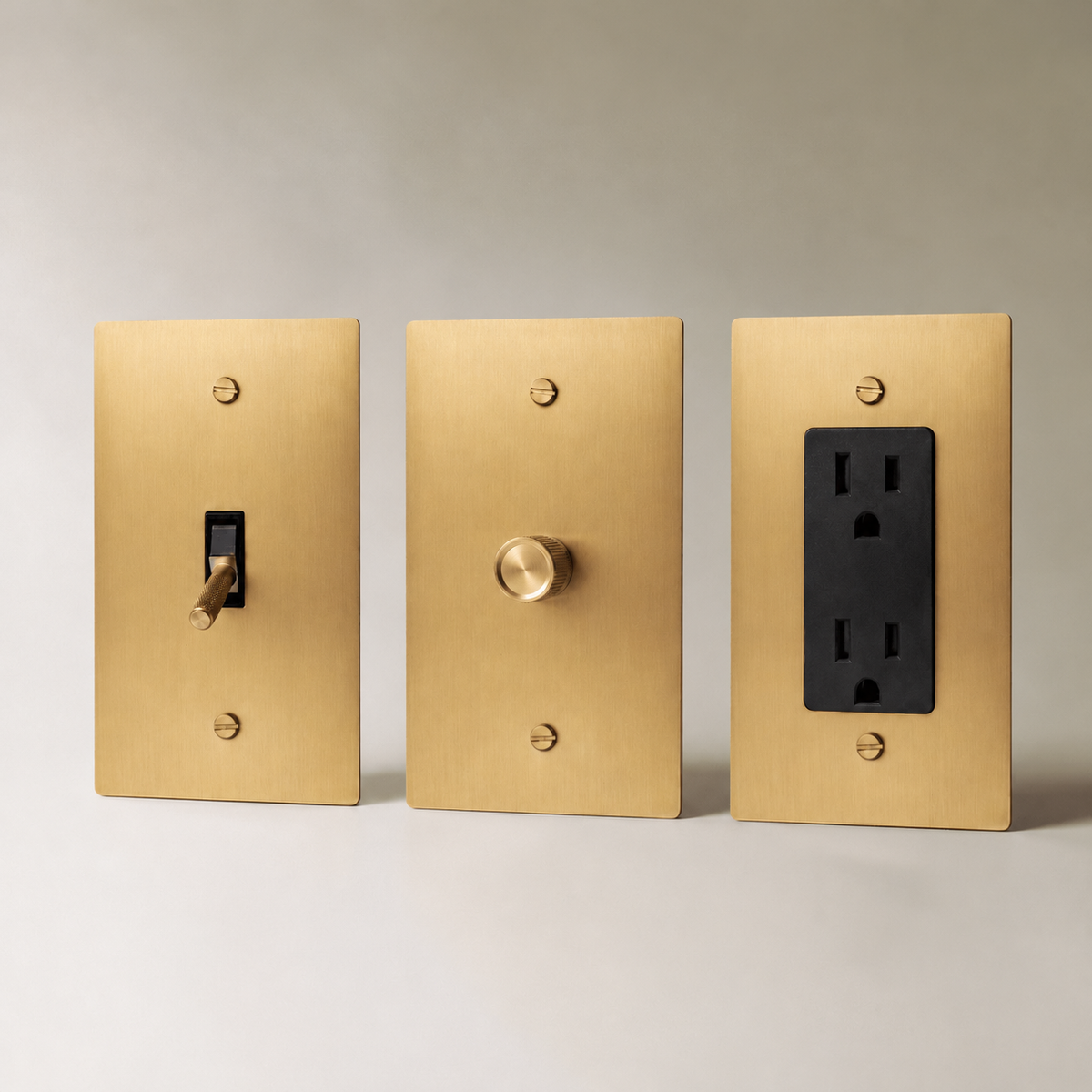
For adjustable brightness from a single control location, compare Brass Rotary Dimmer Switch. Its listing specifies one-way circuits and leading-edge Triac dimming with compatible lamps. For a two-location arrangement, look at the separately listed Brass 3-Way Rotary Dimmer Switch and have the companion control specified for the circuit.

For power points, Brass Wall Outlet offers one- to four-gang configurations with Standard, USB-C, and GFCI options. Natural Marble Wall Outlet offers those connection choices in a one-gang format. Choose the required configuration for each location; a matching faceplate does not make the outlet types interchangeable.

Separate gang count from circuit function
Gang count describes the fitting or plate arrangement. It does not tell you how many locations control the same light. Check the selected configuration’s dimensions and electrical-box requirements.
Three-way describes two-location control in a compatible circuit, such as a light operated from either end of a passage. The three-way rotary dimmer is a distinct product from the standard one-way model, even when the faceplates look alike.
A four-way switch is used within a compatible arrangement for controlling the same light from three or more locations. It works with other required controls; a four-way fitting is not simply a plate with four switches. Leviton’s explanations of three-way and four-way switching explain the terminology.
For ordering, record these as separate fields: the number of fittings at the wall, the control function, and the number of locations that operate the light. Have your electrician confirm the complete arrangement.
Check the dimmer against the actual light
A decorative dimmer needs to suit the electrical components behind the fixture. “LED” and “dimmable” are useful starting information, but the exact lamp or driver and control still need to be compatible.
The linked CARRA brass rotary dimmers specify leading-edge Triac control. Check that requirement alongside the chosen fixture or bulb, the published load rating, and any installation instructions. Ask for compatibility guidance for the specific light and control you intend to use.
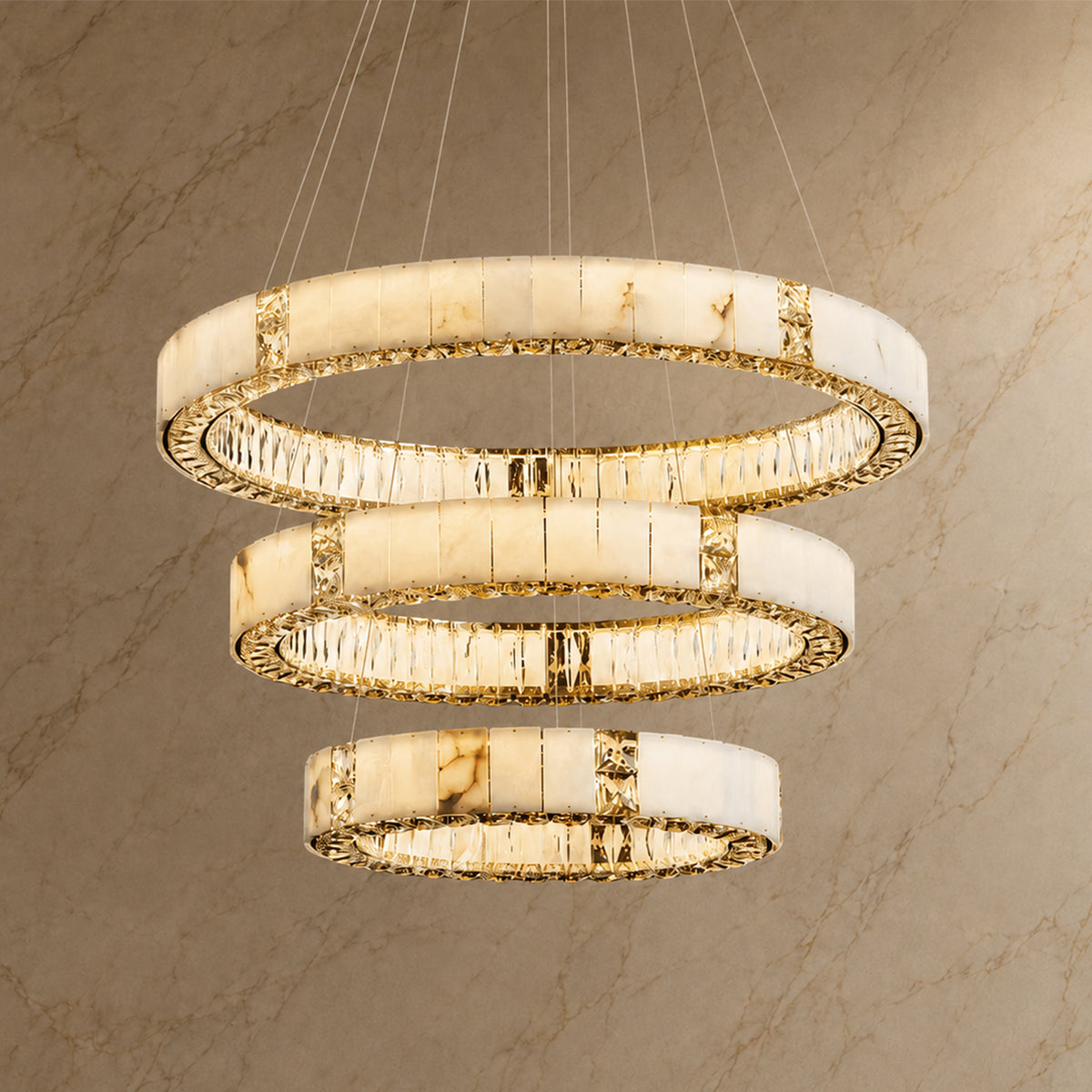
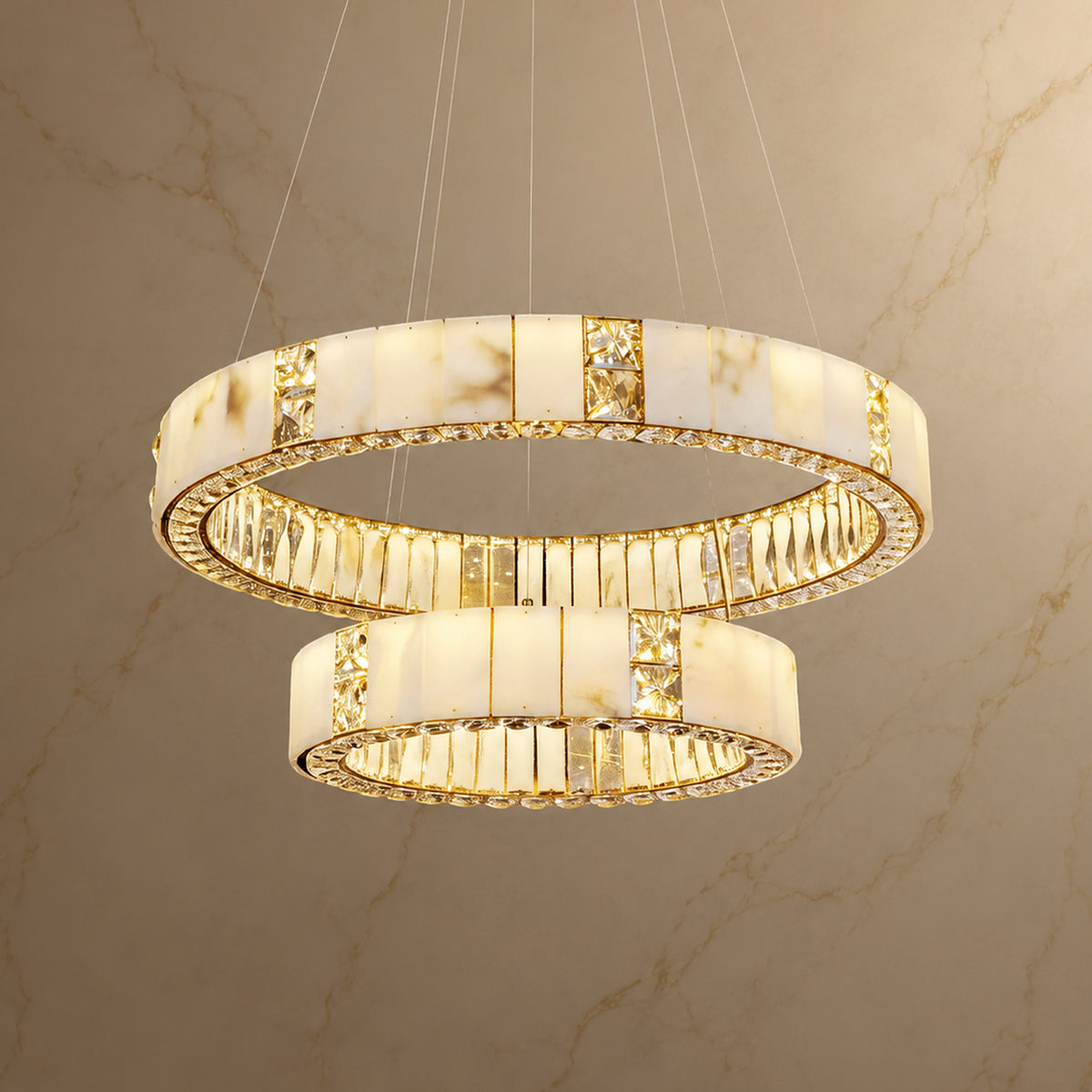
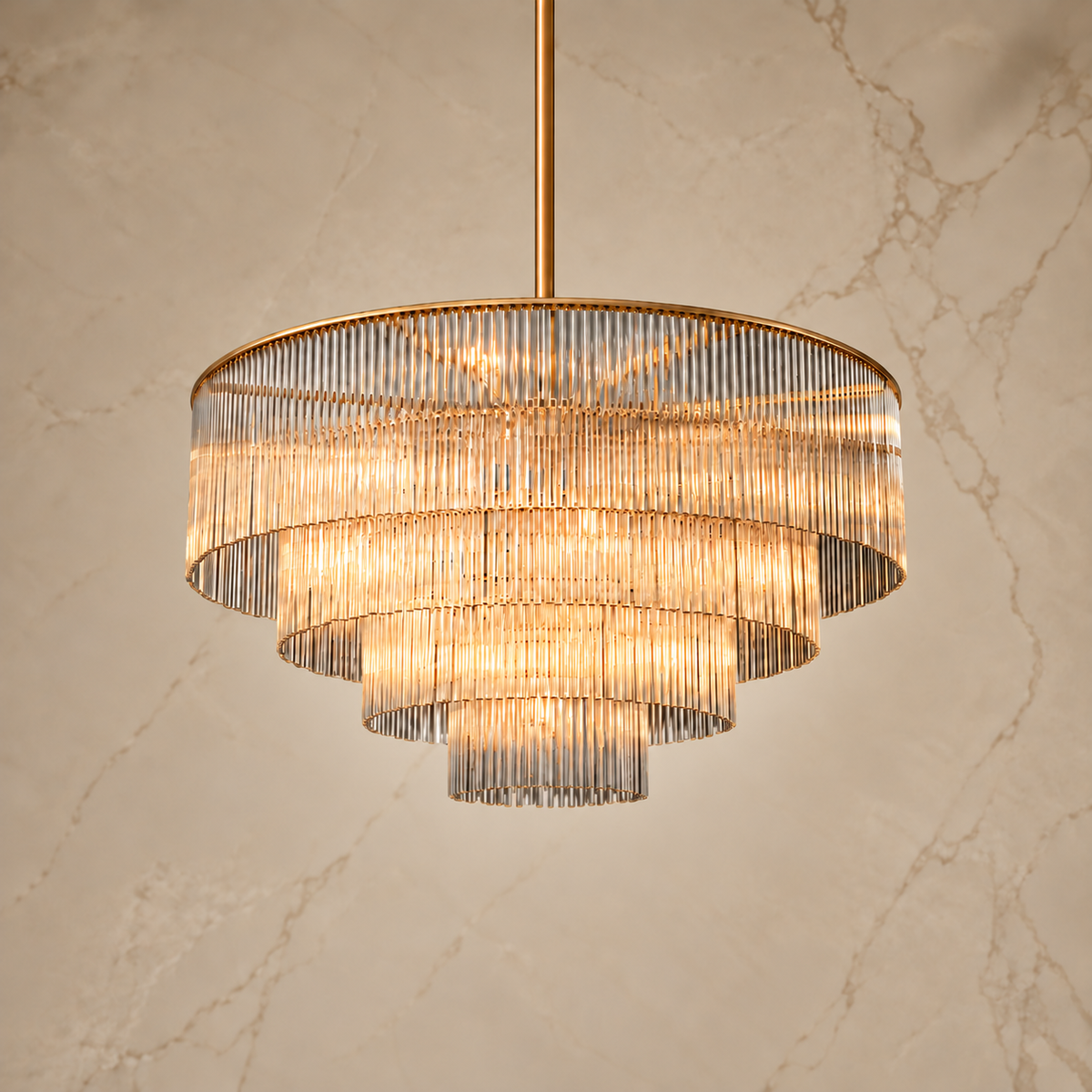
Light-color selection is a separate feature. For example, CARRA’s Lumaire Alabaster 2-Tier Ring Chandelier offers selectable color temperatures but explicitly excludes dimmer-switch use. A coordinated brass appearance would not make that chandelier compatible with a rotary dimmer.
If the product information does not confirm the combination, send CARRA the light model and the proposed control before ordering. An image of the two products together cannot answer that question.
Plan the fittings room by room
At the entrance and through the hallway
Compare the switch with the door handle and trim from the view you see on arrival. For a long passage with more than one entrance, establish the required control locations before ordering the fittings.
Beside the bed
Think through the evening routine: turning off the overhead light, adjusting a compatible bedside light, and charging a device. These may require separate functions. Choose the final positions with the bed and bedside furniture marked out.
In the kitchen
View the metal or stone plate beside the cabinet finish and backsplash. Then have the outlet type and placement specified for the exact location. Where GFCI protection or other requirements apply, the electrical plan should determine the selection.
Near a bathroom
Stone can relate visually to a vanity or tiled surface, but appearance does not establish suitability for moisture exposure. Confirm the exact fitting’s rating, location requirements, and applicable protection with your electrician.
Choose the sample kit for the decision you need to make
Physical samples are useful when choosing hardware for several rooms. Hold them beside the painted wall, the stone, and the door handle. Compare them again in evening light before settling on the finish.
To compare several wall-plate finishes
Brass Wall Plate Sample Kit (6 Pieces) contains six one-gang wall-plate samples. Choose it when the main question is which finish works with your room materials. Switches, dimmers, and outlet mechanisms are not included.
To see three fittings in one finish
Brass Electrical Sample Kit brings together an outlet, a rotary dimmer, and a toggle switch in one selected finish. It helps you compare the coordinated appearance and tactile details of those fittings. It does not establish compatibility for every circuit or product in a larger order.

Before you order
Prepare a simple fitting schedule with one entry for each wall location:
- Function: on/off, dimming, Standard outlet, USB-C, or GFCI configuration.
- Control arrangement: one location, two locations, or a specified multi-location circuit.
- Format and fit: selected gang configuration, dimensions, electrical box, and required clearances.
- Electrical requirements: supply, ratings, lighting compatibility, and the installer’s requirements for that location.
- Material and finish: plate material, metal tone, insert or control color where selectable, and sample reference.
- Contents and quantity: complete fitting or plate only, with the required number of each exact configuration.
For marble fittings, pass the handling instructions to the installer. The marble toggle listing specifies a hand screwdriver and warns against overtightening the stone plate.
Once the functions and fit are settled, use the complete switches and outlets collection to coordinate the visible finishes across the project.
Frequently asked questions
Should switches match the door handles?
A related tone and sheen can help them feel connected. An exact match is a visual choice, rather than a requirement. Compare samples in the room, especially when the fittings come from different suppliers.
What is the difference between unlacquered and polished brass?
Unlacquered describes a finish intended to develop natural patina. Polished describes a reflective surface. Check the coating and care information for the specific product rather than assuming the two terms fully describe how it will age.
Does three-gang mean three-way?
No. Gang count refers to the fitting arrangement. Three-way refers to controlling the same light from two locations in a compatible circuit. Specify both independently.
Can I use a brass dimmer with any chandelier?
No. The chandelier or its lamps must support the proposed dimming method, and the control must suit the circuit and load. Some CARRA integrated-LED fixtures do not support dimming.
Will marble switches and outlets match exactly?
The same stone option gives you a related palette, while each natural plate has individual veining. Choose the metal control and outlet configuration separately where the product offers those options.
Which sample kit should I choose?
Choose the six-piece wall-plate kit to compare finishes. Choose the three-piece electrical kit to see an outlet, dimmer, and toggle in one selected finish. Review the kit contents before ordering.
CARRA product information checked October 27, 2026. General switching terminology was checked against the linked Leviton resources; these are not endorsements or compatibility tests of CARRA hardware. Room pairings are editorial suggestions, and product imagery comes from the linked listings. Electrical installation and local requirements should be confirmed by a qualified electrician.